
Ontario Budget Favours Tech, TV and Film Producers
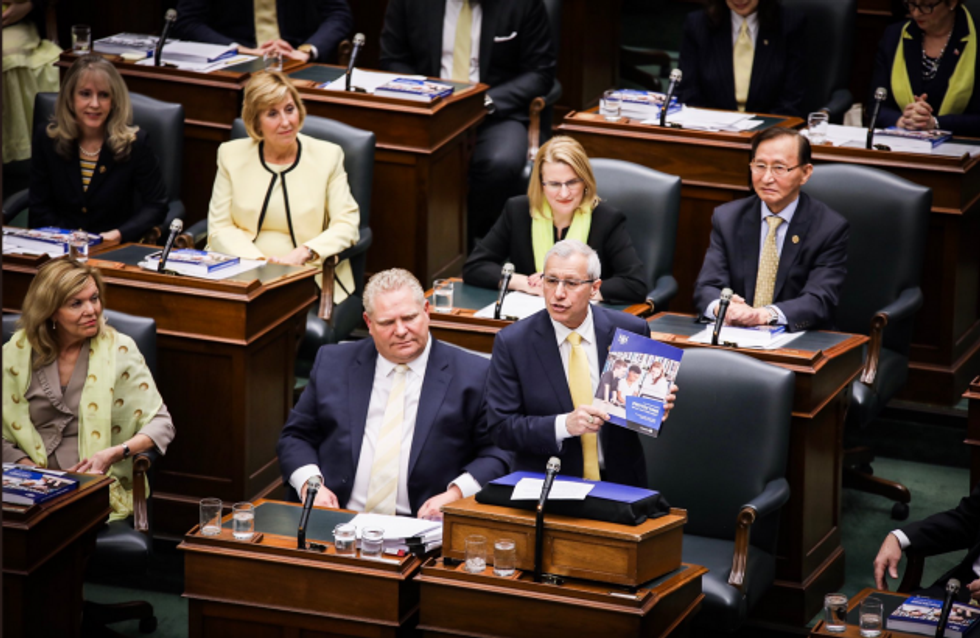
The Ontario PC government proposes to streamline the administration for its cultural media tax credit and certification programs, and to cut red tape for video game developers. Pictured here: Premier Doug Ford and Finance Minister Vic Fedeli tabling the budget in Queen's Park yesterday
By David Farrell
Ontario’s Conservative Government released its first budget yesterday, and it offers plenty of promises as it also raises a lot of questions needing answers.
The chief pillars of the fiscal blueprint aim to slash the province’s $11.7B deficit by increasing tax revenues from the relaxation of booze and gambling laws and buffer the province’s economy as best it can from the inevitable downturn caused by declining business opportunities with China and the US.
More permissive liquor laws will benefit the live music sector; small tax changes help small and medium-sized businesses and tech entrepreneurs.
Culture industries are favourably acknowledged in the document, but the emphasis focuses on film, TV and the video game industries. The government proposes to streamline its cultural media tax credit administration and certification programs, and cut red tape for video game developers.
For the province’s music industry, arms-length provincial funding body Ontario Creates (formerly the Ontario Media Development Corp or OMDC) provides $15M in annual support through four (4) program streams to record labels, music publishers, music managers, artist entrepreneurs, music promoters, music presenters, and booking agents, and music industry trade, service, event and training organizations.
The budget document has the government stating it supports the Ontario Music Fund and that it will work with Ontario Creates to modernize the programs "to focus on activities that bring the biggest return to the province and refocus its investments in emerging talent to create opportunities to achieve success.”
The “biggest return” and the ambiguity of “refocusing its investments in emerging talents” could signal the government wishes to re-direct a more significant portion of the annual funds for foreign trade missions and higher yielding IP programs than is the case now. Whatever its intentions, CIMA’s president Stuart Johnston says he is ready and willing to consult with the government and lobby for its membership to ensure Ontario Creates’ music programs are protected and refined. In a phone call made while in transit last night, Johnston told FYI that the budget document raises questions about the music programs and he’s prepared to do whatever it takes on behalf of his constituency to answer them.