advertisement
FYI

Bryan Adams Calls For Copyright Laws To Change

Appearing in Ottawa on Tuesday morning, Bryan Adams urged the federal government to amend the Copyright Act to give artists more ability to regain control of their works after they've been sold.
Bryan Adams Calls For Copyright Laws To Change

By External Source

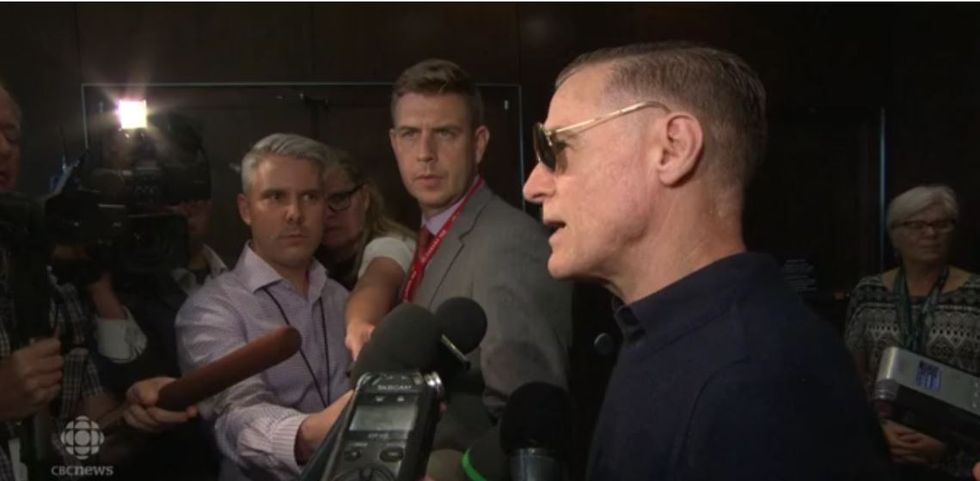
Appearing at the House of Commons heritage committee Tuesday morning, Bryan Adams urged the federal government to amend the Copyright Act to give artists more ability to regain control of their works and songs after they've been sold to a company.


As it stands today, companies which have the rights to work by musicians, authors, composers and other creators have the legal right to retain these rights for 25 years after the artist's death. Adams is calling for a change to the act that would limit those companies to exclusive rights for 25 years after the initial sale of the rights — more than enough time, he said, for labels to commercially exploit artists.

advertisement

"This would be a very big step in the right direction, to help composers and authors in Canada to own and control their work," he said.

The committee is studying remuneration models for artists and creative industries as part of the statutory review of the Copyright Act and is hearing from a broad range of stakeholders and experts. – CBC News

Watch the entire standing committee hearing Tuesday morning

Adams in a media scrum following the hearing

advertisement
Music News Digest: CRTC Aims To Fill a Gap for Indigenous Radio in Toronto and Ottawa
Photo by Will Francis on Unsplash
FYI

Music News Digest: CRTC Aims To Fill a Gap for Indigenous Radio in Toronto and Ottawa

Also this week: Sled Island reveals initial lineup curated by clipping., Truro hosts Nova Scotia Music Week and more.

The CRTC recently launched a call for applications for FM radio stations to serve Indigenous communities in Toronto and Ottawa. Broadcast Dialogue reports "the call follows the demise of First Peoples Radio’s ELMNT FM stations, which went off the air on Sept. 1 last year. Launched in the fall of 2018, the stations had a goal to 'fill the gap' for urban Indigenous listeners under-represented in the radio landscape. They carried an 'Indigenous-variety' format, featuring both English and Indigenous-language spoken-word and musical programming, with 25% of the playlist dedicated to Indigenous talent.

In its call, the commission says in its view, "there is a need and a demand for radio stations to serve the needs and interests of those communities."

keep readingShow less
advertisement