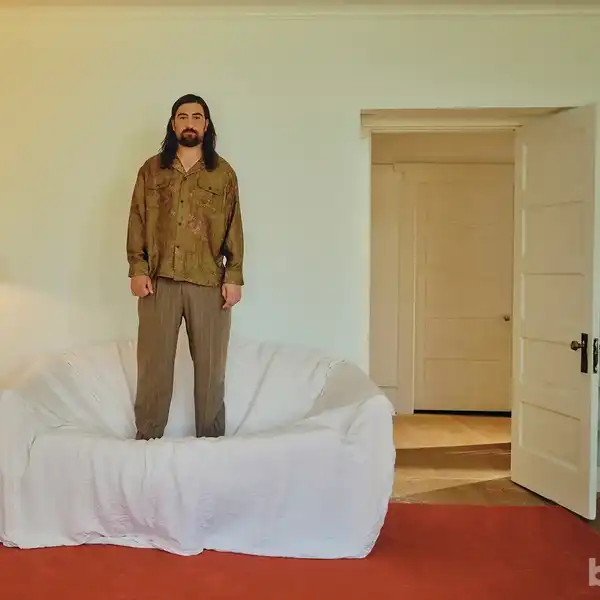
Executive of the Week: Ben Murphy on Turning Prince Edward Island Into a Thriving Music Festival Market
The CEO of Whitecap Entertainment discusses the "competitive advantage" of owning their own site and how Cavendish Beach and Sommo are putting the Maritimes on the map for global artists.

When it comes to Canada's touring market, the focus is typically on three major hubs: Toronto, Montreal and Vancouver. When a major North American tour is announced, those three cities are often the only ones on the itinerary — and sometimes there's only one.
So, if you're building a market in a more remote part of the country, how do you get artists to come?
Ben Murphy has been answering that question since he got started in hospitality on Prince Edward Island as a young university graduate. His parents have been in the restaurant and hotel industry since the time he was born, and he grew up surrounded by it.
Today, he serves as CEO of both Murphy Hospitality Group — an empire spanning 15 restaurants, four hotels and a brewery throughout the Maritimes — and Whitecap Entertainment, the promoter behind two festivals with an excellent reputation: the country festival Cavendish Beach Music Festival and the multi-genre music and food festival, Sommo.
When Cavendish started 18 years ago, Murphy says, their founding owners knew very little about the music industry. Instead, their goal was tourism. Now, with him at the helm, they do both at the same time.
This year's festival features acts like HARDY, Tucker Wetmore and Cody Johnson, three headliners at the top of the country market. Sommo boasts major rock and pop acts like Sombr, Twenty One Pilots and Natasha Bedingfield.
Both build on an economic impact of more than $30 million for PEI and over 80,000 music fans, 80% of whom travel from elsewhere for the festivals.
"We have so many people that come back year after year, and that's their one of their weeks of vacation throughout the year," says Murphy. "It’s a responsibility I wear quite heavily. People are choosing to spend money with us and they could choose elsewhere. So, how do we make it as smooth as possible and make the show good as it can be?"
For this week's Executive of the Week, Murphy talks about the pros and cons of building a festival market in a rural community, how he's turned artists into PEI evangelists, and the benefits of owning their own festival grounds.
For those who’ve never been here, how would you describe the concert and festival scene on PEI? How often do big touring shows come your way?
Music is a major part of the fabric of the Maritimes. People are big supporters of music in general, but especially when acts make the decision to come east.
Especially on PEI, outside of us [Whitecap], there aren’t a lot of shows that decide to come here.
Halifax and Moncton have invested into their arenas and they're seeing more of an uptick over the last couple of years, which is great. But risk is a big factor [for us], and also aging infrastructure in PEI’s concert scene.
What factors do you think contribute to the Maritimes often being overlooked as a concert market in Canada?
We're a less populous area. Tours and shows often stop in the Toronto, Montreal area and don't come further east.
In Toronto, you can go to six shows a week, maybe more, and you all see your favorite acts all the time. Here, it's a little more rare. Fans are excited when it does happen. The connection is genuine. Musicians can feel that. They come out here and they rave about the crowds.
Relationships play such a huge part in making those decisions [with where to tour]. With Cavendish and now Sommo, we've had the ability to make those relationships — with agents, managers, the artist themselves — massage them and be like, “Hey, give us a chance.”
Do you see a lot of opportunity to build up the Maritimes as a concert market or destination?
There's absolutely an opportunity to create new fans here. There’s close to 2 million people in Atlantic Canada. Tourism is a huge industry for us. A lot of Atlantic Canada visits PEI at least once a summer, and it is a massive boost for the local economy anytime there's a festival.
What are some of the other challenges and benefits to being a festival on PEI?
PEI has built an amazing reputation as such an amazing place to visit. That's not just in what we offer, but the pace people have when they come across the bridge. Rarely do you hear a bad thing about someone's trip to PEI. To start from there is amazing.
At the same time, we're a province of 180,000 people. We are rural, remote in the grand scheme of things. Especially for [fans from] Toronto or even the touring acts, it's not an easy place to get to most of the time. For the people coming to Cavendish, 80% are from off island, and probably 75% of them drive to the festivals.
You own your own festival site and venue. How does that define the festival experience?
It’s a huge competitive advantage compared to most other festivals. We probably wouldn't be around if we didn't own it.
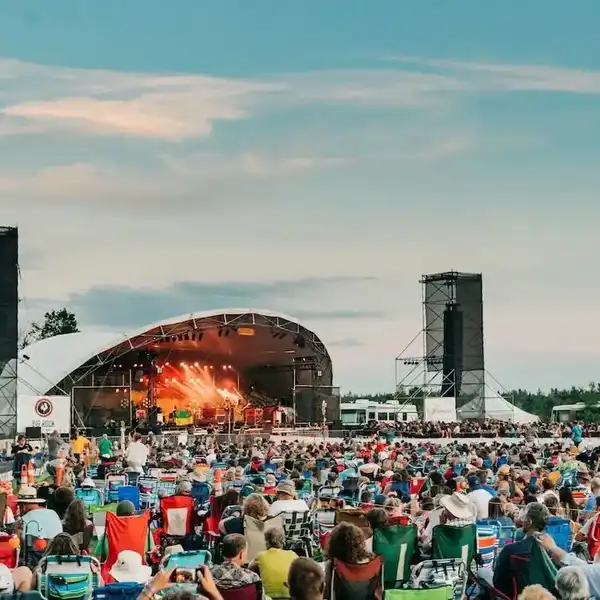
The biggest thing we ever did was create a permanent main stage. It was a substantial investment at the time, but it's helped us reduce costs annually.
At the same time, we've been able to put on shows with medium-bad weather because of that stage. It has worked out well for us and the fans because there's less chance of canceling.
Part of the experience is creating something a little bit more rooted. You can do more with the site when it's yours. We hear from other festivals how we’re so lucky to have it.
For anyone who’s never been, how would you describe the venue for Cavendish Beach and Sommo and the experience you create around it?
We designed it with a walk up into the site. When you enter the first gates, you overlook the ocean. That’s our magic shot. On the festival grounds, we do close to 30,000 people on a sellout, and we've had four to five sellouts in our career.
We have a permanent mainstage, and a soon-to-be permanent second stage. We've added VIP buildings with some corporate boxes that we can sell, which is unique in the outdoor festival game.
Backstage, from the artist's perspective, our goal is to continue to elevate. We run a food and beverage company, so we have a bar and we do all the kitchen. We have a permanent kitchen onsite, and dressing rooms.
How do PEI and the festival’s surroundings shape the artists’ experience?
When people arrive on PEI, they feel that they’re in a different pace of life, and it grounds them. Lots have stayed extra nights to enjoy.
We rave about the beaches of PEI. That's what we're known for, especially in the summer. We are a minute from the beach. Often artists will go down to the beach during the day after their sound check. The first year of Sommo, Vance Joy went for a swim and came back soaked, and he's like, “Oh sh–, I gotta go do a meet and greet.”
We pride ourselves as Canada's food island. We have amazing shellfish, potatoes, obviously the fresh fish. You're not getting it as fresh as you can get it here.
What role does hospitality play in live music events and infrastructure and how are the two intertwined?
I think people need a reason. What's their reason to get off the couch? Live music can be that.
In the hospitality industry, we talk about how people are doing fewer social outings, which makes it that much more important when they do. Creating that memorable experience for the fan that does decide to come is the essence of what we do, whether you go into a restaurant or go to a show.
Cavendish has always been a country music festival. What inspired the launch of Sommo, a multi-genre festival, in 2023?
Country is definitely still huge. With Sommo, we wanted to build something that not everyone else is doing and focus on food and drink, all the things that the artists like.
How do we elevate that festival experience that you can't get anywhere else? The shellfish, fish, lobster rolls — that is what we hear when people want to come to PEI, so let's highlight that and they'll want to come more. Local beer, local wine. Give them a little bit more than your regular big event scene. Make it smooth and make it PEI.
What was the reasoning behind hosting Sommo in September, during what’s called shoulder season?
PEI is built for capacity in the summer. Therefore, it's basically full in the summer — from Cavendish to the end of August. There is lots of excess capacity outside of those months. If we can create meaningful events that drive business, the impact on the economy is that much more.
Especially in Cavendish, it's only 20-25 minutes from Charlottetown, but it’s even more seasonal than PEI is traditionally. We heard rave reviews from a lot of the business people out in Cavendish with Sommo in September and the business that they felt [in that off-peak time] and what a difference it made to their year, which is part of why we do what we do.
What is the importance of that relationship with the community and what steps have you taken to maintain it?
The community plays such a huge piece in the success of the events. Without their support, the events don’t succeed. It’s gone through ups and downs over the years, but we’re in a really good spot.
When you're bringing 20,000+ people into a small resort community, there’s challenges that go along with that — traffic challenges, policing, just absorbing that amount of people.
I think we've done a great job with the community, addressing some of their concerns over the years. The buy-in from the community is one of the reasons why we are considered one of the top festivals in the country.
The festival is only one piece of people's experience. They're staying at a cottage, they're going to the gas station, to the grocery store.
What is the biggest issue you see in the current live music and hospitality scene in Canada?
Getting more people to come play out east. We’re going to continue to do our part to try to get more people to come play shows out here, but you getting people to show up for the shows in the ever-changing world is always a challenge.
It's night and day compared to where we were 15 years ago because we have a reputation and we’ve had some of the biggest artists in the world here.
We had Taylor Swift back in 2010, and that was our first sellout. We had Noah Kahan a couple of years ago at Sommo. We have had most big country artists from Kenny Chesney to Zac Brown to [Tyler] Childers to [Chris] Stapleton. When you say these guys have been here, you have credibility. It’s no longer just, hey, come play a field on Prince Edward Island.
Last year, some controversy arose after Alex Warren dropped out of Sommo at the last minute. How did that impact the festival?
There's so many people involved in the booking process that things get lost in translation sometimes. The people that came last year might have been a little disappointed when they heard that, but that night especially, Hozier put that to bed. I don't think it had any real effect on us moving forward, besides the fact that more people know about the festival now. We just have to continue to deliver the experience that we’re known for.
What do you want people to learn or understand about PEI when they come to your festivals?
People think PEI is rural, it’s out there. We want to deliver a high-end experience.
A lot of people aren't in and around the industry all the time and there’s so many talented people that come together to put on the festivals. We want to showcase their work and their professionalism.
It's their joy of what they do because it doesn't happen every day here. They take great pride in everything, from the stage manager to the person that picks you up at the airport to the person that makes the beer.
We have the opportunity to change people’s opinions — of the fan experience, but also the industry experience.
Additional reporting by Stefano Rebuli.