advertisement

Billboard is a part of Penske Media Corporation. © 2023 Billboard Media, LLC. All Rights Reserved.

advertisement
Popular



Latest News



advertisement
BILLBOARD CANADA FYI
A weekly briefing on what matters in the music industry
By signing up you agree to Billboard Canada’s privacy policy.




advertisement
advertisement
Courtesy Photo
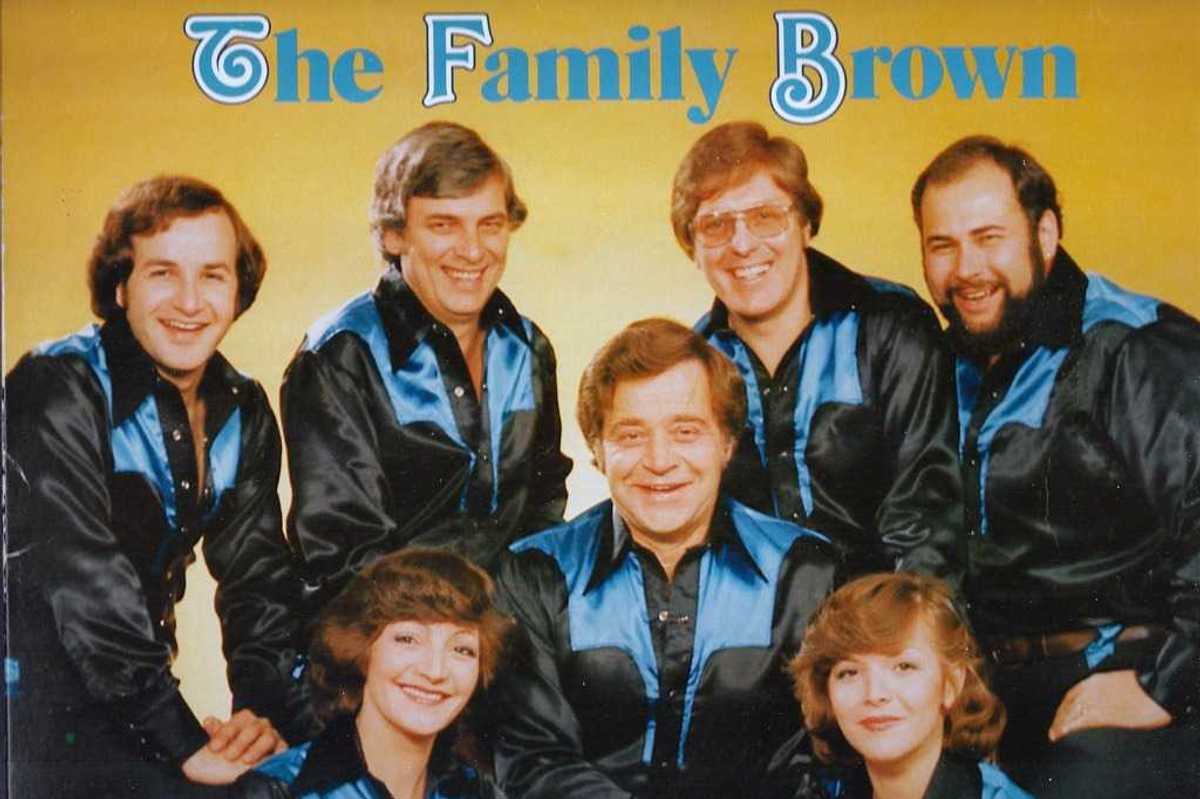
Ron Sparling With The Family Brown
FYI
Obituaries:Canadian Country Music Hall of Famer Ron Sparling, U.S. Country Star John Anderson
This week we also acknowledge the passing of Irish folk legend Dónal Lunny.
14m
Ron Sparling, a double inductee into the Canadian Country Music Hall of Fame as a musician and industry entrepreneur, died on Oct. 21, at age 86.
A biography on the CCMA website published at the time of Sparling's induction into the Canadian Country Music Hall of Fame as a pioneer in 1990 notes that ''A professional musician since 1957, Ron Sparling was a founding member of the international supergroup Family Brown in 1968, although he soon involved himself more extensively with the business side of the industry, managing and booking the act.
''Ron Sparling has played a major role as a television producer and helped to bring country music to a wider audience. Through his foresight and energy, he spearheaded the establishment of Canada’s first Country Music Week in 1977, an event which continues to this day.
''Sparling has gone on to become one of Canada’s most successful and respected agents and managers, with his conscientious work on behalf of country music the subject of gratitude from his colleagues, peers and the artists he has represented.''
advertisement
Sparling was inducted into the Canadian Country Music Hall of Fame for a second time, in 1997 in the artist category as a member of the Family Brown.
His highly varied resume includes work as a musician, producer, booking agent, artist manager, TV booker and producer and successful business entrepreneur outside of music as well.
In 2023, Sparling was profiled by legendary Canadian country music historian Larry Delaney in his series on Ontario's country music pioneers for the Country Music Association of Ontario.
It states that ''The early formative years of the Canadian country music 'industry' were built around the dreams and hard work of a few dedicated individuals. Ron Sparling was at the forefront of that movement as a musician, a manager, an advisor, a leader, a mentor… and much more.''
advertisement
Born in Ottawa in 1940, Ron Sparling spent his early years in Campbell’s Bay, Quebec. As a youngster, he was intrigued by the glamour of small-town fairs and festivals. At age 17, he became a drummer for the Ottawa Valley group The Blue Mountain Boys, and, soon after, he played drums for Hank Rivers – at the time, one of Canada’s top touring and recording acts.
In 1961, he joined the group Joe Brown & The Happy Wanderers (the Ottawa Valley’s premiere country act) with group members Joe Brown, Ward Allen, Bob King, Ken Davidson and Vince Lebeau. The group was featured on a daily noon-hour radio show on CFRA and the weekly Shoregas Barn Dance show on CJOH-TV, heard and seen throughout Eastern Ontario.
When that group disbanded in 1967, Joe Brown and Ron Sparling formed Family Brown, an act headlined by “Papa” Joe Brown and his children: Barry, Lawanda and Tracey Brown. The group was also initially supported by musicians Dave Dennison (guitar) and Bob Wingrove (steel guitar), and later with Gary “Spike” Spicer.
Family Brown began playing Ottawa Valley fairs and festivals in 1968, at which time Ron Sparling donned his “managerial” hat, scoring a TV show deal – at first with CHOV-TV in Pembroke. By 1972, the group was signed by CJOH-TV in Ottawa, where they hosted a series of TV shows – initially under the name Call It Country, then Country Way and eventually Family Brown Country – enjoying a 13-year run, with the show syndicated across Canada.
advertisement
Delaney's profile reports that ''during the early 1970s, Sparling was successful in securing a major label record deal for Family Brown with MCA Canada and soon afterwards, a long-standing run with RCA Canada, releasing a dozen albums and 50 nationally charted singles. Family Brown also earned numerous group of the year awards. The group was inducted into the Canadian Country Music Hall of Fame (1997) and the Ottawa Valley Country Music Hall of Fame (1991). All of this success came under the managerial leadership of Ron Sparling.''
advertisement
''In 1971, at the start of the Family Brown legacy, Ron, with his wife, the late Laurie-Ann Sparling, formed the Laurie-Ann Entertainment Agency, handling show bookings for the group and for many of the Ottawa Valley’s top touring acts of the day.
''The Laurie-Ann Entertainment agency also became heavily involved in booking entertainment for local fairs, festivals and special events; most notably, the long-running Wayne Rostad Gatineau Clog and the equally popular Ompah Stomp. The agency also brought in major acts (Johnny Cash, Merle Haggard, George Jones, Waylon Jennings, Loretta Lynn and many more) to stages in communities throughout Ontario.''
Laurie-Ann died in 2020, and Ron sold the business to Louis Lacelle in 2022. It was renamed Glovebox Entertainment and remains in operation. Lacelle told Billboard Canada that ''Ron was my mentor. He showed me everything I needed to know to carry on his legacy. Even though he was not involved anymore, he still wanted to know how our shows went and who is coming this week when we met for breakfast every Friday morning.''
In other ventures, Ron Sparling also partnered in establishing the Snocan Recording Studio and Snocan Records label, home to many of Canada’s top country recording artists. He also opened two short-lived Family Brown Record Stores and he bought into the Kemptville Hotel, a popular venue that featured acts booked by his agency.'
He made a brief return to the TV world in the early 1990s, as executive producer of the country shows Spirit Of The Country and Ronnie ‘n The Browns – a syndicated show with Ronnie Prophet.
advertisement
Sparling, as chairman of the host committee, was also instrumental in bringing the CCMA’s Country Music Week events to the nation’s capital, first in 1977 and later, in 1981 and 1989.
Aside from his name being attached to countless awards by Family Brown, at the CCMA Awards, Sparling was named manager of the year (1982-1984) and was a six-time recipient of booking agent of year during the 1980s,
The Ottawa Valley Country Music Hall of Fame also honoured Sparling with induction in 1989, recognizing his work as a musician, manager, and promoter.
Its bio noted that ''Ron Sparling has played a major role as a television producer and helped to bring country music to a wider audience. Through his foresight and energy, he spearheaded the establishment of Canada’s first Country Music Week in 1977, an event which continues to this day.
''Although, Ron is well known in the country music industry, we wish to point out that both Ron and the agency are knowledgeable and work in all aspects of the entertainment industry. He has gone on to become one of Canada’s most successful and respected agents and managers with his conscientious work on behalf of country music indebting him with gratitude from his colleagues, peers and the artists he has represented.''
advertisement
As news of Ron Sparling's passing spread on social media, his peers, clients and industry colleagues were quick to pay tribute. Here is a selection.
In the tribute he sent to Billboard Canada, country singer-songwriter Barry Brown, of Family Brown, recalls that ''In the past few years, we'd get together on a semi-regular basis to reminisce. He loved to talk about the early years, and especially how much his late wife Laurie-Ann did for Family Brown, and his talent agency. He often said he was lost without her.''
Brown also reminisced that ''It was a different world in the '70s, I remember Ron and I driving in his old Buick, he had the radio playing, a cigarette going in the hand on the wheel, and a styrofoam coffee cup in the other, talking a mile a minute about music, hockey, and politics. I was sitting by an open window. '
''John Diefenbaker was his hero, and Family Brown were asked to play for the former Prime Ministers birthday in the West Block. Ron was in his element when we were waiting in the green room with Diefenbaker, Pierre Trudeau and Robert Stanfield.
Many performers and builders in Canada, and the U.S., will have a lot to say on Ron Sparling's accomplishments. For me, Ron was the Family Brown drummer, our driving force, a dreamer and a doer, and a friend I'll miss.''
Barry Brown's daughter and CEO of SOCAN, Jennifer Brown offered this to Billboard Canada: ''I was a kid when I was around Ron but, of course, he was so important to Family Brown and the Ottawa music scene. Now I can appreciate how much of a builder he would have been in an era where people were figuring it out themselves and building the associations and programs we rely on today.''
Fellow Canadian Country Music Hall of Famer, agent and promoter Brian Edwards, on Facebook: ''Today I received the news that my friend Ron Sparling had passed away. I took a few hours to let it sink in and reflect on how many years I had known Ron. It has been many years, like 45+ with Ron, who without a doubt was one of the greatest promoters of country music I had ever met. A musician, agent, manger, producer and god only knows what else he was able to do. All I know is, he did it all well.
''I listened to Ron in person and on the phone for many years. Listening with interest as he shared with me his vision on how to promote shows and he was the master. I learned so much from Ron, a mentor to many including me. A true friend, colleague and an all round good person. The countless shows we did together, trips to conventions, Country Music Week celebrations here in Canada and sharing a lunch and a few drinks along the way. Ron, thank you for all you did for me and countless others. RIP my friend.''
Another Hall of Famer, singer-songwriter Michelle Wright, on Facebook: ''We have lost a true legend. Ron Sparling was a musician, a manager, an agent and a big promoter of Canadian country music. He booked me many times through the years which helped keep me and the boys and the bus goin' down the highway. Thank you Ron. Rest In Peace my friend.''
Fellow Hall of Famer Carroll Baker, on Facebook: ''Another sad day, another musical loss, and one that hits close to home. Ron Sparling: A musician, a talent agent, and long time manager of the Family Brown has left us. Ron was an inductee of the Canadian Country Music Hall of Fame and deservedly so. His accomplishments were many.
''Ron’s life was filled with music and was one of his great loves. However, I don’t believe anything filled or completed him like the love he felt for and shared with his wife Laurie-Ann. It was beautiful and never ending. When Laurie passed away Ron was never the same. So Ron, you are gone and although many are grieving, I have a feeling you are where you want to be, with your precious Laurie-Ann. We will never forget you Ron Sparling.''
Veteran music trade journalist Larry LeBlanc (now senior writer at Celebrity Access) offered this tribute to Billboard Canada: ''There has never been anyone like Ron Sparling in any sector of Canadian music who both understood the business of music and who developed careers as a musician, manager, and a club, concert and TV booker over an astonishing six decades.
''I dealt with him for much of my career, as did my wife radio promoter Anya Wilson. I actually talked to him for my latest project, a documentary on French Canadian superstar Lucille Starr.
''I know about Ron’s early days playing drums as a teenager in the ‘50s with Ottawa Valley’s Blue Mountain Boys, and then playing nationally with top Canadian country star Hank Rivers. What really set Ron’s life in motion was joining Joe Brown and the Happy Wanderers that led to Joe and Ron co-founding The Family Brown.
''Ron came to manage what became Canada’s most successful country band. No question Ron was the man of ALL skills in our industry as it was growing. We needed him to show the way.”
Anya Wilson provided Billboard Canada with this tribute: ''I dealt with Ron many times in the early days of my career and he was very helpful to me when I entered the country music industry with not much knowledge of it. Ron was a great problem solver for who any question I had was never too stupid. He was an original.''
A close industry friend of Sparling, Richmond Fair programmer Rob Petten, on Facebook: ''It is with great sadness to announce, Ron Sparling has passed away. Ron was a pillar in the country music scene in Canada. He was also my mentor in the industry. He will sadly be missed by all who knew him. We are working on the funeral arrangements and will let you know details once they are finalized.''
International
John Anderson, the Country Music Hall of Fame inductee with a distinctive voice and a weighty songbook that included “Swingin’,” “Straight Tequila Night,” and “Seminole Wind,” died on Oct. 21 at the age of 71.
“It is with the heaviest of hearts that we share the passing of our beloved husband, father, grandfather, and best friend,” reads a statement from his family. “To the world, he was a gifted country music singer whose voice and songs touched countless lives. To us, he was so much more. He was the heart of our family, the one who made us laugh, loved us fiercely, and made every ordinary moment feel special.”
“His music will live on, but for us, his greatest legacy will always be the love he gave his family and the memories we will carry with us forever.
Anderson attended the Country Music Hall of Fame induction ceremony to herald this year’s honorees on Oct. 18.
''A native of Apopka, Fla., Anderson relocated to Nashville in 1971. An early job saw him nailing shingles onto the roof of the Grand Ole Opry House ahead of that iconic building’s 1974 opening," reports Billboard.
“I was just wanting to play and sing pretty much at any level that I could,” he told Billboard in 2024. “Thankfully, I was blessed that one little job led to another one, and most of the time it was kind of a little upgrade.”
''That upgrade came when he signed with Warner Bros. Records and went about constructing a lofty career in music with such works as 'I’m Just an Old Chunk of Coal (But I’m Gonna Be a Diamond Someday),' 'Wild and Blue,' '1959,' 'Black Sheep,' and his signature song “Swingin’, which would scoop both the CMA Horizon Award and single of the year in 1983.
After a cooling-off period, his career took off once again when he signed with BNA in 1991 and landed a comeback hit with the Country Airplay chart-topping "Straight Tequila Night," featured on his album Seminole Wind.
Billboard notes that ''A neo-traditional pioneer, Anderson was both a critical and commercial success. He landed five No. 1s, among 20 top 10s, on Billboard‘s Hot Country Songs chart, with those top 10s spanning 1981-95. On Top Country Albums, he notched five top 10s, from the years 1982-92. Respect came from his peers, too, with Academy of Country Music’s career achievement award in 1993, induction into the Nashville Songwriters Hall of Fame in 2014, and entry into the Country Music Hall of Fame a decade later, in 2024.
Anderson battled health issues in recent years, but pushed through the pain. At one stage, he suffered almost 100% hearing loss.
During the peak of the pandemic, he released a critically-acclaimed album of new material, Years, produced by The Black Keys’ Dan Auerbach and David “Fergie” Ferguson.
Kyle Young, CEO of the Country Music Hall of Fame and Museum, paid tribute to Anderson, noting that “He was a one-of-a-kind song stylist who proved that fresh innovations were best born from time-honored traditions.''
“Whether he borrowed inspiration from Lefty Frizzell’s vocal bends or the Florida swamp land, he brought dynamic distinction and creative soul to a world that needed to hear his voice. In 1981, John famously gave life to Billy Joe Shaver’s lyric, ‘I’m just an old chunk of coal, but I’ll be a diamond someday.’ He was already a diamond then, and a diamond he always will be.”
Anderson's work had a major impact on many Canadian country music stars, some of whom paid their respects on social media.
Jason McCoy posted this tribute on Facebook: ''So sad to learn of John Anderson’s passing. A few years back, we booked John for an acoustic show in Nashville. We traded a few phone calls, and he left a couple of voice messages. I've always kept them because...well, it's John Anderson.There was something pretty incredible about hearing that big, rich voice I’d grown up listening to coming through my phone. The same voice behind 'Wild and Blue,' 'Swingin’ and 'Seminole Wind.' Rest easy, John. You’ll truly be missed.''
Also on Facebook, Brett Kissel wrote that ''John Anderson truly was one of the most underrated 'greats' in country music. I first met John on a country music cruise years ago, but like all those things, they’re brief and nothing more than a quick grip and grin. A few years later though, I got to open for him in Knoxville, Tennessee. It was amazing to see that long after his peak in popularity, he was still selling out arenas — because people came to hear the songs and experience 'that voice.'
''I couldn’t afford to bring my band to that show, so I chose to do it solo-acoustic — just me and my guitar. After my show, John walked into my dressing room and said 'kid, it takes a lot of balls to go out there, for 45 minutes, and play to a crowd who don’t know a thing about you, just you and your guitar. Well done, son. Well done' (In his signature southern-growly-drawl..''
''As I became a parent of my own, I took a deep dive into all the fatherly songs out there. And Mr. Anderson’s song 'I Wish I Could Have Been There For That' always got me. John sure knew how to describe the yearning and heartache of missing the big moments in your kids’ lives. Heaven keeps gaining some pretty spectacular country stars… makes me sad down here on Earth that all the good ones are going…Sending love to all the John Anderson fans out there.''
Veteran Toronto country music journalist Roman Mitz was a longtime fan of Anderson's work. In 1992, he interviewed Anderson after a show in Florida for Canadian publication Music Express, and it included a discussion of Anderson hit ''Seminole Wind.'' Mitz tells Billboard Canada ''that is the song I will remember him most for. It's a heartfelt number the Florida-born singer wrote about the environmental threat to Everglades National Park.''
Dónal Lunny, an Irish musician, singer-songwriter and producer who had a huge impact on Irish folk music, died on Oct. 23, at age 79.
A BBC obituary observes that ''As a founding member of three renowned bands - The Bothy Band, Planxty and Moving Hearts - he was widely credited for the revival and growth of Irish traditional music.''
''He also composed and wrote scores for a wide range of projects including TV dramas, documentaries and films. In recent years he worked with contemporary artists such as Kate Bush, Rod Stewart, Elvis Costello and Clannad. He is noted for having left a lasting impact on the music scene in Ireland and was once described by U2's Bono as the island's 'answer to Quincy Jones.'''
Lunny was born in Tullamore, County Offaly and moved to Newbridge in County Kildare when he was five years old. He first met renowned Irish singer-songwriter Christy Moore in 1959 and the two school friends recognised a musical connection between them that would last for many decades.
Along with Liam O'Flynn and Andy Irvine, they formed Planxty, a group credited with Lunny helping redefine traditional Irish music. The group recorded three albums between 1971 and 1973, with Lunny playing bouzouki, guitar, keyboards and bodhrán throughout.
In 1973, Lunny set up the label Mulligan Records and went on to produce 17 albums, with the label publishing music from a range of artists including Boomtown Rats, The Radiators and Agnes Bernell.
BBC reports that ''Lunny joined The Bothy Band in 1975, helping push the boundaries of traditional Irish music alongside Matt Molloy, Tríona Ní Dhomhnaill, Kevin Burke, Paddy Glackin and Paddy Keenan.''
In 1992, Lunny produced and served as musical director of the acclaimed TV series Bringing It All Back Home, beginning a long creative partnership with producer Philip King. He also composed film scores, including for This Is My Father, starring Aidan Quinn and James Caan.
Following a successful, decades-long career, Lunny was presented a lifetime achievement award at the BBC Radio 2 Folk Awards in 2018. In 2025, he was awarded a lifetime achievement award at the RTÉ Radio 1 Irish Folk Awards. and he told RTÉ News at the time that ''It's only when I look back at my career that I see the road I have travelled and the wonderful friends I have made through this community and getting this award means so much to me – the recognition of a lifetime making music,.''
Another prestigious honour came from Folk Alliance International (FAI). in 2017. On Facebook, celebrated Canadian folk singer-songwriter and former executive director of FAI, Aengus Finnan posted that ''I was honoured to present a Lifetime Achievement Award to Dónal Lunny during the inaugural Folk exChange in Ireland.''
Lunny also received an honorary doctorate from Trinity College Dublin in 2008.
One of Lunny's last public appearances was in August, when he performed at the Fleadh Cheoil na hÉireann [All-Ireland Fleadh] in Belfast.
A feature-length documentary, In Time: Dónal Lunny, was released in 2025 exploring his life and career. As is noted in the documentary, he became seriously ill during the making of the film, in 2024.
In a statement, The Irish Traditional Music Archive (ITMA) said Lunny's influence on Irish music was "immense" and he "opened new harmonic and rhythmic possibilities.''
Crediting the work he produced in his bands, they said "his imagination shaped the sound of Irish music" and his career was described as being built on "creativity, friendship and collaboration."
"Dónal leaves behind an extraordinary body of work. His artistry, generosity and influence are woven deeply into the living tradition and into the lives of so many who knew him, were inspired by him, or had the privilege of playing and working alongside him," ITMA added.
in the early 2000s, he had a brief relationship with his musical collaborator Sinéad O'Connor in the early 2000s and they welcomed a son, Shane, in 2004.
On Facebook, veteran singer-songwriter Stephen Fearing posted this tribute: ''Ahhh now, Donal Lunny is gone. This is a hard one… For those that don’t know his accomplishments, he was a master musician, innovator, producer, trailblazer, mentor and a true keeper of the flame.
''I’ve admired him, the music and the musicians that surrounded him for many years. I met him briefly backstage at a gig in London when I was opening for him and Christy Moore. He was kind, friendly, soft-spoken and generous with his time. Thank you Donal Lunny for turning so many of us onto the good stuff.''
BC singer-songwriter Jay Knutson ( Spirit of the West.) on Facebook: ''A sad day. One of Irish music's greats has passed. It would be an understatement to say that Donal Lunny of Planxty,The Bothy Band and Moving Hearts was a huge influence on our approach to Spirit of the West. RIP good sir.''
keep readingShow less
advertisement
Popular
advertisement
Published by ARTSHOUSE MEDIA GROUP (AMG) under license from Billboard Media, LLC, a subsidiary of Penske Media Corporation.
advertisement