Rock
‘Man on the Run’ Director Morgan Neville on Demystifying Paul McCartney: ‘I Took the Idea of Paul the Music Genius and Put It on the Shelf’
The documentary from the Oscar-winning director examines McCartney's post-Beatles work with Wings.
Feb 26, 2026
‘Man on the Run’ Director Morgan Neville on Demystifying Paul McCartney: ‘I Took the Idea of Paul the Music Genius and Put It on the Shelf’
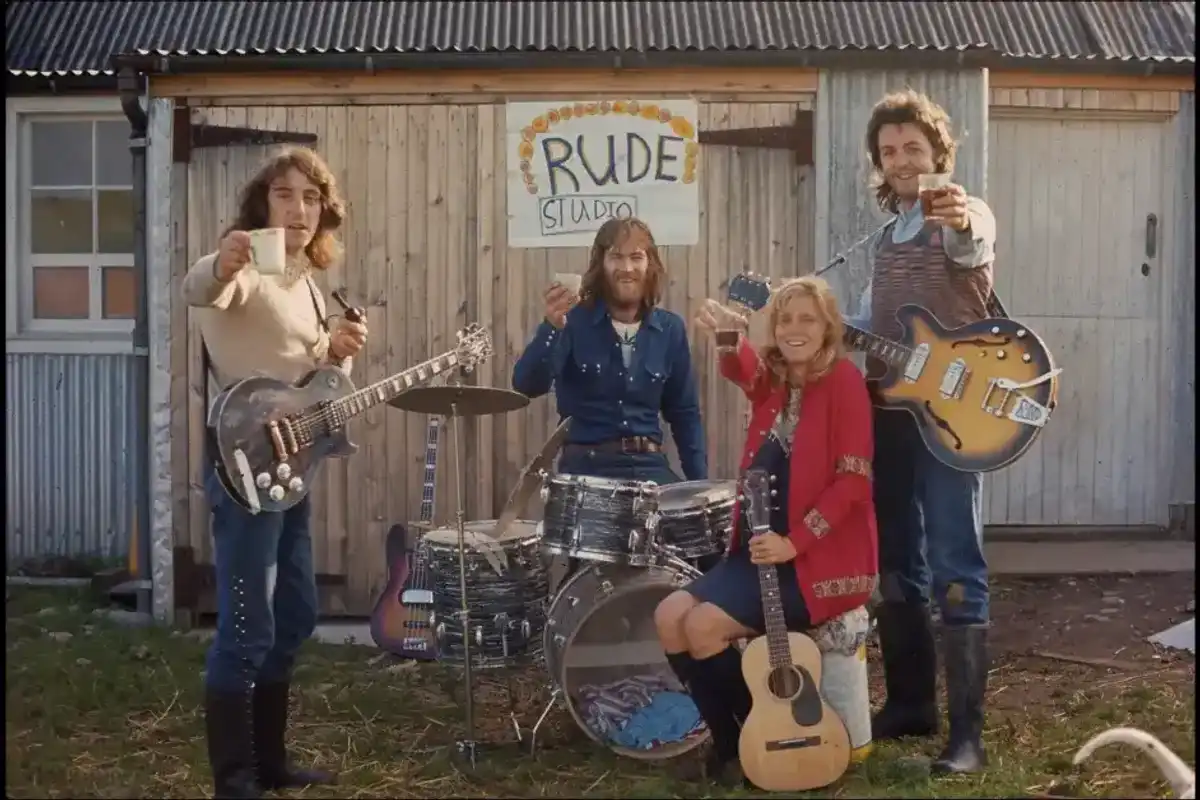
Linda McCartney
As Paul McCartney watched a final cut of Man on the Run, Oscar-winning director Morgan Neville’s documentary on the musician’s time in Wings, the former Beatle sat with a pad of paper and pen. When the movie ended, he stood up, looked at Neville and — flashing him a blank piece of paper — said, “Here are my notes.”
“Somebody said, ‘You should have taken that piece of paper and framed it,’” Neville says with a laugh over Zoom. The film, which begins airing on Prime Video worldwide on Friday (Feb. 27) examines McCartney’s life throughout the ‘70s after the Beatles dissolve and he leads another extraordinarily successful group and navigates family life with wife Linda and their chidren.
advertisement
McCartney’s longtime manager Scott Rodgers and Universal Music Group executive vice president Michele Anthony approached Neville about making the film, which was financed by UMG’s Polygram Entertainment (UMG also distributes McCartney’s music).
Though Neville, the director of such films as 20 Feet From Stardom, Won’t You Be My Neighbor, Roadrunner: A Film About Anthony Bourdain and Keith Richards: Under the Influence, was trying to take a break from doing music docs, “I think within 60 seconds, I was all in,” he says. “I’ve made music films for a long time, and I think some part of me was always wondering, ‘Are you ever going to do anything related to The Beatles?’ I mean, I went to my first Beatlefest when I was 12.”
Though the band toiled in the Beatles’ shadow and had a revolving lineup other than the McCartneys and guitarist Denny Laine, Wings was one of the most successful rock groups of the ‘70s, scoring such hits as “Band on the Run,” “Live & Let Die,” “My Love,” “Jet,” “Listen to What the Man Said” and “Silly Love Songs.” The prolific group also landed four consecutive albums at the top of the Billboard Top 200 chart between 1973 and 1976.
advertisement
Neville had access to a tremendous amount of archival material and music — there are 80 needle drops in the film — and unlimited access to McCartney, whom he interviewed six times, as well as all living members of Wings (Linda McCartney is represented by interviews prior to her 1998 death), McCartney’s children, John Lennon’s son, Sean Ono Lennon and friends including Mick Jagger and Chrissie Hynde.
This interview has been edited for length and clarity.
What was your first meeting with Paul, who served as executive producer, like?
Paul came to L.A. because he was rehearsing for a tour in Burbank. We were left alone in a room, sitting on a couch next to each other. At that point, the initial idea was nothing more than Paul’s interest in doing something about Wings. I said to him that the story, to me, really begins the moment the Beatles break up because that’s [what] sets everything in motion. And to me, the end of it is really John [Lennon’s] passing [in 1980], because Wings never play again.
Had you seen the 2001 documentary about the band, Wingspan?
advertisement
Oh, yeah, I remember seeing it on ABC when it came out. I devoured everything Beatles. Wingspan is a very — I’m trying to be nice about it — like a very kind of ordinary telling of Paul’s version of what he did in Wings. He tells lots of stories I’ve heard him tell lots of times, and there’s great footage in it and everything. But for me, I thought there were a lot of [missed] opportunities. For starters, none of the other members of Wings talk ever. They’re not in Wingspan. Also, Linda doesn’t talk in it. That early time about the breakup of the Beatles, it’s very quickly glossed over, as it is in Anthology too.
advertisement
And I just thought the machinations of what really happened as The Beatles were coming apart was something that I could explain. I didn’t want to make a film about Paul’s discography of the 1970s, great though it is. I thought, “What is this character, this guy named Paul, who’s coming out of [a band] divorce and trying to figure out who he is?’”
Was there an immediate way in?
Right in the beginning, [something] that gave me a key into the story was that written Q&A with the release of McCartney, the one where he announces The Beatles are broken up. That last question says, “What are you going to do now?” And he says, “My only plan is to grow up.”
That’s what the film is. How do you grow up? Being a rock star is a state of arrested development for most people, but Paul kind of goes in the opposite direction. He was 27 when the band breaks up — and rather than living in the South of France, surrounded by women or whatever, as some rock stars might, Paul gets married instantly, has a child, adopts Linda’s child, and moves to a totally dingy farmhouse in nowhere in Scotland and he starts growing food and shearing sheep and mending fences and kind of becomes a farmer. If you want to stay grounded, it’s about as literally grounded as you can be.
Given that his manager came to you with the project, how do you make sure you have editorial control?
The thing about music films is that no matter what, if they control the music, there’s always some element of control [for the artist]. I have been doing this long enough that I say if you come to me that I’m not here to praise you, I’m not here to bury you, I’m just here to understand you. Let me tell the story I want to tell. I didn’t even say this to Paul — because, honestly, Paul, from the first meeting, just said, “It sounds good.” And then we did interviews and interviews and interviews. Paul didn’t see the film until it was done.
advertisement
Beyond no notes, what was his reaction?
It was very emotional for him to see the film. Paul said, “It’s very honest. It’s maybe a little too honest.” I said, “Understanding your failures and your struggles actually is so relatable.” I tried to take the idea of Paul the music genius and kind of put it on the shelf… The thing that I really wanted to communicate is the center of Paul’s life through this time was the family. Every tour they did, all the kids were there. There weren’t nannies. They did it all themselves. When they went to the studio, they brought cribs, and the kids would be crawling around in the middle of the studio. Paul and Linda never spent a night apart from the time they were married until he went to jail in Japan [for drug possession].
advertisement
A big part of the movie explains why Linda was in the band, even though she was criticized for her lack of musical ability.
She says it: “It wasn’t because I was the best keyboard player, it was because we loved each other.” He’s making music at home. Linda was his first audience, and he trusted her, and he didn’t want to be apart from her, and so she becomes part of the band. I think a lot of people thought, “Oh, Linda fancies herself a rock star and she wormed her way into being in the band.” None of that is true… I like Linda’s singing…It’s not like she’s an incredible singer, but she can hold her own.
What the film really brings across was how much Paul got slapped around post-Beatles in the early years of Wings and how painful that is. Even though it was John Lennon who instigated the breakup, McCartney buys into maybe he was to blame, even saying, “I thought, ‘That’s the kind of bastard I am, you know.’” And had also confesses he thought, “I may never, ever be able to write a song again.” He’s so hard on himself. Did that surprise you?
There were a couple of character elements that came out that I felt like I was getting someplace really beyond the normal, charming, funny Paul. And part of it is the insecure part of him. He told me in the first conversation I had with him, “You know, I can remember the names of the reviewers who gave me all those bad reviews.” Here’s Paul McCartney relating that those hurt and still to some extent hurt because he told me their names.
Did you try to interview them?
No, I don’t think they’re alive. Then the other thing is occasionally seeing Paul’s kind of steeliness come out. The “f–k you” mode. You don’t have the career Paul McCartney’s had just being a pushover. Sean even says in the film that both John and Paul were strong, and Paul just had a softer way of showing it. He would maybe disguise it more, but Paul has a lot of grit to him. These are boys from Liverpool. They know how to scrap if they need to.
For all the interviews, not just Paul, you recorded audio only. There is no video, so there are no talking heads in the film. Why did you make that decision?
There’s an intimacy you can have. When I would interview Paul, which I did over many months at different times, it was just the two of us talking on the couch, having conversations. I don’t want it to feel like I have an agenda. It’s getting them to a place that feels like, “Oh, we’re having a real conversation,” as opposed to you’re just going through a list of the hits [he] had in the 70s. I will burn lots of time just to try and get in that zone. But the other thing is when you don’t have people on camera, the film becomes a present tense story. And I really like that. It’s not old people looking back. It feels like you’re living through it more in real time.
Do you think this is an opportunity for people who may have discounted Wings to hear how great these songs are? Or hear them for the first time?
Yeah. When I hear “Let ‘Em In” or “Let Me Roll It” or “Band on the Run,” these are amazing songs, and they do stand up with the best of anything he’s written. I think to some extent that Paul’s coming to terms with Wings again. Wings took so much stick back in the day that I think he internalized a lot of the attitude that, “Oh, we must not be that good.” And I think the more he hears people like me or others saying, “I love this music” and sees how audiences react to it, it’s been this kind of gradual coming to embrace it more and more. In a way, I think this film helped him see his own story in a way that’s actually been very therapeutic. I’ve sat in the theater and watched it with him four times. So, it obviously speaks to him on some level.
What do you want people to learn about Wings from this?
He put out 10 records in these 10 years. I’m not saying everything’s great, but there’s great stuff on every record. People have said when they finished the film, they immediately go down a wormhole of listening to this music, which is great. That’s not my goal. That’s a byproduct. My goal is to tell a great story about an artist struggling with their voice and trying to figure out how to live the artist life of a creative. That is my filmmaker goal for the film. My fan goal is thrilled that people are getting into the music.
You included footage of his cheesy 1973 television special that includes him singing “Mary Had a Little Lamb” with a red clown nose on. How did he feel about that being in there?
He never flinched. I mean, he said, “It’s embarrassing,” and then just at the premiere the other night, I heard him saying to somebody, “Yeah, I didn’t make a smart decision the whole decade.” [Laughs.]
As the documentary shows, Wings plays a 1979 charity show, which Paul says is the worst show he’s ever played in his life, and then they go to Japan to play 10 dates, and he’s arrested on the drug charge and the shows never happen. Did you get any sense that he regretted ending on that note?
The writing was on the wall. [Last Wings studio album] Back to the Egg comes out in late spring of ’79. Rather than touring right away. Paul goes to Scotland and records McCartney II and he records “Wonderful Christmastime,” too, which gets released as a solo single in ’79. They go to Japan. Everything blows up. Japan was definitely the thing that put it all on hold. And then the success of McCartney II. And then John’s death. It was over. Paul said they might release more stuff, [but they never did], so it went out with a whimper. I think Paul really was ready to go to the next stage. And John’s death just solidified that.
You’re three-quarters of the way to an EGOT. You have an Oscar and Grammy for 20 Feet From Stardom and an Emmy for Best of Enemies. How are you going to get the Tony?
I do think about it. I just have to come up with the idea. I’ve always been interested in theater, and it’s one of the only parts of culture I haven’t made a film about too. So, who knows? Maybe next.