Gracie Abrams Says People ‘Appropriately’ Call Her a ‘Nepo Baby’: ‘I Had a Safety Net’
"I wasn't growing up afraid financially, and that's the biggest deal," Abrams tells The New York Times' Popcast, ahead of her July 17 album release.
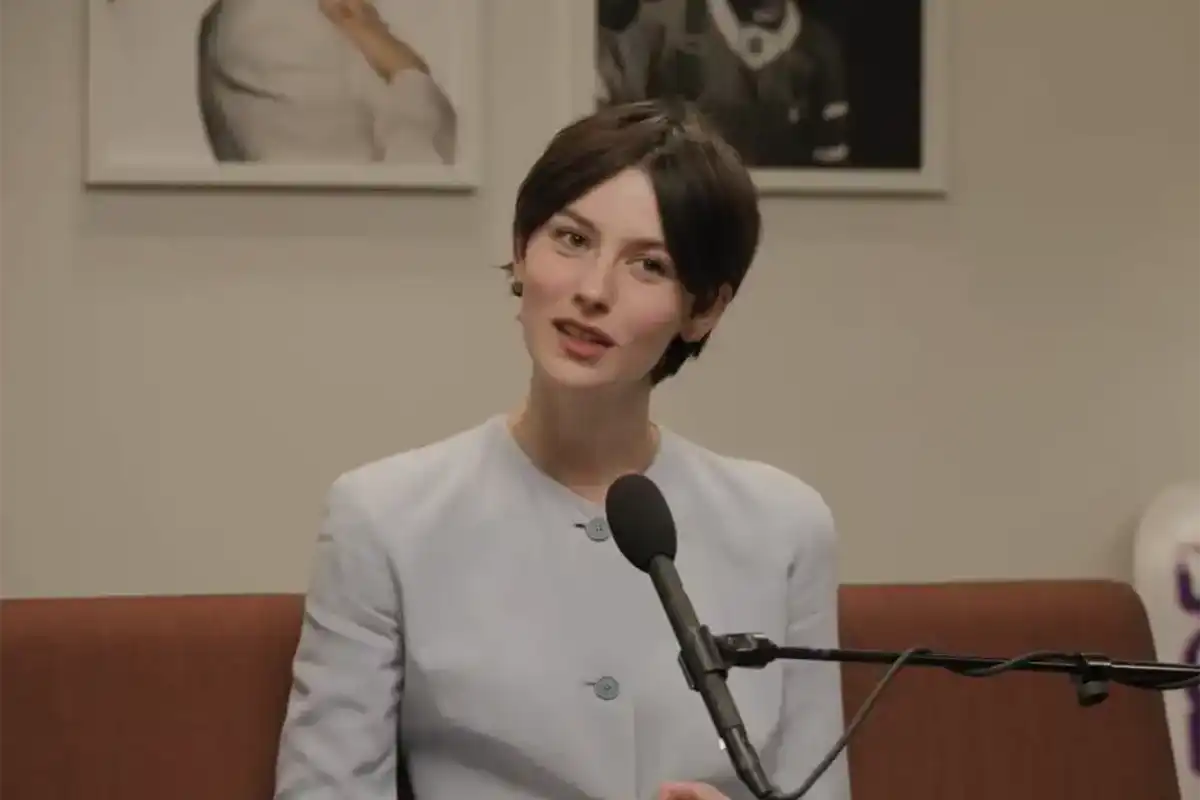
Grace Abrams on 'Popcast'
Gracie Abrams knows you think she’s a “nepo baby,” and she’s OK with it.
In an interview with The New York Times‘ Popcast about her upcoming third album Daughter From Hell, Abrams was asked by co-hosts Jon Caramanica and Joe Coscarelli about the discourse around having A-list director J.J. Abrams as her dad and Hollywood producer Katie McGrath as her mom and how that makes her a so-called “nepo baby.”
“The nepo stuff is obviously in the discourse appropriately,” Abrams acknowledged. “I think about the privilege there, and it’s like, I had a safety net, and that allowed me the ability to experiment and to concentrate and I had the gift of time to dedicate to doing this thing I loved. I wasn’t growing up afraid financially, and that’s the biggest deal.”
Beyond the financial, though, Abrams also spoke about the advantage of growing up with parents who understand both the entertainment industry and working in a creative field.
“The specific household that I was born into, there is just this vocabulary that I’m so lucky to grow up with,” she said. “So like, when I see people pointing that out, it’s like, I get it, hard-core. The jokes and things, I understand the tone of the Internet.”
Elsewhere in the hour-plus interview, Abrams explains the title of her July 17 album and what she put her mom through during adolescence.
This isn’t the first time Abrams has talked about the “nepo baby” discourse, which was popularized by a 2022 New York magazine cover story that highlighted the perceived privilege of the children of the rich and famous, including Zoë Kravitz, Lily-Rose Depp and Ben Platt. In a 2023 Rolling Stone interview, Abrams said she’s tried to keep her mom and dad out of her music career. “Obviously we can’t control where we are born into, and there are a million visible and even more invisible advantages to having family members who are in any entertainment industry. I know how hard I work, and I know how separate I’ve kept [my parents] from every conversation about anything careerwise, but of course you can understand what it looks like from the outside.”
- Gracie Abrams’ Third Album ‘Daughter From Hell’ Is on the Way: ‘So Ready for It to Be Yours’ ›
- Gracie Abrams to Embark on Arena Tour in Support of New Album: ‘I HAVE MISSED YOU’ ›
- Gracie Abrams Tells Olivia Rodrigo Why She’s Done ‘Pointing Fingers’ in Her Songs: ‘I Was Careless in the Past’ | Billboard Canada ›
- Gracie Abrams Says ‘Daughter From Hell’ Is a ‘Thank-You Note’ To Her Mom | Billboard Canada ›
- sombr Calls ‘Nepo Baby’ Label ‘Incredibly Insane’: ‘I Will Forever Respect My Dad & My Mom’ | Billboard Canada ›