Obituaries: Canadian Folk Artist Bruce Murdoch, Ska/Reggae Legend Stranger Cole
This week we also acknowledge the passing of blues-jazz guitar star James Blood Ulmer and Steve Almaas of the Suicide Commandos and Beat Rodeo
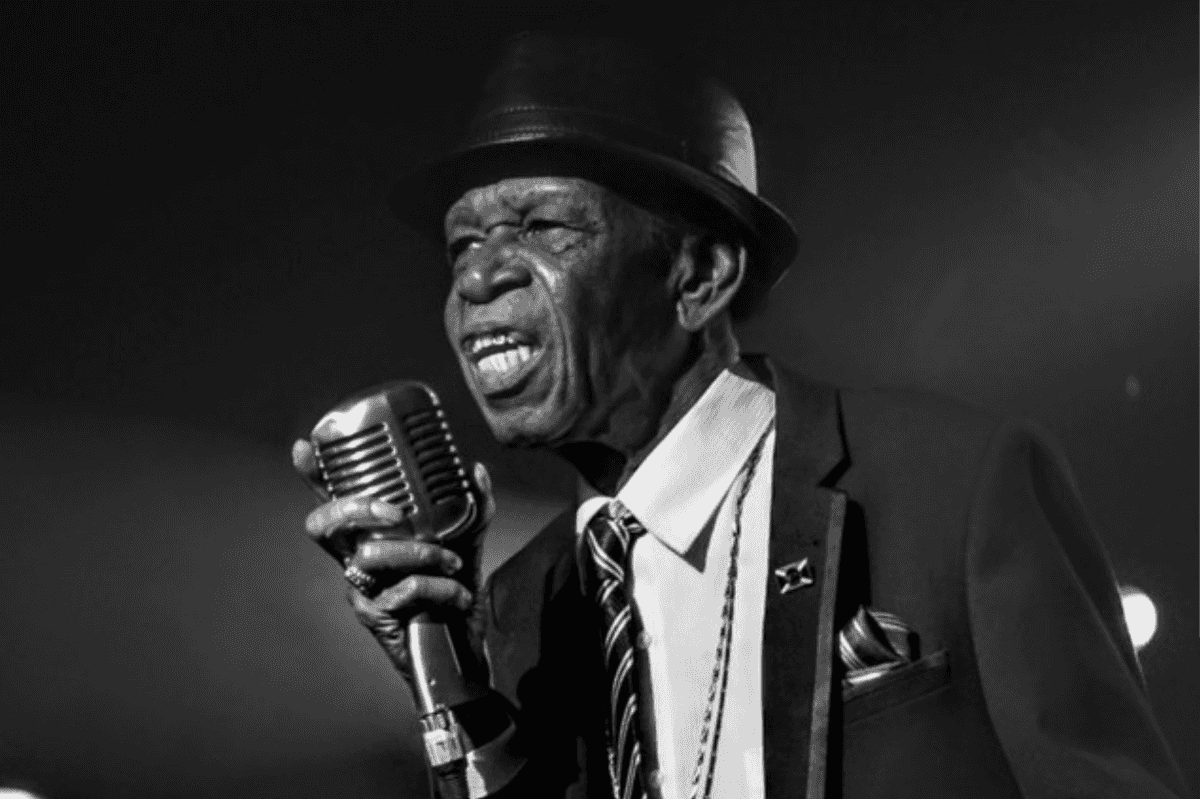
Stranger Cole
(Thomas) Bruce Murdoch, a Montreal folk singer-songwriter who made a splash in the late '60s before retiring from music for several decades then making a comeback, has died at age 78.
Veteran Montreal and Ottawa music journalist, folk club booker and radio host (CKUT's Folk Roots/Folk Branches show and CKCU) Mike Regenstreif was a longtime friend and admirer of Murdoch's work. In a 2011 blog post, he recalled that ''I’ve known Bruce Murdoch for a very long time – more than 40 years. His music – I’ve always thought he was a great singer and songwriter – and his friendship, have both been very important to me over the years.
''I was just 15 or 16, early in my involvement in the Montreal folk scene, circa 1969 or ’70, when I first met him. Bruce, who would still only have been 21 or 22 then, was back in town after five years or so of making an important mark on the U.S. folk world. In 1965, at 17, Bruce was one of four then-unknown artists – Richard Fariña, Patrick Sky and David Cohen (later David Blue) were the others – who made their debuts on The Singer-Songwriter Project LP.''
Citizenfreak notes that Murdoch ''was signed to Stormy Forest Records by Richie Havens shortly after making his way to New York City. The artist sang in several festivals, including the New York Folk Festival and the 1968 Newport Folk Festival — he even had the pleasure of performing at Carnegie Hall. The folk singer went on to write the campaign song for presidential peace candidate Eugene McCarthy."
He later recorded 33 1/3 Revolutions per Minute, a full-length 1970 LP with producer Havens. Murdoch was tipped for big things on the New York City folk scene in those early years, but his career moves didn't pan out.
Canadian record industry veteran and art gallery owner Ralph Alfonso tells Billboard Canada one example: ''Bruce told me he lost his Columbia Records deal when he was recording his demo with Al Kooper on keyboards and Jimi Hendrix (then Jimmy James ) on guitar. John Hammond suggested he change the word 'damn' in one of the songs as it wouldn’t get airplay (this was 1965). Bruce said no way and Hammond ripped up the contract. That demo session is unreleased and is sitting in the CBS vaults. I had a friend who deals with CBS to check and it is indeed still there.''
Upon his return to Montreal in the early '70s, Murdoch became active on the local folk scene. Regenstreif wrote that ''I was instantly captivated when I began to hear Bruce play at places like the Back Door, the Yellow Door and the Montreal Folk Workshop. When I started my first concert series at Dawson College in 1972, Bruce was the first artist I invited to play. Then, in 1974, when I took over the Golem Coffee House, Bruce was the first artist I invited to play there, too.
''By the end of the 1970s, after recording one final LP, the self-titled Bruce Murdoch, and for reasons that I fully understood, Bruce was done with the music scene. He needed to get away from it, to go somewhere where he had no history and start over. So he moved out west, went back to school, and became a high school teacher in small town Alberta. His Martin D-28 sat unplayed in its case for 25 years.''
Other career detours included work as a firefighter, a civic councillor, a drug counsellor and a first-responder. The itch to create music returned, as Regenstreif recalls.
''In the mid-2000s, Bruce let me know that the guitar was starting to come out of the case again, that songs were starting to come again. He promised that as soon as he was ready, mine would be the first radio show he’d play his songs on. As fate would have it, he made it just under the wire. He was on Folk Roots/Folk Branches with me on July 26, 2007, just five weeks before I signed off the radio show. Bruce’s new songs were different than the ones he was writing in the 1960s and ‘70s. They were generally more personal and less obviously political, but, they were every bit as compelling.''
In 2008, Murdoch released another solo album, Matters of the Heart; marking his return to the stage and the studio after a long absence, followed by another full-length recording, Sometimes I Wonder Why the World, in 2011. After a long spell out West, he returned to Quebec late in life, living in Ormstown, a small town south of Montreal.
Murdoch also became an author, writing a short stories collection, The Grampy Tales and Stories, as TB Murdoch . It was published by Amaranth.
Although not a household name, even in Canadian folk music circles, Murdoch had a major influence on other artists he befriended and encouraged.
One of those was acclaimed folk singer-songwriter Noah Zacharin, who tells Billboard Canada that ''I have always felt him guiding various aspects of my musical voyage over--it shocks me--50+ years..
''His guitar skills easily went from dramatic to extraordinarily tender. Richie Havens produced his first recording. Havens was, of course known for the voodoo he could do with rhythms, splitting bars of 4/4 into thirteen beats, etc. Bruce used some of that, strumming 16th notes to punctuate the air, and I learned some of that from him, most notably in a song called 'Pure as Love' that I'll be releasing on a record of archival material from before I turned 19.
''Bruce taught me not to be a snob about ONLY fingerpicking, and that the flatpick too has its place. He meant a great deal to me and to all those who knew him. The effect he had on the hearts of those who met him was quite amazing.
Ralph Alfonso hired Murdoch for a rare performance at his BBAM! Gallery in Montreal in 2013. He recalls to Bilboard Canada that ''it was two afternoon shows he did and at the first one, a guy came in all the way from New York to see Bruce and get his autograph for the Elektra sampler he was on.''
''He was a mysterious character. I did notice he played guitar with his thumb coming over the neck, kind of Richie Havens style (on whose label Bruce had an album on). Not very many people play like that. It’s like the thumb making barre chords.You need big hands.''
Present at that gallery show in 2013 was Montreal folk-rock artist Patrick Hutchinson. In a Facebook tribute, he notes that '' I only got to know Bruce a bit this century, in the course of Swift Years gigs in the Chateauguay Valley, where he lived latterly. He was a fine singer/songwriter and raconteur, and general larger-than-life character.''
International
Stranger (Wilburn Theodore) Cole, a legendary Jamaican ska, rocksteady and reggae singer who lived in Toronto for many years, died on June 11, at age 83.
Cole's long recording career dates to the early days of ska in 1962. An entry in the Canada Black Music Archives (CBMA) reports that ''Cole was born in Kingston, Jamaica in July of 1942. He was nicknamed 'Stranger' by his family members as he did not resemble anyone in his family. He began his career as a successful songwriter and wrote the hit 'In and Out the Window' for Eric 'Monty' Morris, which would allow him to make his recording debut.''
''He found success in 1962 with the tracks 'Rough and Tough' and 'When You Call My Name.' He continued to climb in success in the '90s, performing duets and working with famed Jamaican producers such as Clement 'Coxsone' Dodd, Prince Buster, Bunny Lee, Lee Perry and Sonia Pottinger.''
To Billboard Canada, Phil Vassell, executive director of the CBMA, explains ''Stranger Cole has left a huge legacy in Jamaican music as a singer who has taken ska, rocksteady and reggae internationally. From Jamaica, where he had a variety of hits, to the UK where he lived for a short while and then Toronto for an extended period.
''Making a living as a reggae musician in Canada has always been a challenge. So this former tailor refused to give up on his passion for music and opened a record store selling records in Kensington Market here in Toronto. He was the first to do so.
''He later returned to Jamaica where opportunities to perform were much better. As a veteran artist who had also performed as a duo with Ken Boothe, Stranger Cole's catalogue of hits provided him with the opportunity to perform at Reggae Sunsplash, the largest and most influential reggae festival at the time. His name still resonates with a generation of Jamaican music fans who can still sing along with early ska hits.''
Some observers consider Cole's 1968 hit "Bangarang" to be the first reggae song. It was recorded in 1968 at Duke Reid's Studio with sound engineer Bunny 'Striker' Lee where Cole performed the song with saxophonist Lester Sterling and keyboard player Lloyd Charmers.
Cole emigrated to England in 1971 and performed there extensively, eventually moving to Canada in 1973, settling in Toronto and opening his record store in Kensington Market. It was in Canada where Cole released his first album, Forward in the Land of Sunshine, in 1976.
Cole released his first album in twenty years in 2006, titled Morning Train, a collaboration with Jah Shaka. He is featured in the 2009 documentary Rocksteady: The Roots of Reggae, where he and other musicians from the “rocksteady” era reunited to form an album under the same name. The album included appearances from Marcia Griffiths, Ken Boothe and Leroy Sibbles among others, and was released in 2009.
He would continue to release a large number of albums over the years, mostly on his own label. His final album, a retrospective collection entitled Storybook Revisited, came out in 2019.
Cole's sons, Squiddly and Marcus, followed him into a music career: Squiddly working as a drummer for artists including Ziggy Marley and Mutabaruka; and Marcus Cole (aka KxritoXisen) producing music for his father.
James Blood (Willie James) Ulmer, an adventurous and acclaimed American jazz, blues and funk guitarist and vocalist, died on June 3, at age 86, reportedly of cardiac arrest. In a statement, his family noted “His music was fearless, and so was his spirit.''
A Guardian obituary calls Ulmer ''a musician who spliced jazz, funk and blues, including in a spell on a major label in the early 1980s.''
"Ulmer’s music career started out in funk bands, shuttling from Pittsburgh to Columbus to Detroit – and backing musicians such as Jewel Bryner and Hank Marr – before settling in New York in the early 1970s. “I ain’t never thought nobody could make no money playing free music,” he later said. “So I always played structured blues, rhythm playing, dance music, or something like that. And I abandoned it! When I came to New York, it was like … I just went totally another way.”
''As well as playing there with Art Blakey, Joe Henderson and Rashied Ali, Ulmer was mentored by Ornette Coleman, who schooled him in his 'harmolodic' theory: avoiding regular keys and harmonics in favour of a freer approach to sound. That spirit would inform Ulmer’s entire career from then on, characterised as it was by instinctive, unbounded playing even as Ulmer began to embrace songwriting.
Free jazz pioneer Coleman co-produced Ulmer’s debut album Tales of Captain Black, and Ulmer released his next album, Are You Glad to Be in America?, on the UK’s Rough Trade label. The Guardian notes that 'the spirited social commentary on the title track made it a signature song, and he ended up supporting punk and rock bands such as Public Image Ltd and Captain Beefheart.
Ulmer collaborated with jazz saxophonist Arthur Blythe, contributing to his album Lenox Avenue Breakdown (1979) and Illusions (1980): released on Columbia, the sessions earned Ulmer a Columbia record deal of his own. The three albums he put out with Columbia between 1981 and 1983 – Free Lancing, Black Rock and Odyssey – were remarkably progressive for a major label. Free Lancing had him hailed in Rolling Stone as “the most original electric guitarist to emerge since the late Jimi Hendrix."
Ulmer's band Music Revelation Ensemble, featuring saxophonist David Murray, bassist Amin Ali and drummer Ronald Shannon Jackson, put out their debut No Wave in 1980 and would end up releasing six more albums.
Ulmer was briefly signed to Blue Note for 1987’s America – Do You Remember the Love?, and continued to release studio albums during the 1990s and 2000s as he focused less on jazz and more on blues. Blue Blood (2001) featured an impressive band including Bill Laswell, Amina Claudine Myers and Funkadelic’s Bernie Worrell. Released the same year, Memphis Blood: The Sun Sessions earned Ulmer his only Grammy nomination, for best traditional blues album.
Ulmer's distinctive guitar playing appears on records including Ry Cooder’s score for Wim Wenders’ 1997 film The End of Violence, and on Phrenology by hip-hop group the Roots. He eventually retired in 2024, playing his final concert at that year’s Detroit jazz festival.
Veteran Toronto concert promoter Serge Sloimovits worked with and befriended Ulmer. He tells Billboard Canada that ''I am so lucky to have worked with some of the great Jazz musicians for so many years. James Blood Ulmer is one of them – from Paris to NYC and in Toronto in the '90s and early 2000s.
''His free-thinking style caught the ear of Ornette Coleman and many others recognize him as a pioneer and first major guitarist to play free jazz.I started promoting shows by the trio in Paris, consisting of Ornette, Charlie Haden and Ulmer. He’s one of the last generation with a direct connection with Free-Funk jazz/Freejazz."
Another noted Canadian music industry figure, Ian Menzies, posted this tribute on Facebook: ''I was lucky to cross paths with James Blood Ulmer 3 times in my life – and two of those I even got a chance to talk with him a little bit. He was an absolutely idiosyncratic musical force and an unrelenting iconoclast. We won't see his kind again on this mortal plain... may he rest in peace.''
Steve Almaas, a singer-songwriter and bassist in influential Minneapolis punk band the Suicide Commandos and leader of Beat Rodeo, died on June 5, due to complications of recurrent cancer. He was 69.
In its obituary, The Current reports that Almaas ''helped kickstart a local punk scene as a founding member of the Suicide Commandos. Almaas led the country rock group Beat Rodeo, and was an accomplished solo artist.''
Born in Minneapolis, Almaas formed the Suicide Commandos in 1975 with guitarist Chris Osgood and drummer Dave Ahl. They released their debut album, Make a Record, in 1978. According to The Current, ''their raw, unflinching style was apparent on tracks like 'Burn It Down' and 'Complicated Fun.' Their energetic noise has been cited as an inspiration for the revolutionary ‘80s independent rock scene that eventually included Hüsker Dü, the Replacements, and countless other Twin Cities noisemakers.''
In its obituary, Parade also noted that ''though they only released two 7-inch EPs and one album during their initial run from 1975-1980, The Suicide Commandos were hugely influential, paving the way for future acclaimed Twin City rockers.
''After the band split, Almaas relocated to New York where he formed the Crackers, and worked with such indie rock stalwarts as Richard Barone of the Bongos and Mitch Easter, who would later produce R.E.M. and form Let’s Active. Initially, Almaas recorded a four-track EP titled Beat Rodeo with help from Barone and Easter. Later he formed a band called Beat Rodeo that landed a deal with IRS Records, the home of R.E.M. and the Go-Go’s, after first signing with a German label.''
IRS Records put out two albums by Beat Rodeo in the mid-’80s. Almaas went on to release six solo albums and also played in The Bongos, The Raybeats and The Del-Lords. He played with the reformed Suicide Commandos, who released Time Bomb, their first album in 38 years in 2017.
The Suicide Commandos again reformed in 2023 to perform at the Big Hits of Mid-America Volume Three vinyl re-release event at Hopkins Center of the Arts. The performance was released as the live album Highway 16 Revisited.
Into late 2025, Almaas was performing shows leading The Steve Almaas Selection. Due to a return of his cancer that he detailed on Facebook, he had to bow out of participating in the Suicide Commandos’ Farewell Blowout Show at First Avenue in late March. He was present in spirit (and on the big screen) during the star-studded evening featuring appearances by Bob Mould and Craig Finn.
In addition to his musical endeavors, Almaas was a longtime teacher in New York City.