Hugh's Room Live Seeks New Location After 37% Rent Increase
A confluence of urban realities is not only threatening live music clubs but also the musicians who for decades have added vibrancy to populated areas increasingly defaced by condo sticks and the sameness of neon-branded chain stores.
By David Farrell
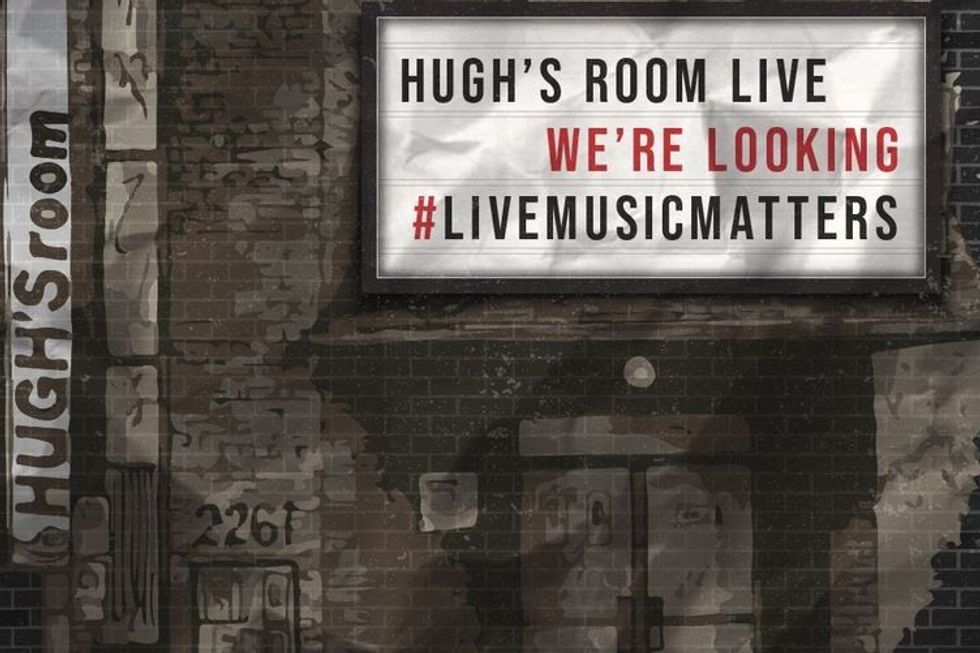
Hugh’s Room Live, the long-running live music venue in Toronto’s west-end, has reached an impasse with its landlord and is set to close on March 31.
The governance board for the 200-seat room, one that has become a cornerstone for folk, jazz and blues acts in the city, issued a communique Thursday that states that a 37% increase in rent has forced its hand in leaving the space, but makes clear that ongoing discussions with other spaces are in the works.
“We want you to know that our discussions with our present landlord have been extended and excruciatingly difficult. Last week - having exhausted efforts to secure a long-term arrangement - we finally received the landlord’s terms for a six-month extension to our current lease, a 37% increase over current rent. Needless to say, this is beyond our means to pay, particularly after having faced a 59% increase in property taxes last year.
“We are in discussions with developers, commercial property owners, and the city to identify a permanent home for Hugh’s Room Live. In particular, we are pursuing the vacant St. Patrick Market on Queen Street West and made this presentation to the Grange Community Association last December. There is a Working Group formed by Councillor Joe Cressy to determine its future uses, and that process will take some time. Your support and endorsement for our proposal would be most welcome.
“We will continue to explore a longer-term solution to continue to bring provide the best listening experience for you. Any thoughts that you may have in this regard are also invited.”
Opened in 2001 by Richard Carson and named in memory of his brother Hugh, a former folk musician who had dreamed of opening his own performance venue before his death of cancer in 1999 (Wikipedia), Hugh’s Room Live has operated as a registered charity since 2017 when a group of volunteers banded together and raised $150,000 to save the venue from closure and re-open it as a not-for-profit.
The story behind the club is quite extraordinary and has become part of the city’s longstanding folk history (read here), and, as important, it has become an oasis for a range of acts playing outside the commercial mainstream. It is also one of a growing number of live music spaces across the continent that is being forced to confront rent increases that slice away any chance of profitability.
The conundrum faced by live music clubs that don’t own their own real estate is bedevilling urban touring spaces across North America, and rental costs are also squeezing musicians and other creative types to uproot from cities as affordable apartment rental costs balloon. As of January 2019, the average wage for Canadian employees across the nation was $1,011.62 per week before taxes. In Toronto, the median monthly cost of a one-bedroom apartment has risen to $2,299, eclipsing a similar monthly rate of $1,949 in Vancouver.
Club closures and the rising cost of living in urban clusters are just a part of a tyranny of financial consequences faced by musicians today, many of them documented in Music Canada’s well-documented report, Closing the Value Gap: How to fix Safe Harbours and Save the Creative Middle Class.
The financial peril facing musicians in 2020 is being documented in FYI’s ongoing Surviving As A Musician series, and nuanced by Manteca’s Matt Zimbel in today’s publication.
We wish the Board of Hugh’s Room Live the very best in finding a future for an honourable venture that deserves a fighting chance.