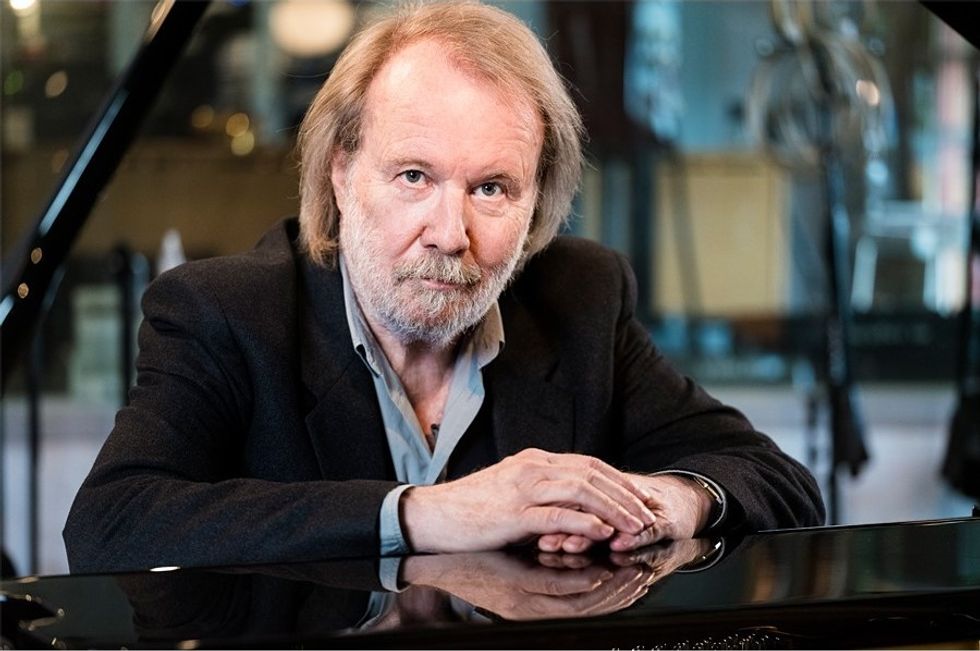
Abba's Benny Andersson On Songwriting
So many songs are now written by committee, and I don’t understand how that works because for me a song starts with melody combined with chords.
By External Source
Who are your favourite songwriters from any era?
Well if we extend it to include composers, it is Johan Sebastian Bach at number one – and then comes nothing for a long time. Then people like Richard Rodgers, Irving Berlin, Lennon and McCartney, of course, Brian Wilson, one of my heroes, Ray Davies, Tony Hatch. I won’t be able to remember all the names. And I like the work of [fellow Swede] Max Martin; he knows what he’s doing.
But, so many songs are now written by committee, and I don’t understand how that works because for me a song starts with melody combined with chords. I arrange the song, with bass and drums, after the song is finished, not the other way around. If I start with the drums and the bass and then add some chords, randomly, and then try to write a melody… I don’t know how that works; I don’t get it.
What that lacks, I think, is a ‘sender’. If someone likes my music, that’s me; it’s me sending it to you. If there are seven people behind it, are they all honest? Do they all mean it?
– Benny Andersson, the founding member of Abba, in an interview published by Music Business Worldwide