advertisement
Billboard is a part of Penske Media Corporation. © 2023 Billboard Media, LLC. All Rights Reserved.

advertisement
Latest News
advertisement
BILLBOARD CANADA FYI
A weekly briefing on what matters in the music industry
By signing up you agree to Billboard Canada’s privacy policy.

advertisement
advertisement
FYI
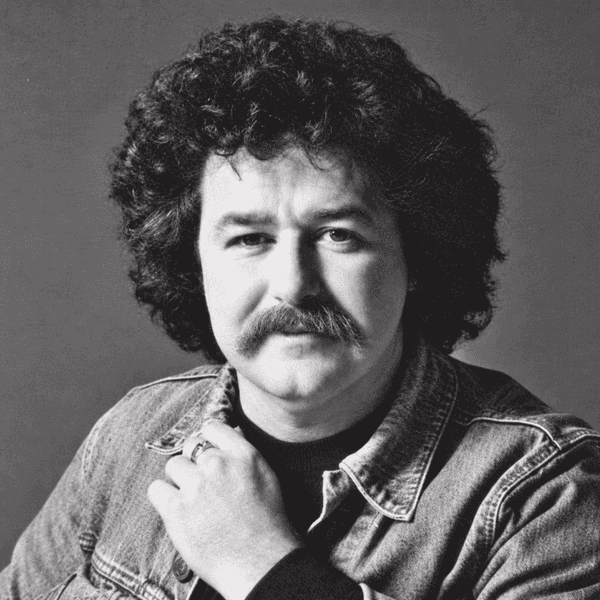
Obituaries: Toronto Harmonica Ace/Vocalist Howard Willett Remembered By His Peers
This week we also acknowledge the passing of The Cure keyboardist/guitarist Perry Bamonte, bubblegum hitmaker Jerry Kasenetz, influential U.S. label head Howie Klein and innovative jazz musician Michal Urbaniak.
32m
Howard Willett, a vocalist and harmonica player with the Bebop Cowboys, Whiskey Jack and many other Ontario country/roots outfits, died on Dec. 31. His age has not been reported.
On his Perlich Post blog, Toronto music journalist Tim Perlich says, "I'm saddened to hear that Parry Sound-born singer/harmonica ace Howard Willett has passed away. Howard was a longtime performer on the Toronto scene, well known for his work with the Bebop Cowboys, Swing-a-Billy Orchestra, Whiskey Jack, Junction City AllStars, The Shifters and many others. He'll be greatly missed."
Willett toured Canada a number of times with R.W. Pawley and later the Good Old Boys. He appeared on CBC Radio and Television and guested with Jack deKeyzer, Downchild Blues Band, Danny Brooks and more.
advertisement
His stint in veteran Toronto bluegrass/roots band Whiskey Jack was a notable one. That group's leader and producer, Duncan Fremlin, tells Billboard Canada in a tribute that "around lunch time on New Year's Eve, I answered a call from my musician friend, Bill Heffernan, telling me that our favourite harmonica player had just died.
"Howard Willett had played in both our bands so we knew him well, or so we thought. I spent that afternoon listening to some of Howard’s performances on many of the tracks I recorded during his years in Whiskey Jack. I even had a few videos that I used to create a tribute on behalf of the band. Within seconds of posting the video, the accolades began to arrive, not just from fans but from bandmates and childhood friends who knew him as a young man in Parry Sound."
"I then began to appreciate the source of Howard’s genius. Only some of us knew of him as being born into a proud Metis family dating back to the War of 1912, or working as a French surveyor on Baffin Island, or a butcher in Bermuda, or a taxi driver in Parry Sound and so on — all the while teaching himself how to 'blow' a harmonica. That small instrument, combined with a singing style that was all emotion, drew large audiences of fans in many genres, blues, country, jazz, bluegrass and folk."
advertisement
Reports suggest that Willett first started performing publicly sitting in on jams while working as a meat-cutter in Bermuda.
Acclaimed Toronto-based country swing combo the Bebop Cowboys released three albums between 2004 and 2006: Debut, Some Kind of Fantasy and Canadian Dance Hall. Group leader Steve Briggs informs Billboard Canada that "Howard was featured on all three recordings. He was a founding member with myself in 2002, and he performed with us the last time in 2016 at the Monarch Tavern in Toronto."
In a Facebook post, Briggs notes that "Our first CD Debut was released after a wonderful residency at Sam Grosso's Cadillac Lounge on Queen St. W. in Toronto. The band toured Canada in the subsequent years, including a Christmas tour with Stuart MacLean's Vinyl Cafe in 2006. Howard's harmonica was what reinforced the gritty blues flavour in the band's nascent sound at the time and it was so much fun! I remember how much he loved being a part of the band. Safe travels, Howard...and thanks for the music."
advertisement
Willett also played alongside a Whiskey Jack bandmate, Bob McNiven (formerly Stompin' Tom's guitarist), in a Toronto roots music duo, Roots and Branches. They expanded into a trio around 2018 with the addition of Dave McManus on bass. McManus tells Billboard Canada that "In addition to Howard and Bob's originals, that group played mostly country, country-swing and some blues. For a while Roots and Branches was a regular fixture at the Cadillac Lounge."
advertisement
In 2020, Willett joined Junction City All-Stars, a musical collective headed by McManus, who states that "Howard's uniquely inventive style of blues harp and soulful vocals were a perfect fit with our blues and New Orleans R&B repertoire. Principally a live performance band, we did cut a couple of sides during the Covid years. Howard's last appearance with us was in November just before his failing health caused him to be hospitalized. "
Another Toronto group with whom Willett regularly performed was the Bill Heffernan Homeland Security Roadhouse Band. Group leader Heffernan tells Billboard Canada that "Howard also appeared on my 2016 release, The Horses Are Loose, and was featured prominently on the track 'Hey Mr. Dylan.'"
"Howard was a real fan favourite at the Saturday Sessions that I hosted and curated at the Gate 403 and later to this day, when we moved to the Inter Steer Tavern, both locales situated on Roncesvalles Ave. in Toronto."
Willett released just one solo album over his career, 2014's Blue Smoke, featuring the track, "She's On The Ball."
Howard Willett's popularity amongst his peers has been showcased by the many tributes they posted on social media or shared with Billboard Canada.
Roots music drummer Stephen Pitkin (Elliott Brood) sent Billboard Canada this tribute: "I played maybe half a dozen gigs with Howard and the Bebop Cowboys a ways back, around the turn of the century. He was a really sweet guy. Back then the band was in its infancy, playing almost 100% covers. I was happy later to see that the group delved into more of an original band vibe, carving a particular and, in my opinion, culturally vital niche."
"Howard was a brainchild of that, curating his song picks with a lot of insight and depth of knowledge . He transformed my opinion of what a harp player could be, as he presented more like a humble musicologist with a good sense of humour. To that point, my opinion of harmonica players was more of like a hanger-on who hogs the mic, over top of vocals and everything else. Howard was definitely not that. He was 100% a musician, and I gained from his understanding and at times his understatement."
advertisement
In his Billboard tribute, Duncan Fremlin also observes that "For me, Howard's genius took over when he was in front of a crowd. Some players are like that. Standing on stage with him night after night, when he was under the spotlight, he took the mic and 'owned the room' for one of his off-the-cuff solos, crafted, designed and presented with a sense of purpose and direction, a skill very few improvisers master.
"In simple terms, he made us all sound better and our crowds grew larger during the years he played with us. Howard Willett was a dear soul with a giant heart. The Canadian music community is a bit quieter today."
Bill Heffernan, in a Facebook post: "RIP my friend Howard...and thank you for our countless times together on stage, our recording sessions and our social get togethers. You will now be joining two other illustrious alumni from the Bill Heffernan Homeland Security Roadhouse Band, Gordie Goidwin and Bob McNiven, up in the Celestial Ballroom-- how about a round of tequilas, boys. We'll miss you Howard."
advertisement
Noted Toronto recording studio owner and engineer and James Paul (The Rogue), to Billboard Canada: "I first made Howard’s acquaintance when he came to record what I believe was his first demo. I have little memory of the actual sessions but I clearly recall Hawksley Workman, who was my assistant engineer for them, turning to me and saying 'this guy is alright.' Hawk was right, Howard was alright in every way.
"Years later, Howard returned with the Bebop Cowboys. I was really thrilled with his playing then and, as always, the wry smile and sense of humour. Most recently, I saw and chatted with Howard regularly in the halls at PAL [ Performing Arts Lodges] where he lived, and the nearby St. Lawrence Market. A kind man, I would see him playing with buskers to boost their presence on the streets. I loved hearing him practice from the courtyard balconies at PAL."
International
Perry (Archangelo) Bamonte, longtime guitarist and keyboardist for The Cure, died over the Christmas break, at age 65.
The band made the announcement on their official website on Dec. 26, noting in their statement that "Quiet, intense, intuitive, constant and hugely creative, ‘Teddy’ was a warm hearted and vital part of The Cure story."
Billboard reported that "The musician joined the band — which is comprised of frontman Robert Smith, Simon Gallup, Reeves Gabrels and Jason Cooper — full time in 1990 after initially joining as a roadie in 1984. He played the guitar, six-string bass and keyboard on 1992’s Grammy-nominated Wish, which peaked at No. 2 on the Billboard 200 and included Billboard Hot 100 hit 'Friday I’m in Love'; 1996’s Wild Mood Swings, which reached No. 12; 2000’s Bloodflowers; 2001’s Acoustic Hits and 2004’s self-titled album."
Bamonte left the band in 2005 after 14 years and more than 400 shows together. He rejoined The Cure in 2022, playing another 90 well-received shows, culminating with The Show of a Lost World concert in London 1st November 2024.
He was inducted into the Rock Hall of Fame as a member of The Cure in 2019.
Jerry (Jerrold H.) Kasenetz, who with his production partner Jeff Katz was one of the hottest producers of bubblegum music in the late 1960s, died Dec. 6, at age 82. The reported cause of death was complications from a fall at his home.
Kasenetz met the Brooklyn-born Katz when both were undergraduates at the University of Arizona. They promoted a campus concert by the Dave Clark Five.
Kasenetz and Katz’s first production was for R&B singer Christine Cooper. “S.O.S. Hearts in Distress” bubbled under the Hot 100 at No. 101 in February 1966
.A Billboard obituary reports that "Kasenetz and Katz were never nominated for a Grammy, nor are they in the Songwriters Hall of Fame. But they found their niche and delivered hit after hit. Between 1967-68, Kasenetz and Katz produced six million-selling singles, including five that reached the top five on the Billboard Hot 100: The Music Explosion’s 'Little Bit o’ Soul' (No. 2); Ohio Express’ 'Yummy Yummy Yummy' (No. 4); and 1910 Fruitgum Co.’s 'Simon Says' (No. 4), '1,2,3 Red Light' (No. 5) and 'Indian Giver' (No. 5). Their million-seller that missed the top five was Ohio Express’ 'Chewy Chewy' (No. 15)."
In 1968, they had a top 30 hit on the Hot 100 as artists. Kasenetz-Katz Singing Orchestra Circus reached No. 25 in December 1968 with “Quick Joey Small (Run Joey Run).”
Kasenetz-Katz had most of their successes on Neil Bogart’s Buddah Records: Ohio Express, 1910 Fruitgum Co. and their own hit. They sometimes used the nameplate Super K Productions.
In 1969, Crazy Elephant (on Bell Records) took “Gimme Gimme Good Lovin,” another Kasenetz-Katz production, to No. 12 on the Hot 100.
Bubblegum reached its peak of popularity at the same time that hard rock, at the opposite end of the musical spectrum, became a major force.
Nearly a decade removed from their run of hits, Kasenetz-Katz produced one more big hit: Ram Jam’s rock-leaning rendition of “Black Betty,” a song recorded by Lead Belly in 1939, which hit No. 18 in September 1977.
Howie Klein, an influential and forward-thinking U.S. record executive and political activist, died on Dec. 24, at age 77, after a battle with pancreatic cancer.
A Billboard obituary notes that "Klein's artist-first philosophy helped bring alternative music into the mainstream. Widely respected for championing creative freedom and resisting censorship, Klein left his mark on the music business through influential roles at Sire Records and Reprise Records, as well as earlier work in radio and indie labels."
Klein, a Brooklyn native, launched his music career in the late 1960s while studying at Stony Brook University on Long Island, where he wrote about music and booked concerts. After relocating to San Francisco in the 1970s, he emerged as a prominent DJ at KSAN-FM and co-founded 415 Records, an indie label that became a key incubator for punk and new wave acts including Romeo Void, Translator, Wire Train and the Nuns.
At 415, Klein also developed forward-thinking ideas about record promotion, arguing as early as 1980 that labels should target college radio stations strategically rather than flooding the system with unwanted promo copies — an approach that anticipated modern data-driven marketing.
In the mid-1980s, Klein joined Seymour Stein’s Sire Records, rising to managing director and working closely with a roster that included Lou Reed, the Ramones, Talking Heads, Depeche Mode and Uncle Tupelo. When Stein moved Sire’s distribution from one Warner Music label to another (Warner Bros. Records to Elektra) in the mid-1990s, Klein hung back and was named president of Reprise Records in 1995. During his six-year tenure, he oversaw a remarkably eclectic lineup, including Green Day, Wilco, Fleetwood Mac, Paul Westerberg, Enya, Depeche Mode and Canadian stars Alanis Morissette, Neil Young and Joni Mitchell.
Klein departed Reprise suddenly in 2001 following the Time Warner–AOL merger. Billboard notes that "after leaving Reprise, Klein turned his focus to political activism, serving on the board of People for the American Way and launching the liberal blog DownWithTyranny!."
In 2011, the Rock & Roll Hall of Fame and Museum archived the Howie Klein Collection, preserving materials from his career that document a transformative era in modern music history.
Michał Urbaniak, a Polish jazz musician who played violin, lyricon, and saxophone and found success in the U.S., died on Dec. 20, at age 82.
Urbaniak was born in Warsaw. Learning to play on the alto saxophone, he first played in a Dixieland band, and later with Zbigniew Namysłowski and the Jazz Rockers. After this, he was invited to play with Andrzej Trzaskowski, and toured the United States in 1962 with the Trzaskowski band, the Wreckers, playing at festivals and clubs in Newport, San Francisco, Chicago, Washington, D.C. and New York City.
After returning to Poland, he worked with Krzysztof Komeda's quintet (1962–1964), then relocated to Scandinavia, where Urbaniak remained until 1969. There he created a band with Urszula Dudziak and Wojciech Karolak, which gained considerable success and was later to be the starting point for Michał Urbaniak Fusion.
After Urbaniak returned to Poland agaIn and the violin, he created the Michał Urbaniak Group. In 1973 he emigrated with Dudziak in 1973, to the United States, where he lived as a U.S. citizen.
Urbaniak signed a contract with Columbia Records, who released the West German album Super Constellation under the name Fusion. In 1974, Urbaniak formed the band Fusion and introduced melodic and rhythmic elements of Polish folk music into his funky New York-based music. With this band Urbaniak recorded another album for Columbia in New York: Atma.
Later projects included Urbanator (the first band to fuse rap & hip-hop in jazz), Urbanizer (a project with his band and four-piece R&B vocal group, 1978) and UrbSymphony. From 1970 on, Urbaniak played his custom-made, five-string violin furnished especially for him, a violin synthesizer nicknamed "talking" violin; soprano, alto and tenor saxophones; and lyricon, an electric saxophone-like horn.
He went on to play in well known clubs such as the Village Vanguard and Village Gate and in famous concert halls such as Carnegie Hall, Beacon Theatre, and Avery Fisher Hall.
keep readingShow less
advertisement
Popular
advertisement
Published by ARTSHOUSE MEDIA GROUP (AMG) under license from Billboard Media, LLC, a subsidiary of Penske Media Corporation.
advertisement