Kneecap Banned From Hungary for Posing ‘National Security Threat’
"We stand against all hate crimes and Kneecap champions love and solidarity as well as calling out injustices where we see it," the Irish trio wrote on social media.
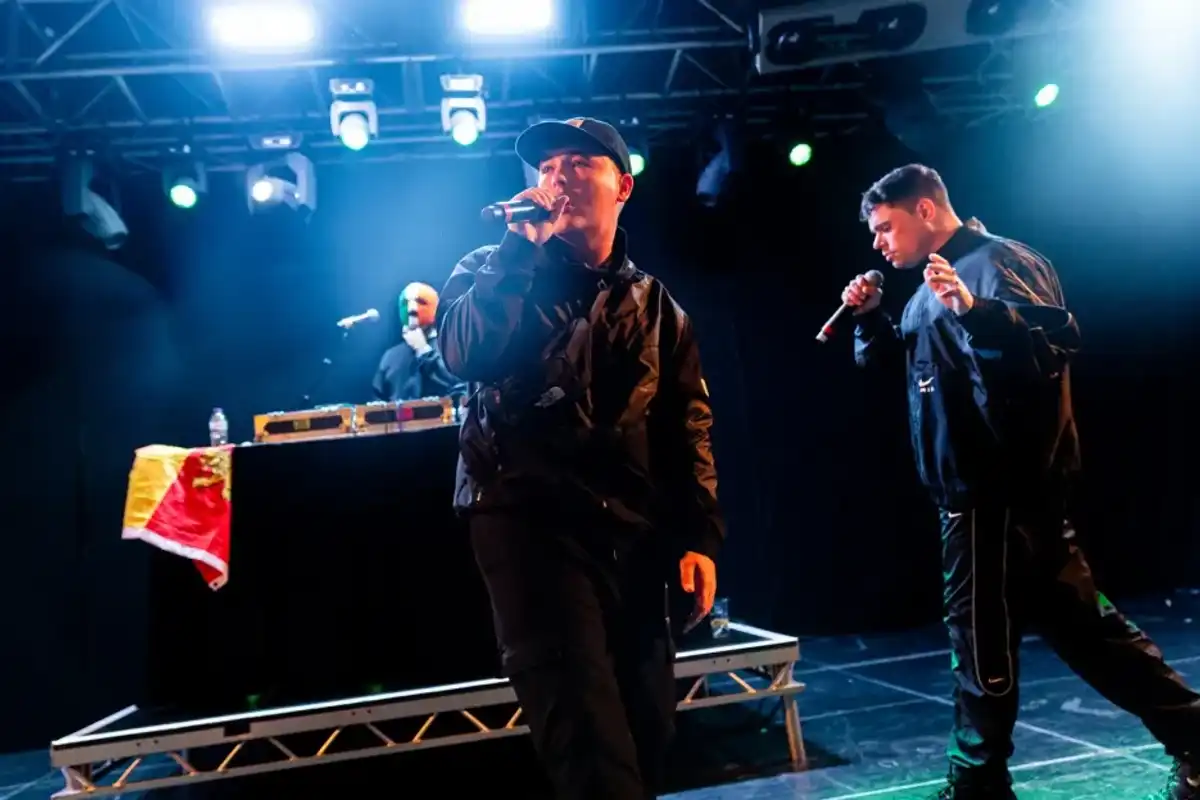
Mo Chara, DJ Próvaí and Móglaí Bap of Kneecap performs at Tramshed on October 01, 2024 in Cardiff, Wales.
Irish rap group Kneecap will not be performing in Hungary next month, with the group now banned from the country for allegedly posing “a national security threat.”
Hungarian politician and spokesperson Zoltán Kovács announced the ban on social media on Thursday (July 24), explaining that the group’s planned appearance at Budapest’s Sziget Festival on Aug. 11 would not be going ahead.
“Kneecap are officially banned from entering Hungary—for antisemitism and glorifying terror,” Kovács stated. “When hate ignores the mail, we put it on a wall.”
“Kneecap’s members repeatedly engage in antisemitic hate speech supporting terrorism and terrorist groups,” he wrote in a follow-up statement. “Hungary has zero tolerance for antisemitism in any form.
“Their planned performance posed a national security threat, and for this reason, the group has been formally banned from Hungary for three years. If they enter, expulsion will follow under international norms.”
Kneecap themselves responded to the band with a statement hours later, apologizing to the “tens of thousands of fans who we were buzzing to see in person at Sziget.”
“The authoritarian government of Viktor Orban say we ‘pose a national security threat,'” the group wrote. “Which is f–king outrageous coming from a man who welcomed Netanyahu, a wanted war criminal, like a hero just a few weeks ago.
“There is no legal basis for his actions, no member of Kneecap has ever been convicted of any crime in any country. We stand against all hate crimes and Kneecap champions love and solidarity as well as calling out injustices where we see it.
“It’s clear this is political distraction and a further attempt to silence those who call out genocide against the Palestinian people,” they added.
Kneecap’s ban from the country takes place in the wake of their headline-generating actions of recent months, with the trio having gained greater attention following their appearance at Coachella in April. The group projected strong anti-Israel sentiments during their set – sentiments which they had claimed were censored during their first weekend appearance.
“Israel is committing genocide against the Palestinian people,” the projected messages read. “It is being enabled by the U.S. government who arm and fund Israel despite their war crimes. F–k Israel; free Palestine.”
While they would also gain similar attention for their performance at the Glastonbury Festival in June, and would be removed from the lineup of Scotland’s TRNSMT Festival, the group have also faced legal issues. Most notably, member Mo Chara (born Liam Óg Ó hAnnaidh) was recently charged for allegedly showing support for militant organizations Hamas and Hezbollah – both of which are defined as terror groups by U.K. law – in resurfaced videos from a past concert
Chara appeared at Westminster’s Magistrates Court on June 18, where he was released on unconditional bail and set a hearing date of Aug. 20.
“Much like the good people of Budapest, who defied their own President’s ban on their ‘Pride Parade’ in June, we will fight on for what is right,” Kneecap promised in closing their latest statement.