Five Questions With… Kyle Taylor of Death Party Playground
The Waterloo rockers release a debut full-length on Friday. Here their leader reflects on his musical past, important new songs, artistic evolution, life changes, and a memorable Brooklyn gig.
By Jason Schneider
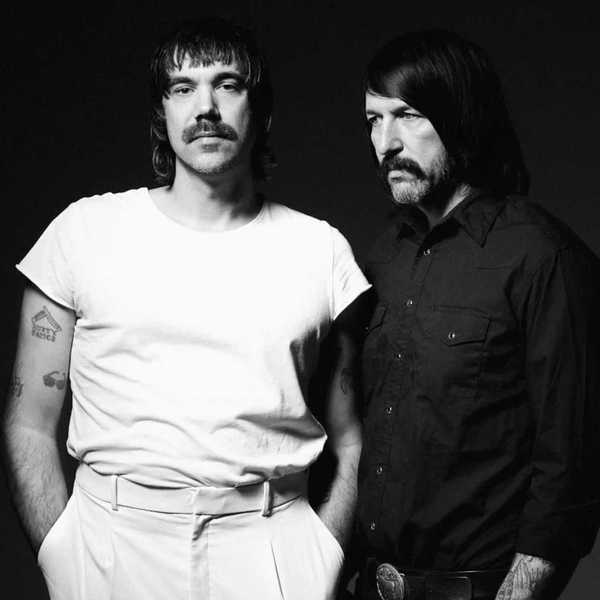
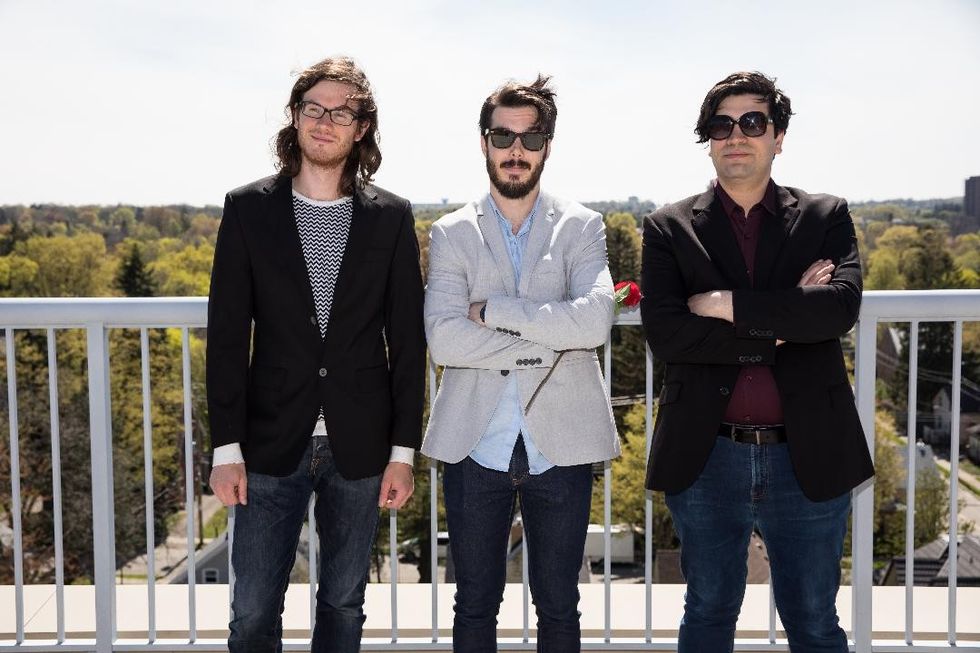
Death Party Playground makes serious rock and roll imbued with the wonder we all experienced when we first dropped the needle on a spinning black disc. Their full-length debut album Little Joy, out Jan. 17, is really the story of bandleader and multi-instrumentalist Kyle Taylor’s creative evolution. Based in the thriving university town of Waterloo, Ontario, Taylor has been a fixture on the local music scene for over a decade and began sharing his catchy power-pop anthems under the Death Party Playground banner in 2013.
Many of these, as well as a cache of new material, have been collected on Little Joy. On one hand, it showcases Kyle’s undeniable lyrical and melodic skills, but at the same time, it displays how Death Party Playground has become a true band, with bassist Dylan Bravener and drummer Sam Kargus providing the rhythmic backbone. The results are a combination of late-‘70s New York energy and early-‘90s Britpop drama, but most of all it’s the sound of a group of young musicians discovering their distinctive chemistry.
Songs like Love & Fidelity and Rubber Man literally leap out of the speakers, a far cry from earlier versions of these songs that made the rounds on the 2017 EP, Bruce Willis’ Jog Playlist #3. In many ways, Little Joy is the perfect example of how Taylor’s experimentation to this point has paid off, mostly in the lessons he’s learned about how to make a message more powerful by saying less.
Death Party Playground performs January 25 at Maxwell’s in Waterloo and you can hear more at deathpartyplayground.bandcamp.com
What makes Little Joy stand apart from your past work?
This is the first full-band release as Death Party Playground. In the past, I've recorded everything myself and played most of the instruments, but thanks to a grant from the K-W Arts Fund, Joe Shugan came on board to handle the recording this time around so I was able to focus just on playing and producing. We went into much more detail on Little Joy, ironing out some kinks and wrinkles that I might've let slide in the past.
What songs on the record are you most proud of and why?
Still Memories is a particular achievement. It's an important song to me, one I'd written some time ago that never made it off the back burner. It's in an open tuning and a lot softer than what we typically play so it wouldn't transition well to a live band. For the album, our drummer Sam and I took the original demo I'd made, which was only an acoustic guitar and two vocal parts, and fleshed it out with bells, percussion, four-part harmonies and a live string quartet. It has a beautiful swirling feel to it.
Love & Fidelity, alternatively, is a special moment in time we captured. We did all the bed tracks live-off-the-floor and Love & Fidelity really took off. I think we recorded it first thing in the morning and Sam was on fire. Dylan's bass lines just bounce all over the place and our keyboardist David played a great part. I'm pretty happy with that one.
How would you describe your artistic evolution so far?
My earlier songs were filled with lyrics. I try to say the same thing with less now. If it can be said with less, it’s usually a bit more poignant and powerful. Starting out, I never paid much mind to how different words are sung, and which ones sound nicer than others. I always consider that now. The importance of a good opening line wasn’t realized until later. It’s the listener's first impression, so it’s important. Knowing where to “cut the fat” from a song can be critical to whether it works or not. I also try to pay attention to the space between songs during a live performance. The show doesn't stop because the song stops. All the best live bands keep it rolling somehow.
What's been the biggest change in your life over the past year?
Well, I had a wild year. It started in Los Angeles and ended in Rio, Brazil, with a ton of places in between. I was on more planes last year than in my entire life combined. I basically realized that home is something you can take with you anywhere you are, which I guess is the same as saying “home is where the heart is.” I think that's true.
What's your best touring story?
Years ago, in a different band, we were set to play the Don Pedro in Brooklyn. At the time, none of us in the band had a car, but we were lucky enough to borrow a gracious friend's car for the tour. So we pull up to the Don Pedro and somehow lock our keys in the car. It's not our car, we're from a different country and we can't just call CAA to break into it for us. On a long shot, we walk into Don Pedro and ask if they know anyone who could help. “Yep, let me grab so-and-so, he's a car thief.” Sure enough, the man comes out with us, looks around on the street for a bit, finds a thin piece of metal on the ground, and picks the lock in less than 30 seconds. It was amazing. Nice guy.