advertisement
Billboard is a part of Penske Media Corporation. © 2023 Billboard Media, LLC. All Rights Reserved.

advertisement
Latest News
advertisement
BILLBOARD CANADA FYI
A weekly briefing on what matters in the music industry
By signing up you agree to Billboard Canada’s privacy policy.
advertisement
advertisement
Music
A 2026 Resolution: Remember The People Behind The Music (Guest Column)
In a year where it was hard to get a footing, Max Kerman of Arkells found meaning in human interaction. Let's remember the people — the stagehands, the crowds, the invisible ecosystem — that allow the things we love to exist in the first place.
5m
I’ve always been a bit wary about giving too much credit to art, in the grand scheme of things. It’s not the foundational part of the hierarchy of needs. I think that instinct comes from my mom — her Okay, let’s not get too carried away with ourselves disposition, which always carried a hint of suspicion when things felt a little too steeped in praise or flattery.
But there’s a generosity in that instinct. There’s a reminder to remember the people — the stagehands, the crowds, the invisible ecosystem — that allow the things we love to exist in the first place.
advertisement
- YouTube
Sam Fender’s “People Watching” was one of my favourite songs this year, and his People Watching album moved me in a way that rarely happens. His songwriting is singular in how intimate it is, but also outward-looking. He’s curious about the world around him. He writes about the struggles of characters in his hometown, the complicated feelings that accompany personal success, and the cost-of-living pressures that dominate a class-stratified England. I listened to the album countless times and am grateful it exists. It made this year better.
While listening to an episode of the Song Exploder podcast featuring Fender, I learned that “People Watching” is in part an ode to a drama teacher named Annie Orwin — a surrogate mother to Sam and other kids in his community. Sam describes having a hard time in school, and how his grandmother signed him up for a subsidized theatre group at a community centre. He talks about how Annie encouraged him, made him feel special, showed him that a life on the stage was a worthwhile pursuit — and how it changed the entire trajectory of his life.
At one point, he begins to cry, describing how he held her hand in the hospital during her final days. I found myself getting teary too, because I had the thought: if Sam doesn’t meet Annie, does the world get Sam? My guess is maybe not. And what a shame that would be — to not have his music, or the brilliant live show he’s shared with so many of us.
advertisement
2025 felt like a year where it was hard to find a sense of footing. We’re living in a strange dichotomy: the world is more connected and convenient than ever, but it often feels directionless. Beneath so many conversations is the same question: What does anything mean anymore? There are charts to tell you how popular a song is, and there are stats and polling to describe what’s happening — so why does it feel so difficult to quantify anything on a day-to-day, human level?
The swirling cacophony of ideas and information can distract from the thing we’re all actually after: meaning. And meaning — while just a feeling — has something tactile about it.
The things that offer me meaning tend to be incredibly tangible: the patrons and staff at my local coffee shop. Neighbours offering warm hellos in my building. The renovation at the park across the street, which has turned it into a beautiful, bustling space for families.
advertisement
The public elementary school around the corner displays a series of values, written beautifully across the building’s entrance: humility, respect, wisdom, bravery, honesty and truth. I reflect on those words every time I pass them, and on how they welcome every kind of student and deny no one. All the little Sams.
And while the temptation to migrate to a frictionless, online existence is a daily one — the convenience of having every possible piece of history at your fingertips — it’s the local things I witness with my own eyes and breathe in that feel most nourishing. I never feel empty or drained when I’m out and about, but I often feel the come down of a sugar high if I’ve spent too much time scrolling.
advertisement
I’m struck by how often I want to enjoy the finished product without sitting with the conditions that made it possible. How easy it is to love the music, the neighbourhood, the sense of culture — without looking too closely at what’s underneath it: the care, the patience, the public spaces, the people who show up long before anything is deemed “worth something.”
Any success I’ve experienced is in large part thanks to the countless people I’ve worked with along the way: indie club promoters, producers who worked with young and unestablished bands, other artists who gave me great advice.
That’s why the Sam Fender and Annie Orwin story — something that happened an ocean away — lands in a way that feels incredibly local. It’s not just about Sam — it’s about the Annies, the people who welcome everyone and quietly shape a kid who might one day write songs like his. Who was Annie’s Annie? And who isn’t getting that Annie in their life?
Sam’s music reminded me of the interconnectedness of the things that give life meaning — how meaning isn’t accessed in a silo and never has been. To love Sam’s music means loving Annie Orwin, and the community centre that served kids who might not have been able to afford it otherwise.
One of the reasons I write is to keep ideas that feel worth remembering close at hand. I want to remember this one.
I’ve learned the vastness of the modern world — for all of its daunting qualities — can only be conquered by reining it all in and focusing on the smallest, most intimate relationships. Often the best art is born from a desire to honour one person, or a small idea. And I think that’s where the magic is.
advertisement
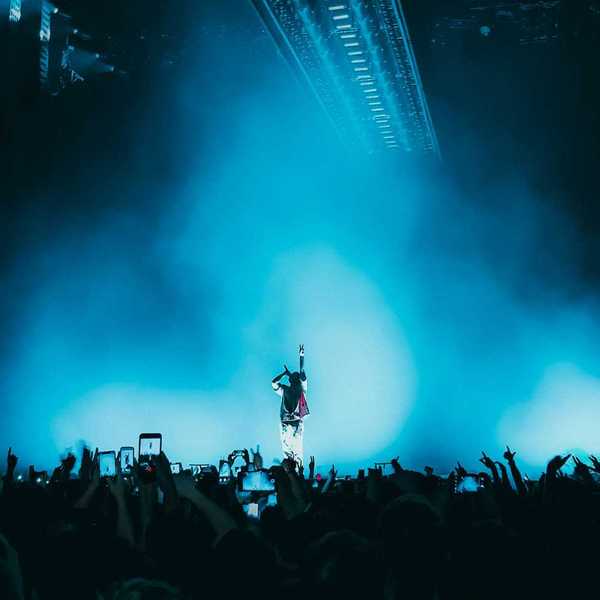
Last week, Arkells played two holiday shows in Niagara Falls. The first was in a hotel room with an upright piano — a secret show — where 40 fans heard new songs up close. The second was for 5,000 people in a beautiful theatre. Both offered meaning. Neither mattered more than the other.
While arena tours often dominate the algorithm and cultural conversations, all of the people who are working to produce those shows started off in some small club with little budget.
So in 2026, let’s go where the people are, and remember — with pleasure — that you don’t get one nice thing without the other.
Max Kerman is the lead singer of Arkells and the author of the bestselling book Try Hard: Creative Work in Progress.
keep readingShow less
advertisement
Popular
advertisement
Published by ARTSHOUSE MEDIA GROUP (AMG) under license from Billboard Media, LLC, a subsidiary of Penske Media Corporation.
advertisement