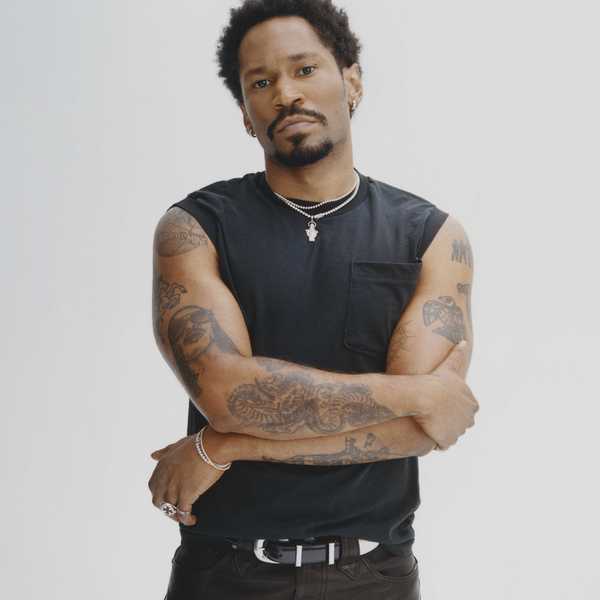
Who Could Represent Canada at Eurovision? Here Are the Eligible Acts
According to the song contest’s Canadian head of delegation, Jennifer Dettman, bbno$ is a contender ahead of Canada’s inaugural Eurovision entry in 2027, but Angine de Poitrine is not.

The journey to selecting Canada’s first-ever Eurovision artist has commenced.
Earlier this summer, it was revealed that the Great White North would officially be able to enter the international song contest after CBC/Radio-Canada became a full member of the European Broadcasting Union.
Following the announcement, many users took to social media to share their picks for who would best represent the country, including bbno$, Charlotte Cardin, Alessia Cara and Carly Rae Jepsen, among others. Late last month, applications officially opened for homegrown acts to shoot their shot, and are set to close on Sept. 9.
Once submissions close, the national public broadcaster will have eight months to pick an artist who will write an original song and perform it at the Bulgaria ceremony next May.
Now, Jennifer Dettman, the country’s head of delegation for the song contest, is dropping into the conversation.
“Right off the bat, we knew we were working against a tight timeline and that we were building something that was completely new in our music ecosystem, so we did do a lot of consultation,” Dettman recently told The Globe and Mail.
So, which artists can qualify for the coveted spot? According to Dettman, viral Vancouver act bbno$ is a contender, but buzzy math rock duo Angine de Poitrine wouldn’t qualify. The polka dot aliens play instruments, and Eurovision rules state that a backing track needs to be recorded to accommodate any changes — though the song contest organizers have become more lax about instruments over the years.
The chosen singer will be involved in an “artist-centered” approach to crafting their Eurovision performance, including the songwriting and selecting of a creative director. The broadcaster has a mandate stating that the song be performed in both English and French during the ceremony.
It’s a major feat for the country to be included in next year’s edition of Eurovision, since the national broadcaster has been an associate member of the EBU since 1950. As a full member, CBC/Radio-Canada has complete access to multiple services, including the Euroradio Music Exchange.
Typically, a country will host a nationwide singing competition to select its Eurovision representative, but due to time constraints, Dettman explained to the publication that it wasn’t feasible, opting for an internal approach, reportedly, “the second-most-common way national contenders are selected.”
CBC/Radio-Canada’s music and TV teams will pare down the submissions to a short list, ideally with the selected artists having a European following and “significant experience” in the music industry — those finalists will be announced this fall. To crown the winner, a public digital vote and a music industry jury vote will take place.
Dettman shared that the broadcaster is considering a national competition in future years. As for this inaugural year, CBC/Radio-Canada has commissioned a documentary that will air leading up to the song contest, explaining its cultural significance.
“We thought this is the best plan for year one, and then we’re working with the music community to see how we would build out year two that might take a more traditional approach of picking the song,” Dettman told the Globe.
While it’s the first time Canada can be a part of the song contest, homegrown artists have made their mark at Eurovision. Some of the country’s biggest acts have participated in the contest, representing other countries. In 1988, Céline Dion represented Switzerland and won with her performance of “Ne partez pas sans moi.”