Legendary Canadian Producer Bob Ezrin Renounces U.S. Citizenship
The current political climate in the U.S. has prompted the Toronto-born Hall of Fame record producer to move back to Canada and renounce his American citizenship.
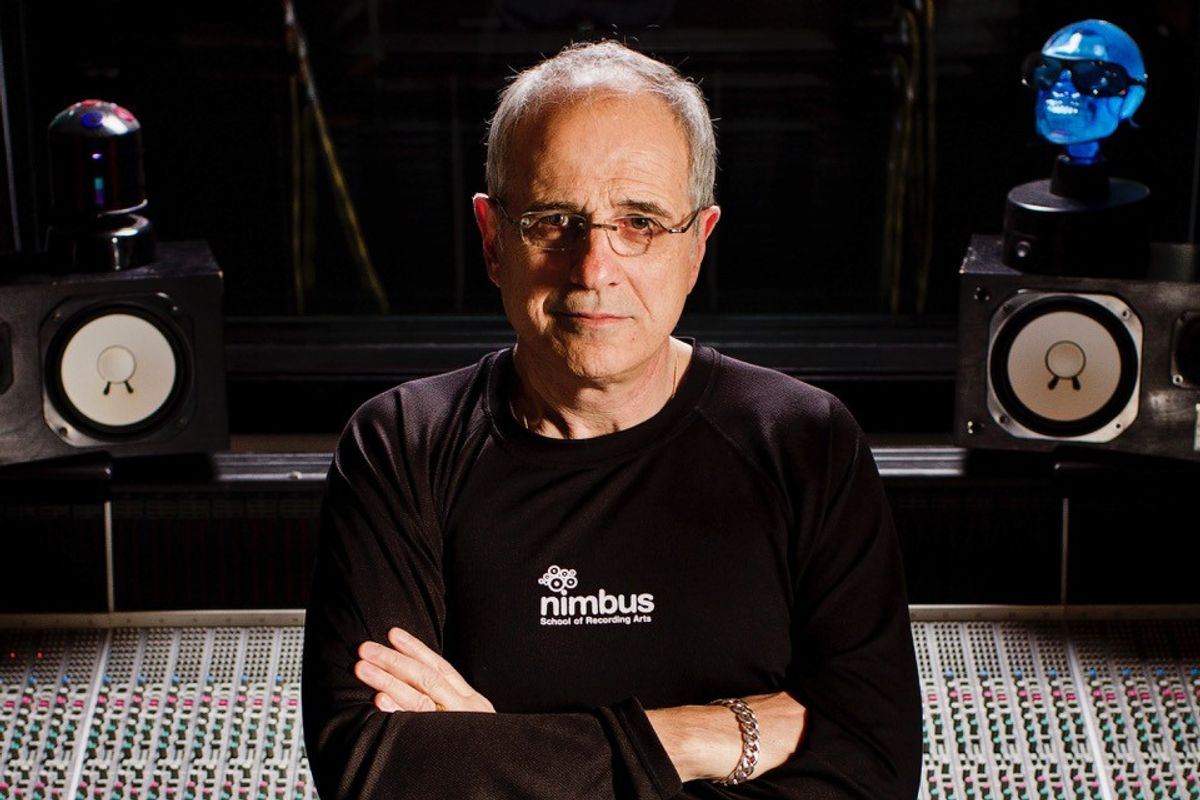
Bob Ezrin
Canadian music producer Bob Ezrin is coming home.
Ezrin plans to renounce his U.S. citizenship. He's made a full return to Canada from his most recent U.S. base, Nashville.
In an interview with The Globe and Mail's Brad Wheeler, Ezrin explains that the current polarized state of American politics and society is the driving force behind this move.
“In the last few years, it seems as if America is split in half,” Ezrin says. “The voices of a radical right have become so much louder. Conspiracy theories abound, people are armed to the teeth, and it’s just a different place than the place I went to.”
Already a member of the Canadian Music Hall of Fame, Ezrin was recently named as a recipient of the lifetime artistic achievement award by The Governor General’s Performing Arts Awards Foundation, honoured for a legendary discography that includes milestone albums by such international stars as Peter Gabriel, Pink Floyd, U2, Deep Purple, Rod Stewart, Andrea Bocelli, Taylor Swift, Alice Cooper, Nine Inch Nails, Kiss, Lou Reed and many more.
Ezrin and his family moved to Los Angeles from Toronto in 1985, and he became heavily involved in the community of that area. The following decade, he became a U.S. citizen in order to vote.
“I was very engaged, very committed," he tells Wheeler. "I believed in the country and I believed in the American people, in spite of things like the Iraq War and the income inequality I saw growing, and in spite of the racism that was knitted into the fabric of American life. I still believed the goodness of the majority of Americans would prevail.”
His decision to move back to Canada predated Donald Trump's inflammatory remarks about annexing this country and his decision to impose excessive trade tariffs, but Ezrin states “All that underscored the rightness of what I’d decided to do,” he says. “If I’m going to spend time fighting the good fight anywhere, I should do it here.”
Even while spending much of his time in the U.S., Ezrin retained close ties to the Canadian music community. In addition to producing records by Canadian artists, he has contributed immensely to the cause of music education in Canada.
After his induction into the Canadian Music Hall of Fame in 2004, he became involved with the MusiCounts charity, and he helped initiate the MusiCounts Teacher of the Year Award at the Junos. He and his wife Jan are also founding donors of the MusiCounts Leadership Circle.
In the U.S., Bob Ezrin teamed up with the Edge from U2 to co-found Music Rising, an initiative to replace musical instruments lost in natural disasters. He is also a board member of the Mr. Holland's Opus Foundation, a national initiative that supports music in U.S. schools by donating musical instruments to under-funded music programs.
It is symbolically fitting that one of the blockbuster albums produced by Ezrin was Pink Floyd's The Wall. With this decision to give up his American citizenship, he has now made it crystal clear which side of the symbolic Canada/U.S. wall he has chosen.