Five Questions With... Jennifer Holub
On her latest album The Reckoning, the Sudbury singer/songwriter offers a collection of 10 songs whose themes live up to the album’s title as both a feminist call to arms and an indictment of past crimes.
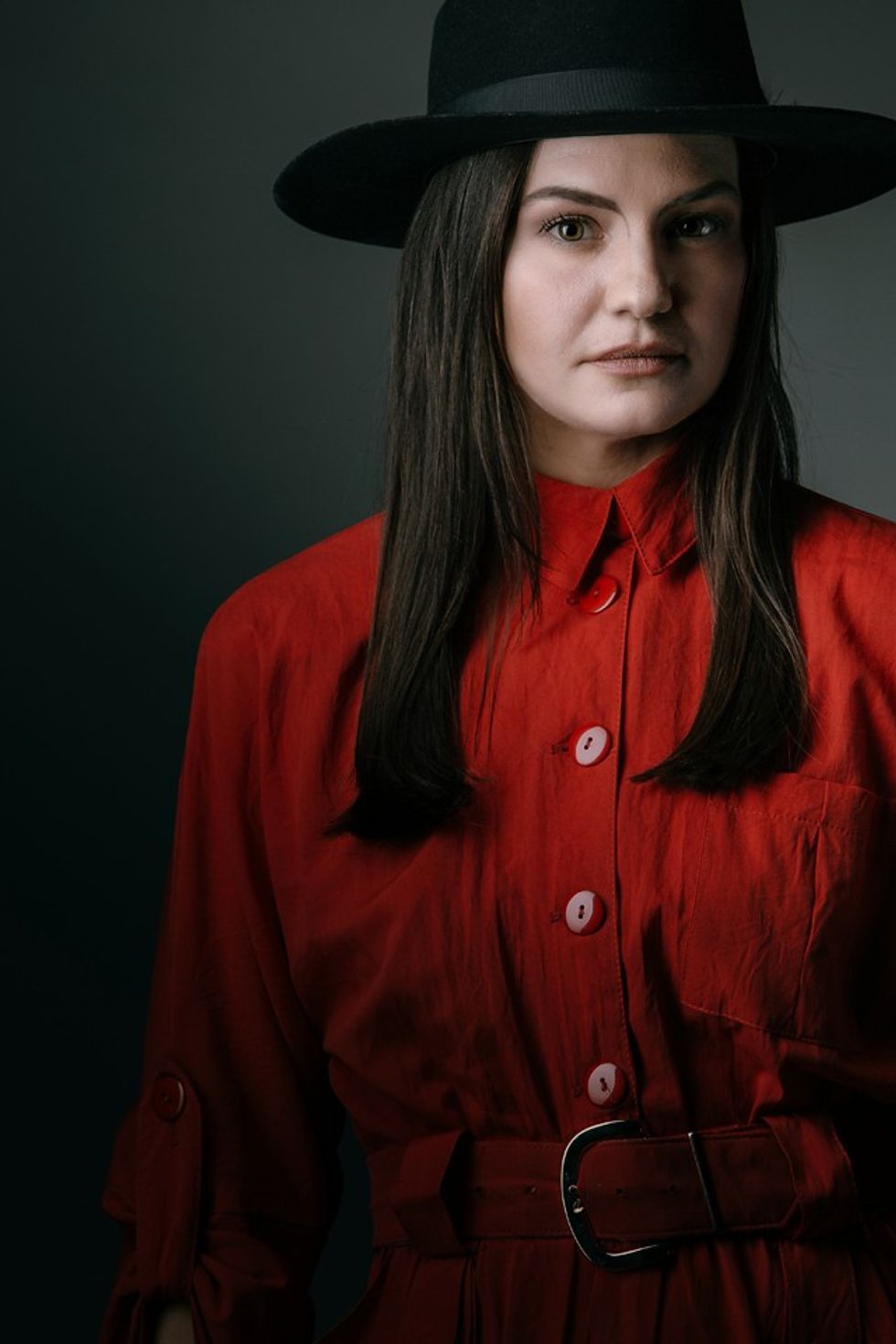
By Jason Schneider
On her latest album The Reckoning—out Sept. 28—Jennifer Holub offers a collection of 10 songs whose themes live up to the album’s title as both a feminist call to arms and an indictment of past crimes.
To back up her powerful words, the Sudbury, Ontario singer/songwriter expanded the Americana approach of her debut album with elements of everything from vintage soul to EDM to create a distinctive sound that often reflects the harshness of her northern environment.
There even a direct connection to that with the new video for the track “Way Out,” which was shot at the ruins of the notorious Burwash prison near Sudbury. It follows on the heels of the equally hard-hitting first single “Island,” and other tracks on The Reckoning such as “Rider” and “Sin For The Child” that are entirely in tune with the #MeToo movement.
As Holub felt compelled to channel these ideas into these songs, she drew inspiration from artists like Mavis Staples and Zach de la Rocha who have long used their music to fight for causes they believe in. With The Reckoning, Holub has firmly thrown down her gauntlet and in the process made one of the most compelling records of the year so far.
She officially launchesThe Reckoning with shows in Ottawa (Oct. 11), Montreal (Oct. 13) and Toronto (Oct. 26), with more touring scheduled into the new year. Find out more at jenniferholub.com.
What makes The Reckoning stand apart from your previous work?
This is a fundamentally different project from my other albums. I was more comfortable with creating arrangements for all instruments in my home studio before approaching a producer. As a woman, it was vital for me to pair with a co-producer who would listen and honour the vision of the project, and Jon Danyliw was a natural choice for co-producer. I trust the hell out of his taste, and he has such a range.
This time I was able to sink my teeth into my origins and passion for social justice music. I found new ways of expressing myself, of experimenting, and not being shy to take the arrangements to a place I hadn’t been to before artistically.
What songs on the album are you particularly proud of and why?
I’m most proud of what I’ve had to work hard for. “Way Out” was such a challenge for me to write. I struggled with the lyrics in the verses, it took me almost two days of research and long walks alone in the swamps and ponds of remote Beaver Lake to finish it. I felt physical exhaustion from it.
I’m also very proud of the bookends of the album, “JSH” at the beginning and “If you stop, they win” at the end. These ambient songs, the former with atypical time signature changes and latter with cinema-like arrangements, have been a huge songwriting/arrangement departure for me.
How would you describe your artistic evolution so far?
To say one has evolved insinuates that I have arrived somewhere, but that’s dangerous for an artist. When you’re comfortable, the creative spirit leaves the room.
I’m still hatching, and evolution depends on the survival of the fittest. I’m developing a lot more grit. You have to if you’re going to make an unapologetic feminist album in a place like Sudbury. While there has been a creative renaissance in Sudbury over the past seven years, we still don’t have the large-scale leftist echo chambers that bolster art in larger urban centres, so I expect push-back in my backyard. I’ve had to insist on things for artistic survival: getting paid fairly, protecting my instruments, my fellow artists, my bandmates, and most importantly, my creativity. Now I only work with other feminists—woman or man or non-binary identifying. I’m so glad I’m in my mid-thirties, and I have come to a place where I don’t give a fuck anymore. Maybe it has something to do with beginning to acclimatize to the cold hard winter.
What are your fondest musical memories as you were growing up?
When I was three I would toddle over to my neighbour’s house, stand on their fireplace mantle with my Fisher-Price microphone, and sing—or more accurately, yell—all the songs from Tina Turner’s Break Every Rule album, which I had memorized.
Another favourite memory was staying up late to watch Saturday Night Live to discover new artists when I was 10 years old. Tori Amos blew my mind. I had never seen anything so cathartic before. Those are the formative moments you don’t forget.
If you could fix anything about the music industry, what would it be?
I’ll repeat what Roxanne Potvin said when you asked her this because she summed it up: “I would change the distribution of income in favour of artists on digital platforms—YouTube, Spotify, etc. These platforms are making billions using content created by people who are barely scraping by for the most part; it’s incredibly unfair and unbalanced in my opinion.”