Master P Talks No Limit Legacy, Snoop Dogg, His Toronto Raptors NBA Stint & Why Rap Label Imprints Have Faded
The Cash Money & No Limit Tour kicks off in Houston on Sept. 11.
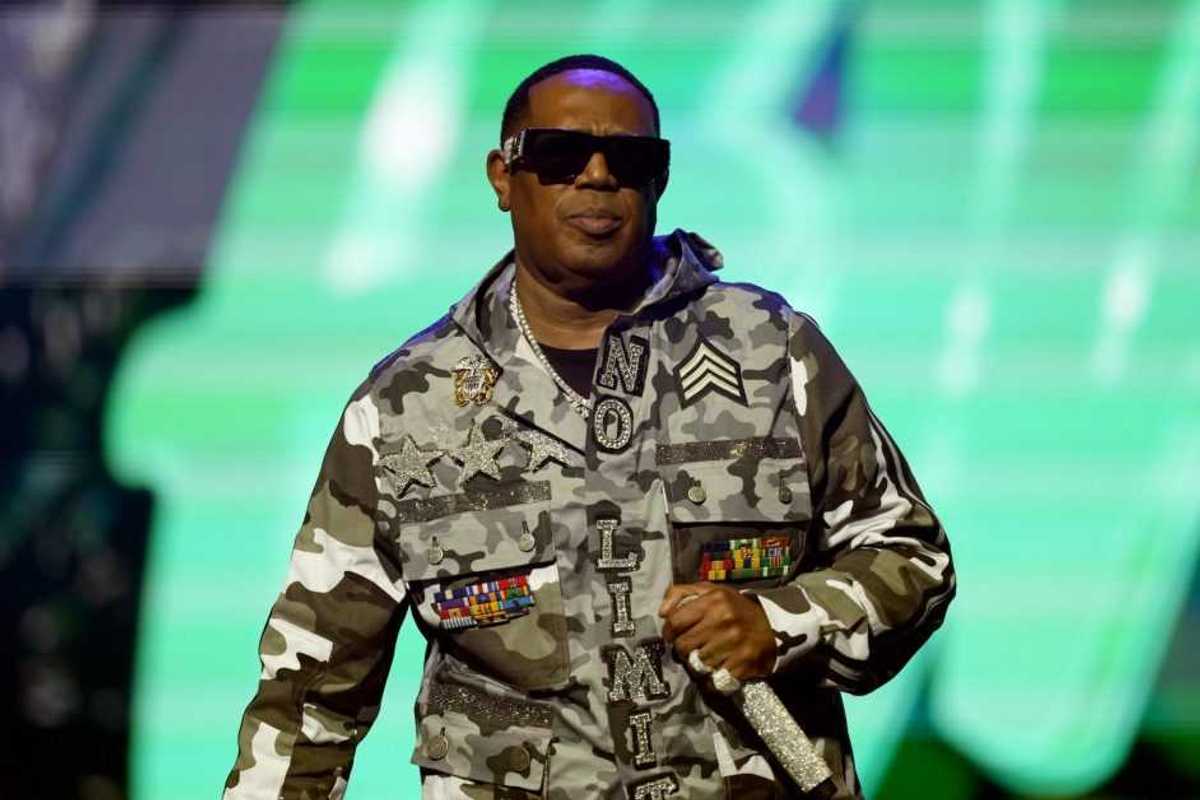
Master P performs onstage during Day 3 of the 2025 ESSENCE Festival of Culture presented by Coca-Cola at Caesars Superdome on July 06, 2025 in New Orleans, Louisiana.
The Calliope and Magnolia projects are separated by just a mile in New Orleans, but birthed a pair of hip-hop dynasties with Master P’s No Limit Records and Cash Money Records, which was founded by Birdman and his brother Ronald “Slim” Williams.
Cash Money and No Limit became part of the fabric defining Southern rap from the ’90s into the 21st century, with a global impact extending far outside the walls of the Big Easy’s Central City.
Over three decades later, Birdman and Master P are putting their competitive rivalry aside to join forces for the greater good, as Cash Money and the No Limit Soldiers will be on the same stage throughout the fall on a co-headlining arena tour, which kicks off on Sept. 11 in Houston.
It’s fitting that Master P’s rocking a bedazzled camouflage jacket in his visit to Billboard, with the military camo and tanks embedded into the No Limit branding.
“This tour should’ve been done a long time ago,” Master P tells Billboard. “We live right up from each other. I feel like timing is the most important thing. I just want kids to go out and experience this and say, ‘These guys came together, and they’re grown up and they’re doing the right thing.’ Stop all this beefing and let’s go get this money.”
Master P secured hip-hop’s version of the Louisiana Purchase, when he negotiated a game-changing 85-15 percent profit share split between No Limit and Priority Records. “Michael Jackson’s [label] had 22 percent,” he contests.
P’s Pen & Pixel vision and shrewd business acumen set a new precedent for independent hip-hop labels. He dominated as the face of No Limit, picking up a pair of No. 1 albums on the Billboard 200 with 1997’s Ghetto D and follow-up MP da Last Don less than a year later, while building up a roster that boasted Mystikal, C-Murder, Silkk the Shocker, Mia X, Mercedes and eventually Snoop Dogg and even P’s son, Lil’ Romeo.
As a rap renaissance man, Master P completed side missions that Grand Theft Auto couldn’t come up with, including starring in films, getting runs in a pair of pre-season NBA stints, launching food products and infiltrating the wrestling world. That hunger remains apparent decades and millions of dollars later.
Find the rest of our interview below with Master P, who talks bringing Snoop Dogg to No Limit, guiding Lil’ Romeo to stardom, becoming a father figure to NBA star DeMar DeRozan and bemoaning the lack of bona fide hip-hop label imprints these days.
What conversations had to take place with Cash Money for the relationship to get to this point and go on tour?
This tour is bigger than us just performing. We’re bringing awareness to mental health. Us growing up and saying it’s time. We respect each other. It’s more of a competitive rivalry. I want to see them win. Us being on stage at one time — the Calliope and Magnolia.
Were there conversations with Birdman?
We talked before, but this is business. This is good for everybody around all the artists and us. For No Limit, this is gonna be a camouflage party. The whole world’s coming out in camouflage one more time for the streets. To bring out all the artists — the ones that are alive and the ones that aren’t incarcerated — everybody’s coming.
As we put this tour together, it’s like, “How do we get everywhere?” We gotta do California and New York. I did a lot of stuff in New York. I used to come to Dapper Dan and get all my clothes. People wait ’til you gone to give people those flowers. Come rock with us. This is a chance for all of us to get on stage at one time.
I look at you as the American Dream in ways. You revolutionized the business side of indie rap labels dealing with major labels. I feel like that wasn’t happening much in hip-hop before.
I did an 85-15 split deal [with Priority Records]. For me to get a distribution deal is a blessing. I’m glad I’m in a position to bless others. There’s a lot of negativity where people just don’t get it and we’re all against each other. Nah, life’s too short. Let’s go get this money. Everybody was poor in my family. Richmond, Calif., to New Orleans and getting in the Bay Area, and learning how to hustle music independently. We’re still not done.
Snoop Dogg’s biopic just received a release date; when are we getting a Master P biopic?
The good thing about the Snoop Dogg biopic is I’ma be in the end. My movie will be coming after that, and I want to go from being a 10-year-old kid until 1998. I want it to end with just signing Snoop [to No Limit]. My son [Hercy Miller] is up for the role in Snoop’s movie. I told him if he gets it in Snoop’s movie, I’ll give it to him for mine. The difference in mine is that this is the first faith-based street movie. The title is Only God Can Judge Me. I want to show people where I started, where I evolved to and how my growth is still coming. The church is what saved my life. People don’t know I was an altar boy.
I went from selling no records to 100 million records coming from the projects. I think that’s why this tour is so important. Let’s not wait until artists are dead to say, “Look at the great things they did.” They talk about 2Pac and Biggie Smalls and all the great things they’ve done, but if they were still here, would you still be talking about them like that? I looked at Nipsey Hussle; the same record he had when he was alive, he hardly sold any records. When he died, he went triple-platinum. He used to tell me about it all the time. He’d say, “Big dog, I’m putting it all into this music, and they still not feeling it.” He don’t even know he had a funeral in a sold-out Staples Center.
Alley Boy passed away in July. Can you speak to your relationship while he was part of the No Limit family?
Alley Boy was one of the hardest young rappers. He made me get back in the game. That song “Take a Ride” is one of the hardest records I made. I loved his energy and he had a good spirit. I’m sending my condolences to the family. My dog’s on the other side, but he loved the music. I don’t think there were too many guys from the streets that had that “it” [factor] he had. I loved making music with him.
Life is short. Look how many people are talking about Alley Boy now. Nobody was talking about him while he was alive. That’s the part I don’t like. Show the people that when they’re alive so they can feel it. That’s all they want.
Take me back to the time when you signed Snoop to No Limit in 1998. What was his reputation at that point? Were there people doubting him without Dr. Dre and the Death Row backing?
I felt like people had forgotten about Snoop at that time, and they didn’t appreciate him — but I did. When I get into business, I find a problem. Snoop is one of the biggest artists in the world. I felt if he got around, [that would change]. All you need is one person is to believe in you. That’s what I did with Snoop. I said, “I believe in you; let’s go get this money. You’re gonna get back to where you need to be at.” Snoop did everything we said we were gonna do. He fulfilled his obligation, and I taught him about the music business, and told him to start his own company.
I showed him how to do it, and the rest is history. He went from being a student to the boss. He’s a great teacher now. You got people wanting to follow the things he does now. It ain’t just about music — and I showed him that product outweighs talent. You gotta be able to diversify your portfolio. There’s no bigger star that comes from hip-hop than Snoop Dogg. We laugh about it all the time, “Remember when people was doubting Snoop?”
How was it balancing being a dad to Lil’ Romeo, but also guiding him to stardom at such a young age?
When you look at father and son relationships, you see all these father and sons getting together. We were probably some of the first in hip-hop that were real father and son. Look at basketball now with [Jalen] Brunson and his dad — I played against his dad — and I was excited to see that. Look at LeBron and his kids, look at Deion Sanders and his kids or LaVar Ball and his kids. These are the negative cycles that we been breaking.
Romeo had a crazy run in the early 2000s. He had hits and a show on Nickelodeon. I saw he won best rap artist at the Billboard Music Awards in ‘01.
What makes him so great, he’s like me and he’s not gonna stop. He’s gonna figure out a way. I love that he’s letting God lead him on the journey. He’ll be successful in whatever he does. He paid the dues. People don’t even know the dues he paid in music, basketball and life. Even as a dad, too. He knows what he’s gotta do. He got it at a young age, because he listens, and knows I’ve got his back.
Another person who credits you as a father figure in his life is DeMar DeRozan. He speaks so highly of you as a coach during the AAU days and having him over your house.
I had DeMar starting in 6th or 7th grade. I seen there was something different for him. It all happened once he got in college, but he stood out. We played the Kevin Durants and Kevin Loves and we beat them. DeMar won the dunk contest in 8th grade over 17-year-olds. Seeing DeMar living in Compton, I had him come around Rome and us to get away from that. He had a chance to see other stuff. The way he’s living now and raising his family, he’s seen all this before. He’s seen mansions and nice cars, so he’s not living for that.
There were so many crews led by A-list artists or executives in hip-hop throughout its history. Why do you think that’s eroded these days?
I think with all the negativity in rap now. Everybody’s beefing, and as soon as you get a Black CEO of a company, everyone thinks you owe them something. Back then, I feel like people respected, like, “This guy is the one that went out and hustled and made the money and now he’s able to put me on.” This generation now feels like they put themselves on. Back then, somebody had to help you. You needed somebody to invest in you. You couldn’t say you did it on your own.
Now you could go online, and you might have a hit record or go viral. People think they made it. How much money does it make? I hear people say they got 1 million streams, but how much money do you make? This generation doesn’t know. You got a million followers, but what’s that mean? And people just want to go viral, so I’m like, “You don’t want to make no money?” You gotta change that mindset. Use virality as a tool, but now start selling these T-shirts. How do you grow and change that? You need to study the people who came before. You gotta be in it for more than just going viral.
Do you feel like there was backlash for your music career as to why you didn’t make the NBA after playing in pre-season for the Toronto Raptors?
It was definitely music. If they had social media back then, I’d probably still be in the league, because of the hard work I put in. You could talk to Steve Francis; you could talk to Baron Davis. I practiced with all these guys for years.
I saw something you said in the No Limit docuseries about Vince Carter’s agent getting in trouble, which led to them shying away from you.
At that time, they didn’t really want me, because they had too much negative publicity. So when you go back and do the research, you’ll see what happened with Vince Carter’s agent. I put the work in. If I’m the last cut on the team, most last cuts come back. I was like, “I’m cool, because I’m better than two or three guys you kept.”
It was cool to see you bridge hip-hop and wrestling with WCW. How did that happen?
We threw a birthday party for Silkk [the Shocker] at a wrestling match. One of the wrestlers said, “Oh Master P, you a country boy!” I was like, “Who’s he talking to?” When that happened, it all clicked. I’m like, “Okay!” That’s how I got into it. I always got a lot of big Soldiers with me. They went in there and trained and it took them six months to get to where they were at, and the rest is history. There was nobody in hip-hop in wrestling at the time. I was like, “Okay, it’s time to take that over too!”
What is the legacy of No Limit?
The legacy of No Limit is not giving up and working hard. It don’t matter where you’re at; you could shake back from anything. Life is like a see-saw; you go up and down. As long as you’re up more than you’re down. None of this stuff you could take with you. If you make an imprint on this planet doing the right thing, you’ve got nothing else to worry about. If they close the door, I’m going through the window.