Obituaries: Toronto Punk Rocker and Artist Sam Ferrara, American Roots Music Publicist Mark Pucci
This week we also acknowledge the passing of David Surkamp, leader of prog rock band Pavlov's Dog.
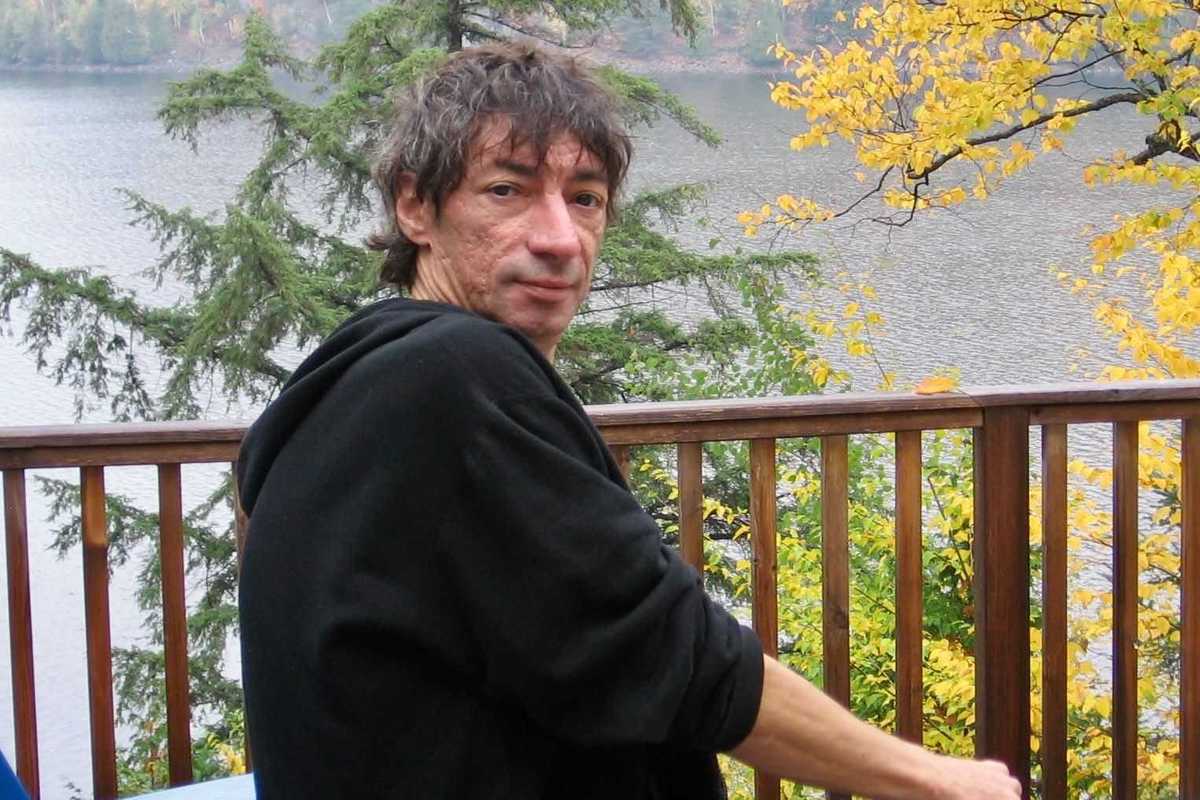
Sam Ferrara
Sam Ferrara (a.k.a. Screamin' Sam), a musician, singer-songwriter, inventor of instruments and acclaimed artist who was a crucial figure on the original Toronto punk rock scene, died on October 16, at age 72, after a long illness.
Steve Koch, a bandmate and very close friend of Ferrara for almost five decades, supplied Billboard Canada with extensive biographical notes.
''Sam was born in Sicily in 1954, the youngest of five children.His family moved to Canada when he was an infant and he grew up and went to school in east end Toronto," he writes.
''He was a wild child and had lots of hair raising adventures he would love to tell us about. It’s no wonder he gravitated to rock and roll early. His first band while still in school was called Hokey Wolf. When he was 16 he quit school and joined his older friends Tony Vincent and Kevin Mulleady in the three piece rock band The Markeys.. For the next 5 or 6 years they played 5 or 6 nights a week, 5 or 6 sets a night in the gruelling Ontario band circuit, going as far north as Sioux Lookout and as far west as Winnipeg where I’m told they opened for Edward Bear. He actually saw those places with chicken wire in front of the stage.
''They played a heavy mix of British blues featuring songs by the Who, the Yardbirds and the Animals. With so many hours and miles under their belts, Sam and Tony became the premier rock rhythm section around. They developed a kind of musical ESP such that each knew instinctively what the other was going to do. They could slow a song down and speed it up without losing the groove, they could do crazy 'My Generation' breakdowns without losing the beat and they could do sweet and soulful ballads. Truly masters of the craft.''
By 1977, The Markeys had changed their name to The Lightning. They played the Colonial Underground on Yonge Street in May ‘77, and Koch notes that ''the poster says, coming soon, the Viletones and the Battered Wives. The same cool kids who went to see [Toronto punk legends] The Viletones also went to see The Lightning.''
That summer, the band acrimoniously broke up and Ferrara and Vincent started a new band with their roadie Mike Muloney, soon to be known as Mike Nightmare. Termed The Ugly, they wrote fast and heavy songs and quickly made a real impact on the Toronto punk scene in their short lifespan of 1977 and 1978.
The punk rock history archive site Punky Gibbon published a profile of The Ugly based around the liner notes of the 1996 compilation CD, Disorder, one that documented a previously unreleased 1977 studio session as well as a few extras. It termed The Ugly ''Punk rock in a Ramones/Stooges/New York Dolls/Sex Pistols vein. They existed between 1977 and 1978 and played with a number of the more well known local and American bands of the period, including The Viletones, Simply Saucer, Battered Wives, The Diodes, Richard Hell & The Voidoids, The Cramps and Dead Boys. Their biggest claim to fame, though, was singer Mike Nightmare getting his face punched in by Phil Lynott.'
''Moderately popular in Toronto, these were genuine working class street kids who got into fights and acted obnoxious. Sam Ugly [Ferrara] and Tony Torcher had previously played in a Yardbirds-type band called The Markeys but got turned onto punk upon hearing the first Ramones LP, and formed Rotten with singer Mike Nightmare and guitarist Brian Vadders.
''Vadders was booted out early on for refusing to stop being a long-haired hippie and was replaced by Mike's brother Raymi Gunner, whereupon the group changed its name to The Ugly and started playing self-described 'hoodlum rock.' They terrorised Toronto's punk stages, with Nightmare's habit of donning a leather gimp face mask being just one of their publicity-generating wheezes (although he primarily wore the mask just so the cops wouldn't recognize him).''
The Ugly reportedly had an intense rivalry with The Viletones, one that, according to Punky Gibbon, ''culminated in an incident during a mini punk festival at the Rockpile in Toronto when The Ugly threw a burning guitar at the Viletones in protest at not being invited to play. They then stormed the stage in order to play an unannounced (and unwanted) impromptu set, which ended with a fistfight between Nightmare and promoter Johnny Brower.''
Ferrara quit the band before a revamped lineup recorded two tracks, ''Stranded In The Laneway (Of Love)'' and ''All Because Of You'' for the compilation LP And Now Live From Toronto ... The Last Pogo, prior to breaking up.
Steve Koch confirms that the infamous troublemaking reputation of The Ugly was no fake pose. He tells Billboard Canada that ''It is accurate to describe both The Markeys and The Ugly as working class. These guys were definitely not OCA [Ontario College of Art] students. They were the Stooges, not the Talking Heads.
''Overall the original Ugly were pretty wild and Mike had a seriously cavalier attitude towards the law which resulted in multiple incarcerations. Sam and Tony were wild and crossed the line sometimes but essentially were working musicians who just wanted to put on a good show and have some fun, both of which they did in spades.''
As fate would have it, The Viletones then played a major role in Ferrara's career. By Sept. 1978, just having released their Look Back In Anger EP, Viletones leader Steve Leckie persuaded Ferrara to join his band. Viletones bassist Chris “Haight” Papputs switched over to guitar and Ferrara moved into the bass role. That lineup only lasted a few shows before all the original members except Leckie quit and regrouped as The Secrets.
Leckie retained Ferrara and added Tony Vincent in a new version of The Viletones. Joining them shortly after was guitarist Steve Koch, who recalls ''I was in the right place at the right time and was hired, playing my first show with the new Viletones in January ‘79. That version of the Viletones lasted most of ‘79 before I quit and shortly thereafter joined the Demics. A few guitarists moved in and out the band in quick succession in late 79 and 80 before Gideon Sajeta finally provided a solid solution on guitar.''
That version of the band broke up by 1981, with Ferrara, Vincent, Sajeta and Brian Connelly (fresh from Calgary’s Buick McKane and then local favorites Crash Kills Five) forming Screaming Sam and the Problems, playing their first show at the Edge. Later gigs included opening for the Dead Kennedys and the Sex Pistols offshoot known as the Professionals.
The group played extensively on the local circuit, and Koch reports that ''The band quickly became known as the best high energy rock band in the city, generating lots of press and a gang of dedicated fans. Brian left shortly to rejoin his friends, forming Shadowy Men On A Shadowy Planet but Screamin' Sam carried on as a 3 piece with a few short term second guitarists here and there.''
The Viletones then re-entered the picture for Ferrara, as Koch recalls. ''In the summer of 1983 Steve Leckie had taken care of some of his demons and convinced the ‘79 Tones, Sam, Tony and myself, to reform with the goal of recording an album. That dream actually came to fruition and the Saturday Night Sunday Morning live album was recorded at [Toronto rock club] Larrys Hideaway.
''The band played a few more shows in that configuration before a spectacularly disastrous show on Halloween of ‘83 caused a final breakup with Sam and Tony quitting the Viletones – again.''
By 1984, Sajeta had also left Screaming Sam and the Problems and Koch joined the group. '' From ‘84 to the late 1990’s I was part of the Screaming Sam band. During that time we recorded one 45 – 'Another World / Not Safe to Love' independently.'' There were other lineup changes (Blue Rodeo drummer Cleave Anderson was a member at one stage], but, in 1994, the band finally recorded and released the only Screaming Sam album, Dust, out on Gerry Young's label Current Records.
Young tells Billboard Canada that ''I first met Sam Ferrara in the early 90's, after he'd already earned his Toronto punk chops with earlier bands like The Ugly and The Viletones. I visited his home/workspace on Sorauren Avenue and he played me some new songs that he was working on with a new band he was forming called Screamin' Sam And The Problems.
''I agreed to be his and the band's manager, but after choosing the produced songs, and soliciting a distribution deal from all the majors without any luck, we decided to release the new album, Dust, independently on G Man Music (an offshoot of Current Records)." All 11 songs were written by band members Sam Ferrara, Steve Koch, "Chick" Parker and Cleave Anderson.
By this time, Ferrara was also immersed in a second creative pursuit, as an artist and sculptor. Koch explains that ''By the late '80s Sam had started his career as an artist using metal and found objects to create beautiful and sometimes terrifying pieces. There was no real gap between his music and his art, they were just two different outlets for his incredible creative vision.''
''Sam would eventually become quite successful as an artist working in metal as well as making incredible mobiles of all sizes. He had large installations in the Columbus Centre and Durham College , among others, and his bi-annual shows were always fantastic social events that sold out.'' Check a video of Ferrara and John Borra performing at one of those art shows here.
Ferrara also detoured dramatically in his music. Koch recalls that ''By the mid '90s Sam was having some pretty serious issues with his back and we started to cut back on the Problems shows. Being Sam, he just figured out another way to be musically creative. He changed careers and became a percussionist.
''Not just any percussionist. He taught himself to play the musical saw and the spoons, he played a cheeses grater with sandpaper, kind of simulating a snare with brushes sound. He invented the famous ‘Ferraraphone’ which was a device that held three slinkys on it, rather simulating a high hat. He originally just used one slinky but found he needed more volume. The solution – stick three together!''
His inventive instrumentation was put to use by a number of local Toronto artists, most notably noted rocker turned singer-songwriter John Borra. Billed as a duo (John Borra and Sam Ferrara) they took on a weekly residency at local bar/music venue Communist's Daughter that lasted two full decades, from 2004 to 2024, when health issues forced Ferrara to stop (the Borra matinees there continue).
Sometimes featuring prominent guest artists, these sessions saw Ferrara's unique percussion work adding atmosphere to Borra's eloquent tunes, and some Ferrara compositions also made the set. Along with his signature slinky, cheese grater and singing saw (one that created theremin-like sounds at times), he had a self-designed tambourine contraption that he played with his heel. Over the long residency there, this actually wore away the linoleum tiling where he sat every week.
Getting a view from the bar of the tiny space for many years was bartender Tim Hanna, now a DJ and bookstore co-owner in Hamilton. He tells Billboard Canada that ''the memory standing out about the years at the Communist's Daughter is the way Sam interacted with kids. As a Sunday matinee, people brought young people in. Sam’s percussion — cheese graters, slinkies, and most of all the 'Singing Saw' — captivated kids. I remember many times looking over after the set and seeing Sam showing some enthralled 10 year old how the saw worked.''
John Borra tells Billboard Canada that ''I've played more shows with Sam than anyone else and I never saw him give any less than 100%. He was always all-in on whatever he did."
Borra also recruited Ferrara for another project, Rattlesnake Choir, the roots band he led from 2006 that released three acclaimed albums, Live Music, Walkin' The Wire and The Prospector's Curse. That group recorded a few Ferrara compositions, including ''Caroline.'' Other artists and groups to employ Ferrara's skills included The Cameron Family Singers, Toronto punk faves Groovy Religion, Kevin Quain and Chris Houston.
In 2014, the Equalizing-x-Distort show on Toronto campus radio station CIUT placed the spotlight on Ferrara's punk rock past. Armed with his trademark hollow body Hofner bass , Ferrarato performed a few songs from that era, alongside guests Steve Koch, John Borra and Cleave Anderson.
He also returned to his punk roots in a new version of The Ugly, as Koch explains. ''Around 2008, Sam and Tony reunited with me and our friend Greg Dick in a new version of The Ugly. The 2000’s version Ugly included songs from the original band but with Greg singing. A 45 single ‘Off The Hook’ was recorded and produced by our friend Don Pyle.
''We played a series of well received shows over the following several years before Tony finally succumbed to illness and passed away. We all vowed that there would be no version of The Ugly without Tony so that chapter was closed.
''In 2024 I convinced Sam to pick up the bass one last time and he added his unique and beautiful bass lines to the song 'Voodoo Blues' that my group He Mistook Her For A Swan released on our album that year.''
Effusive and affectionate tributes to Sam Ferrara were posted on social media or offered to Billboard Canada over the weekend. Here is a selection:
John Borra, to Billboard Canada: ''Sam was a true artist and a true original. From his pre-punk band The Marquees to first-wave punk bands The Ugly and Viletones to his percussion work with myself and others - playing instruments that he invented himself — he was always ahead of the curve.
''His artwork was on another level. No one went to a Sam show and wasn't blown away. He usually always sold out and there are literally thousands of his pieces out there in the world. He was kind, gentle, had a wicked sense of humour and had time for everyone. He touched a lot of people and it was a joy to witness over the years. He was like a brother to me and he was my friend. I'm really going to miss him.''
Steve Koch, to Billboard: ''Sam Ferrara had a unique and brilliant mind. He could look at a piece of metal or stone and see something hiding in it that none of us could see, but once he applied his touch to it, it would magically appear.
''When he faced a problem such as how to create a sound he was looking for, he would reach for an object that no one would ever expect to be musical such as a slinky or a cheese grater and turn it into his trademark sound. When he played bass he would play the complex melody of the song while singing rather than just thump away on the root notes as bass players are taught to do.
''Many idolized him and tried to emulate him, but none could.. But above and beyond all this he was just an honourable and decent person. He would be quick to call out fakes and phonies but if he was your friend he'd never let you down and that's why so many people have been reaching out to express their grief at his passing. He was one of a kind. He was my best friend.''
Noted U.S. folk-rock artist Jean Caffeine, on Facebook: ''What a loss. Sam was a one-of-a kind multi-talented character. I treasure the interactions i had with him at John Borra's shows over the years. He always greeted me with a hug and a smile. Fondly remembering the one time he played percussion with me and Mike somewhere and I rehearsed with him at his place. That was super fun. And he made me my own tapping tambourine.''
Tim Hanna, to Billboard: ''When I think about Sam I realize the fact that he was such decent guy is what stands out. So many old punks guys are not. He was never a nostalgia man. He was artist and interested in what he was doing in the moment.'' On Facebook, Hanna termed Ferrara ''Not just a rock' n roll hero and the coolest guy in town, but one of the most decent people I ever met. One of his cheese graters rubbed flat with sandpaper by Sam playing percussion at the bar with John Borra is proudly displayed at our place.''
Legendary Toronto concert promoter Gary Topp, on Facebook: ''For all the Screamin’ Sam he was, Ferrara was one guy so full of sweetness, honesty and talent. I’m glad he was able to end his years of suffering on his terms. My heartfelt good wishes to all that he touched.''
Author and punk historian Liz Worth featured Ferrara in her book on Toronto punk history, Treat Me Like Dirt: She posted this Facebook tribute: ''Sam was an incredibly talented musician and metal sculptor. He was also a great storyteller, and had a long history in Toronto's music scene as a former member of Toronto punk bands the Ugly and the Viletones. He was kind and funny but also honest and straightforward.''
First-generation Toronto '70s punk band The Mods, on Facebook: ''I know I speak for the whole band when I say he was one of the faces we always liked to see in the crowd or at any event around town. It was so great when he showed at our first reunion gig in 2006. I first saw Sam and Tony playing in a band called the Markeys in 1975 or 1976 out in Scarborough at the Running Pump. They were a 3 piece with a guitar player whose name I do not know, playing all old Kinks, Who and early UK invasion songs.
''They were a great rhythm unit then, as they were when I stumbled across them a few years later as the original Ugly. A great stage presence. I hope they look after that Hofner bass.''
Toronto music supporter and community activist Erella Ganon: ''What a kind gentle man he was, with a shy smile that could perform a kind of heart surgery.What a tremendous loss. Sam's metal sculptures were gorgeously inventive and always emotion-provoking.''
Gerry Young, to Billboard: ''Sam was a pioneer in Canada's punk and new wave scene, an innovative Canadian sculptural artist, and most importantly a dear friend."
Toronto singer-songwriter Rae Billing, on Facebook: ''Sam was one of Toronto's seminal punk rockers and an art builder. Was lucky to play with him for awhile when he tried out some of my country music, along with Steve Koch and Cleave Anderson as the Really Big Men. Thoughts and memories go out to all who knew him. You couldn't help but love the guy.''
Miranda Mulholland, a roots musician, singer-songwriter and member of Rattlesnake Choir, on Facebook: ''Sam, you were one of a kind. It was an honour to share the stage with you so many times. You will be very missed.''
International
Mark Pucci, a veteran U.S. record label executive, writer, publicist and blues booster, has died at age 79, due to a brief illness and complications from a stroke.
His passing was reported via a statement from his publicity company, Mark Pucci Media, on Oct. 15. It noted that ''his extraordinary career spanned more than five decades. Known throughout the music world for his impeccable professionalism, unwavering dedication to artists, and deep passion for the blues, Pucci was more than a publicist. He was a trusted advocate, a champion of musical talent, a loyal friend, and, above all, a gentle and kind human being.''
Billboard reportd that ''During two separate stints at Capricorn Records, Pucci helped lead PR efforts for a who’s-who of Southern rock legends including The Allman Brothers Band, The Marshall Tucker Band and Lynyrd Skynyrd.
''He later founded the Atlanta-based firm Mark Pucci Media, where he represented stars like Johnny Cash, Roy Orbison and Carl Perkins, while simultaneously working to sustain and preserve the legacy of the blues music he loved. For his efforts on the latter front, in 2008, he was honored with the Keeping Blues Alive Award from the Blues Foundation in Memphis, Tenn.''
''Pucci began working at Capricorn — which was at the forefront of the Southern rock explosion of the mid-1970s — as publicity director before later moving up to vp of publicity and general manager. During those years, he was also hired to work on Jimmy Carter’s 1976 presidential campaign, handling PR and promoting benefit concerts designed to bolster Carter’s national profile and fill his campaign coffers.''
Those he directed publicity campaigns for at Capricorn included Dickey Betts, Lynyrd Skynyrd, Elvin Bishop, Delbert McClinton, Wet Willie, Sea Level, Dixie Dregs, Widespread Panic, Kenny Chesney, 311, Cake and many others.
''As founder and owner of Atlanta-based Mark Pucci Media, his client list was stacked with music icons. In addition to Cash, Orbison and Perkins, he represented such names as John Mayall, Taj Mahal, Gordon Lightfoot, Derek Trucks, The Fabulous Thunderbirds, Charlie Musselwhite and Delbert McClinton.''
Other artists he handled publicity for included Dave Alvin, Buddy Miller, Julie Miller, The Flatlanders, Tinsley Ellis, Ronnie Earl, Duke Robillard, Sue Foley, Kim Wilson, Jimmie Vaughan, Eric Johnson, Maria Muldaur, Al Kooper, The Nighthawks, Savoy Brown, and countless others.
Pucci's work boosted many Canadian artists over the decades. Holger Petersen, a renowned Canadian roots music label head (Stony Plain) and broadcaster (CBC and CKUA) informs Billboard Canada that ''Mark Pucci was a dear and valued friend. He was Stony Plain's American publicist for over 20 years, representing our Canadian signings including Jeff Healey, Sue Foley, Long John Baldry, Ellen McIlwaine, Downchild, Ian Tyson, David Wilcox, Amos Garrett and Big Dave McLean in addition to our US artists Maria Muldaur, Rory Block, Duke Robillard, Ronnie Earl, Eric Bibb, Jay McShann, Rosco Gordon and Billy Boy Arnold.''
In 2008, Pucci received the prestigious Keeping the Blues Alive Award from the Blues Foundation in Memphis, Tennessee, recognizing his career achievements and invaluable contributions to the blues community.
Memorial services will be hold on Oct. 28 from 10am to noon and 6 pm to 9 pm at South Care Cremation & Funeral Society in Alpharetta, Ga. Gifts in honour of Pucci can be made to Lifeline Animal Project at lifelineanimal.org.
Tributes to Pucci quickly flowed on social media.
To Billboard Canada, Holger Petersen recalled that ''Mark was a fellow blues and roots music lover. We got together at conferences like SXSW and Americana plus annually at the Blues Music Awards in Memphis. After the BMAs it became a tradition to go on day trips down Highway 61 with stops in the delta which usually ended in Clarksdale, Mississippi. Stops along the way would often include visits to Helena, Arkansas, Tunica or Greenville, Miss. He knew the area from his college days at the University of Memphis and always found the coolest southern cooking, BBQ joints and blues hot spots.''
''He was passionate about the artists he represented and always the consummate professional with a great attitude. He was highly respected and had a long history that was unparalleled. From the heady days of traveling in Capricorn Records corporate jet, to putting together the Elmore James box set and getting a grave marker for him, to working on Jimmy Carter's presidential campaign to writing for Rolling Stone.
''After the sale of Stony Plain Records, we continued to work together and kept in close contact. I continued to do my blues radio shows for CBC and CKUA and Mark set up many interviews including Steve Cropper, Marshall Chess, John Mayall, Jimmie Vaughan and many more. He is a sadly missed friend and mentor.''
Colin James sent this tribute to Billboard Canada: ''I worked with Mark Pucci on a few of my more bluescentric records starting with Blue Highways, Miles To Go and Open Road. He was a dedicated publicist with a real love and knowledge of the music. The last time I saw him we were both in Memphis at the Blues Foundation awards. We ran into each other on Beale street outside of Rum Boogie and it was great to catch up face to face. He will be missed.''
Sue Foley (to Billboard Canada): ''I had the pleasure of working with Mark and his team over many years through my association with Stony Plain Records and True North Records. His deep knowledge of the music industry, extensive connections and dedication to his artists made a lasting impression on me, and his work played an important role in the growth of my career. Through Mark, I also developed a wonderful working relationship with his longtime associate, Karin Johnson, who remains a valued member of our team today. My heartfelt condolences go out to Mark’s family, friends and colleagues during this difficult time.''
David Surkamp, frontman and leader of the long-running progressive-rock band Pavlov’s Dog, died on Oct. 13, at age 73. No cause of death was announced.
A Variety obituary reports that ''While the band, which formed in St. Louis in the early 1970s, was not an arena-filling progressive rock group like Yes, Genesis and Emerson Lake & Palmer, they enjoyed a long career and a fervent fan base. Their at-times symphonic sound included violin and flute, and Surkamp’s high voice put them in a similar category as Yes.
Pavlov's Dog released its debut album, Pampered Menial— produced by Sandy Pearlman and Murray Krugman, who helmed hit albums for Blue Oyster Cult — in 1975 and followed with At the Sound of the Bell the following year. Guests on the latter album included Roxy Music saxophonist Andy Mackay and Yes/King Crimson drummer Bill Bruford.
Variety observes that ''with the rise of disco and punk in the latter half of the decade, progressive rock fell out of fashion. The band recorded a third album in 1977 but its label, Columbia, was unimpressed and declined to release it and Pavlov’s Dog split (the album was final issued by German label Rockville some 30 years later).''
In the1980s, Surkamp relocated to Seattle and formed Hi-Fi with former Fairport Convention singer Ian Matthews, before reuniting Pavlov’s Dog in 1990 for the album Lost in America.
The band continued off and on over the following years, with his wife Sara Surkamp joining on acoustic guitar and vocals in 2006. They released a final album, Wonderlust, last year.
Australian website Noise11 reports that ''The band maintained a strong European touring presence across multiple decades and played major outdoor festivals, including dates in front of tens of thousands of people.'' Pavlov's Dog also retained a loyal following in Australia and had a July 2027 tour there planned.
Noise11 observes that ''Surkamp’s voice and songwriting remained the constant thread through every chapter of Pavlov’s Dog. From the early 1970s recordings that found an audience in Australia through the later studio albums and live performances, he continued to shape the band’s identity until the end. The music he left behind continues to speak for itself.''