Billboard Canada Hall of Fame: Legendary Booking Agent Vinny Cinquemani on Elevating Canadian Artists to Superstardom
Cinquemani has spent over four decades championing homegrown acts like Bryan Adams, The Guess Who, Sarah McLachlan and more, helping to scale their talents into mega-successful careers. Now, he is co-president of Canada’s biggest booking agency, Paquin Artists Agency.
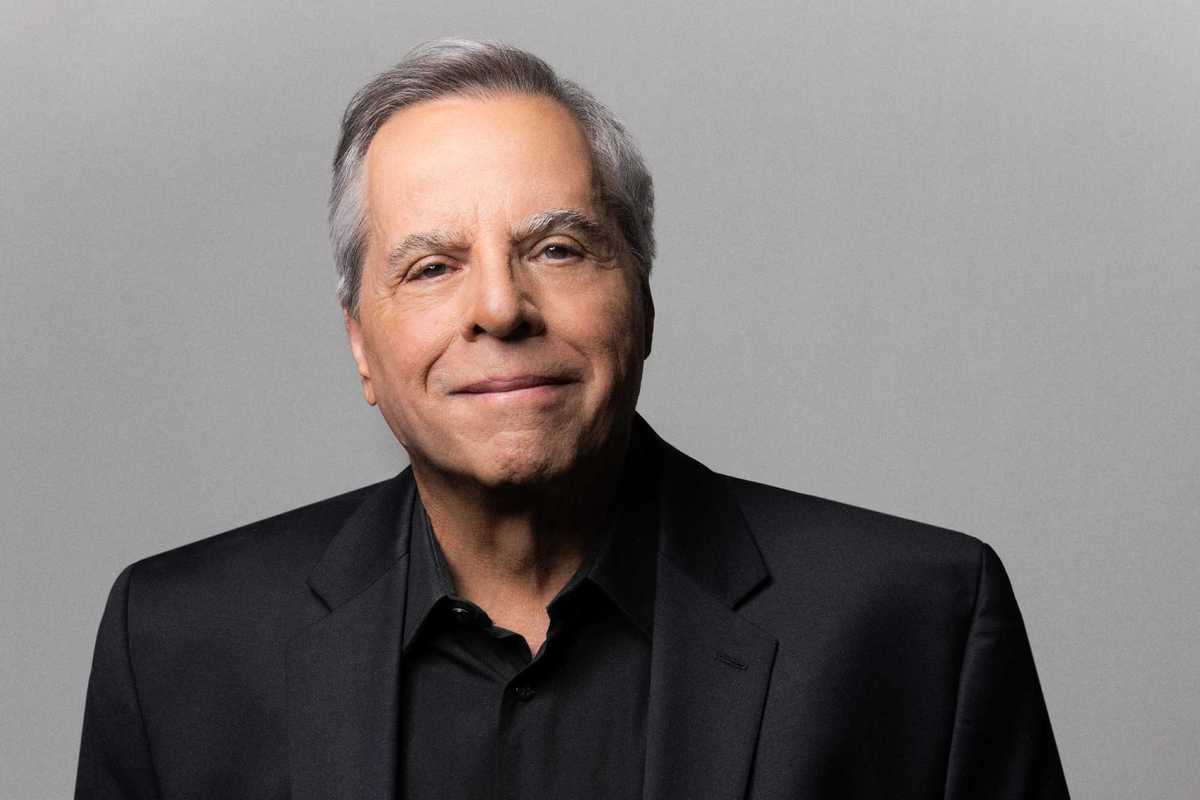
Vinny Cinquemani
Vinny Cinquemani’s day starts early.
“Calls probably start coming in around 9 am, and they go nonstop until about midnight,” he tells Billboard Canada, noting he does break for dinner with his family at 7:30. “It never stops, but it’s the responsibility of dealing with such great artists and management companies.”
It’s a fitting schedule for the co-president of Paquin Artists Agency, the biggest booking agency in Canada — a role he assumed in 2021. From his executive roles at Concept 376 and Music Shoppe International to his influential tenure as President of S.L. Feldman & Associates, Cinquemani has become a well-known figure in the music industry and arguably the most connected agent in the country — over four decades of hard work. He’s earned the time to relax, but he cares too deeply about his artists. He still gets the same goosebumps watching a Canadian artist play for crowds of tens of thousands as he did seeing a young Jimi Hendrix as part of Jimmy James and The Blue Flames at Café Wha? in Greenwich Village.
Growing up in Harlem, a span of music genres like Latin, conga, R&B and Motown were the soundtrack to his teenage years. In the 1970s, Cinquemani arrived in Toronto from New York and hit the ground running. He brought his diverse knowledge to the forefront, building an impressive roster of influential Canadian acts who now hold major star power, citing Burton Cummings and The Guess Who among his earliest clients.
Recently, he has scaled blockbuster tours for homegrown stars including (among many others) Michael Bublé, Bryan Adams, Jann Arden and Simple Plan — many of whom he’s been working with for decades. He works with major American bands as well, with the 2025 The Offspring/Bad Religion tour selling out across Canada. Cinquemani proudly calls it one of the biggest alternative tours of the year, and a major revitalization for the long-running punk bands.
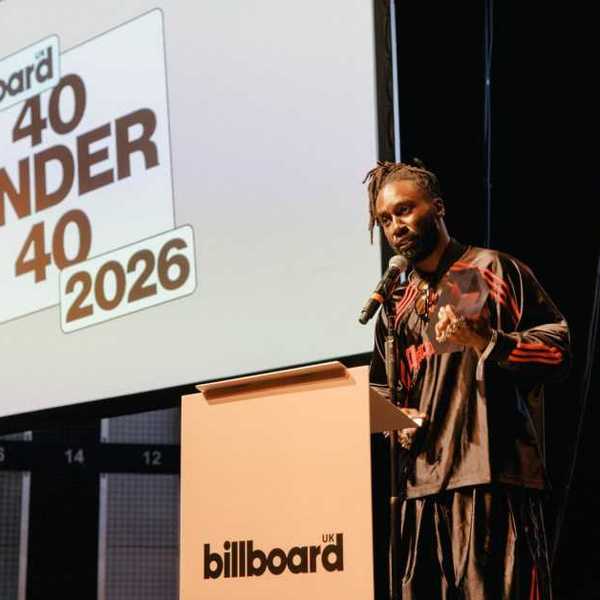
Always elevating how artists reach their audiences across the globe, Cinquemani will be inducted into the first-ever Billboard Canada Hall of Fame alongside his longtime contemporary and chairman of Live Nation Canada, Riley O’Connor. Between the two of them, they played a major hand in building the modern infrastructure of the global touring industry. For Cinquemani, though, he cares as much about the artists within Canada’s borders — making sure they’re treated as the superstars they deserve to be.
Vinny Cinquemani and Riley O'Connor will receive the prestigious honour at Billboard Canada Power Players on June 10, 2026, at NXNE. Tickets are available here.
Find the full 2026 Billboard Canada Power Players list here.
You’re one of the very first inductees into the Billboard Canada Hall of Fame. What does that recognition mean to you?
I am extremely honoured and humbled. I’ve always been a fan of Billboard [and] read it when I started in the music industry. I am still shocked to be one of the first recipients of the Hall of Fame [in Canada.] It is one of the greatest honours I've ever received.
The Canadian live music industry is booming more than ever. Why do you think it has been such a success story for Canada?
I believe all the excitement is with live. Before COVID, it was strong, but after COVID, it became stronger. We're watching ticket counts and shows selling out that you can't believe. You look at Bruno Mars, who’s playing five shows. Five stadium shows times 50,000 people is incredible — hundreds of thousands of people. I've always believed that Canadian music has punched above its weight because we're storytellers from small towns, big cities, coast to coast. We come from different cultures, different experiences, but through music, we speak to the entire world.
You moved from New York to Canada and saw the potential for a star system in this country. Where did that inspiration come from?
I came here with my wife Florence, almost 50 years ago. We saw such versatility and such great talent: the stories, the songs. Look at the Maritimes, look at Western Canada. The culture is unique. I loved it, and I felt it was my job to try to help, to give them an audience. I knew I needed to get involved and help them the way I was never really was when I was a musician and recording artist in New York. The music business is all about the artist — without the artist, there is no business. But in the beginning it was very difficult, like any business. You work, you make no money, you starve, you do what has to be done.
What Canadian talent stood out to you for having potential to be that breakout global star?
One of my first clients was Burton Cummings, whom I worked with for 40 years along with The Guess Who. I worked with Rush for 40 years too, from the beginning to when Neil [Peart] passed away. Every band and artist I worked with was different. Some made it, and some didn't, but I always put the time in. It was a team effort to make it work because you have one shot, and you need to do a good job.
When an artist trusts you and entrusts their career to you, it’s a major responsibility, and I watch many people, agents and managers not take it seriously. I just thought that if this was something you entrusted to me, I'm going to work hard. Even if it takes 14 or 15 hours a day, I would do it.
With most of the artists you’ve worked with, these relationships span decades. What shapes that long-term mindset?
It's a privilege and an honour. Working from the beginning with artists like Loverboy, with [manager] Bruce Allen, and Jann Arden, Amanda Marshall and Anne Murray, one of the greatest of all time — it's an honour. I take the responsibility that they put on me very seriously, and that's why now, all these years later, I think I work harder and longer than I ever have.
What I appreciate about a lot of my artists is earning their trust over time. Success can sometimes happen really quickly for people, but respect takes decades to earn. Most of the people that you talk to me about, I can't believe you're talking about my name next to theirs, because they're legends to me.
Compared to the early days of your career, do you think Canadian artists have more opportunity to reach the upper echelon of success?
Yes, and that’s important. We didn't at the beginning, but most countries didn't [either] — Australia, even the United States.
The last Bryan Adams tour, a major arena tour that we did in Canada with his new album, was probably one of the most successful, major percentage-making tours that Adams has ever done. Now he's coming back in August, September, playing secondary markets and selling out. His numbers worldwide have been great.
I look at the success of Michael Bublé, whom I have the privilege of representing, and he's one of the greatest artists ever and bigger than ever. It’s still exciting when we put together a package for the RBC Amphitheatre, or we do a package with Simple Plan, Marianas Trench and Bowling for Soup, and we sell out the venue with three days of pre-sale. We have to hold some tickets to go on sale, and that's against 100 other shows that have been playing. It blows me away, and it's still as exciting today as it was 40 years ago.
What was the music industry like in your early days? Without major corporate entities like Live Nation, was it less professionalized?
Any business that starts, people are flying solo, and there's nothing established. You have a new business, and you have to work at it. It was really rough and tumble. It was crazy. Back then, professionalism wasn’t always there, and people didn't care like they do now. The thing that bothered me the most was greed. Greed still bothers me a lot, but I’m happy that it’s different now.
We represent these artists and their management companies — it's their life and their livelihood. You have a responsibility. In any business, not just the music business, you find people who are looking to take care of themselves while not taking care of their responsibilities or their commitments. That's a really big deal.
You’re now recognized as one of the architects of the live music industry here. How did you help make those moves?
It's about communication. It's about doing your homework and your research and spending your life on it. It's about telling the truth, too. It's about putting an artist in the right city, in the right venue at the right ticket price, at the right time. You’re looking at the competition around, looking at what other similar artists are playing, coming up with a realistic ticket price and building an artist up from a club date to a college and university tour, then to a concert venue and selling out Massey Hall, or multiple [nights at] Massey Hall and then bigger.
When you have a [music] career, it's not just being good in Toronto — it's being great in Halifax and Quebec City and Kelowna and Winnipeg. We started building in each city and getting relationships and venues and promoters across the country, constantly working with management companies so we were on the same side.
At this stage of my career, I think less about success and more about contribution. [I’m looking at] what survives, what resonates and what inspires the next generation.
Working with artists for decades, how do you view short-term strategy in the TikTok era? Do you think artists are trying to do too much too quickly?
I have to pass on artists who people may perceive as big, but I don't see or feel it. Music is supposed to be emotional. Concerts are supposed to move you. When you have the responsibility of working with these people, I want this to go on. I don't want to have big success in a year or two years from now and never be heard of again. With people who blow up quickly, if you have the talent and songs, you make it. If you blow up quickly and you have no talent or songs, it goes away because the audience likes what's good. If they don't like it, they don't like it.
When you work with [an artist or a company], it's like a marriage. You have to work collectively through good and bad and help each other. People take artists and sign them for the sake of signing them. They don't believe in it — they just do it because they can make some money. It's the reason I left the U.S. with my wife, coming here and starving for years in a country that gave me a great opportunity.
Do you feel the same way that you did at the beginning of your career? Is the new generation speaking to you as well?
There are so many more bands, artists and people, but it's still the same feeling. When you go to a show, and you watch the show, I get moved, and it's no different than it was 40, 45, 48 years ago. It’s really something great to be able to go watch one of your artists, seeing a show and feeling the same way as the other 10,000, 15,000 or 20,000 people.
It’s no different than when I had nothing, and I sat on the hill in Central Park because I couldn't afford to go see Rheingold Music Festival, put on by Ron Delsener, legendary promoter in New York, in Central Park. I didn't have the $5 to go in, but I heard the music, and I loved it.
You've been at Paquin Artists Agency for the last five years. Do you view that chapter as a new phase in your career?
I look at it as a continuing phase. Paquin Artists Agency has really grown and the team is fantastic. I think the company is the best agency I've ever worked with in Canada. We have offices in Toronto, Montreal, Winnipeg and Vancouver. A few years ago, we worked out a deal with APA [Artists Management], and onboarded some of their team members at PAA. It's been seamless.
I've had the privilege of being at many agencies, starting with nothing and then working with a few to platinum artists, then going to The Agency which was my competitor and becoming president, leaving that, merging that, and then working with Sam Feldman for decades, who's a wonderful friend and a great man. When he decided to concentrate on management and sell the company, I knew it was my time to go, and I'm really happy where I ended up. I'm sharing this Hall of Fame award with my team and my family. I feel very privileged and very fortunate to be in this situation.
Looking at your career now, what do you consider to be your proudest achievement?
What stands out is the privilege of working with these phenomenal bands and artists, being involved with them from the beginning, up to global superstardom. It's going to a show and watching the audience sing along, and something affects us to the point where tears are coming from my eyes. Every band is very special. Some don't exist anymore, but that doesn't take away from the accomplishments. This is something I dreamed of as a boy growing up in New York as a musician.