
advertisement

advertisement
Popular


Latest News



advertisement




advertisement
advertisement
Awards
Quebec Music Industry Reacts to Lack of Diversity in ADISQ's Rap Award Category
Fellow hip-hop acts like Calamine and Rowboy are speaking out about the lack of Black artists nominated in the category.
Many acts, both Black and non-Black, within Quebec’s rap community took issue with the all-white nominees, including Calamine, who said it’s “not right” that only white artists are nominated in the rap category.
advertisement
Noting they’d like to see “concrete changes” in 2027, they share a video to Instagram calling on their fellow nominees to speak out. “I think this is a wonderful opportunity for us to show solidarity with our colleagues from these communities. The Quebec music scene is diverse and rich, with no shortage of talented artists who should be standing alongside us at this gala.”
In the caption, they double down on their statement: “Hip-hop was born in Black communities, and the struggle for social justice and against systemic racism is in its very DNA. As members of rap culture, it’s our responsibility to no longer tolerate the status quo. The whitewashing of Quebec rap is glaringly obvious, and it’s time to address the elephant in the room.”
While Loud didn't fully address the criticism in his acceptance speech, he shouted out the “fellow pioneers of Quebec hip-hop” and artists missing from the ballot, but wasn’t specific. Fellow nominee Aswell reportedly said he would’ve called out the lack of diversity in his acceptance speech if he’d won.
In an interview with CBC, former MusiquePlus VJ Malik Shaheed speaks about the lack of diversity amongst this year’s rap category, explaining that the voting jury needs to be more representative of different cultures, saying: “L’ADISQ needs to step up and make sure that it’s accessible [to be a part of the jury].”
advertisement
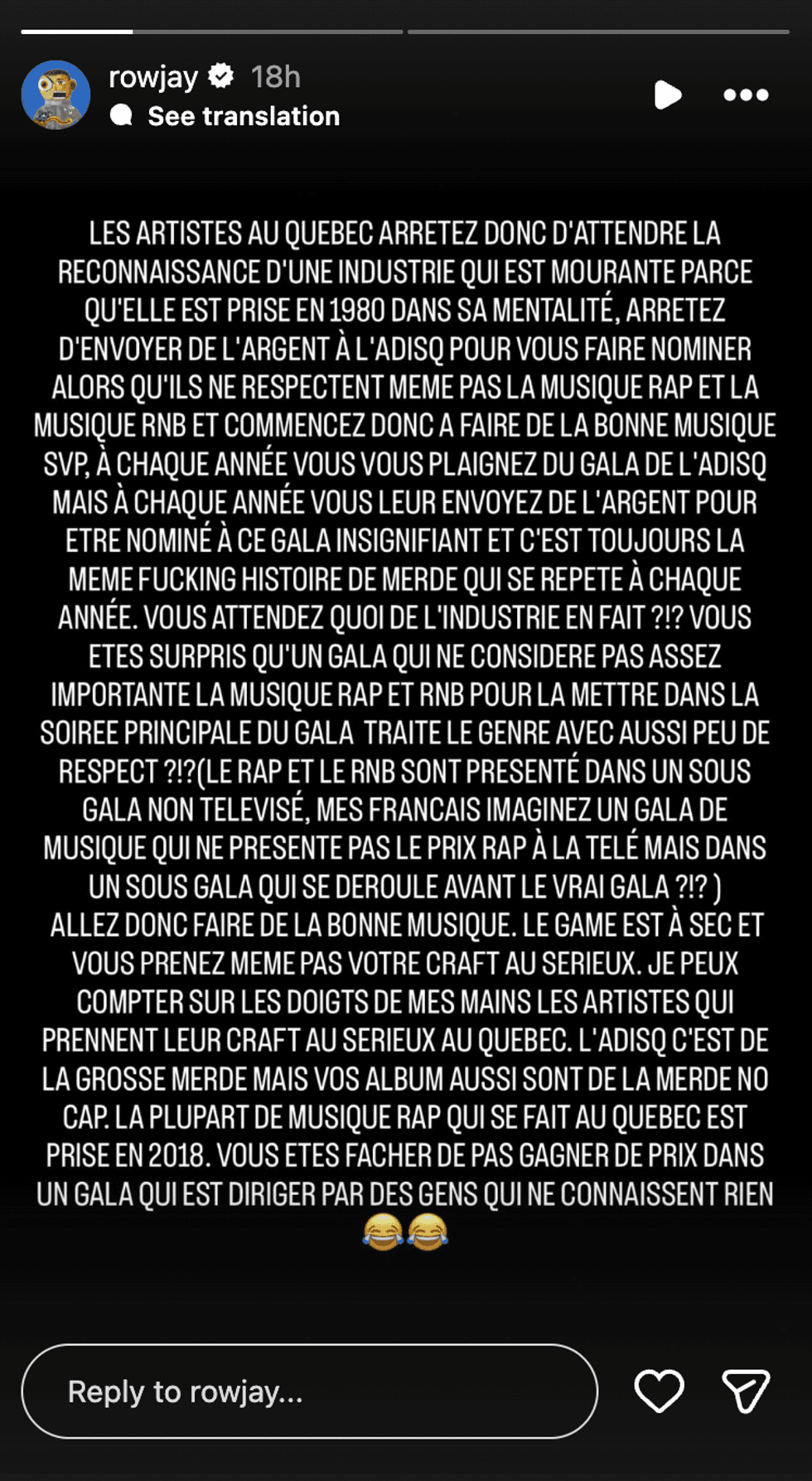
Quebec rapper Rowboy doesn't call out the lack of diversity, but has many thoughts on the gala’s decision not to televize the rap and R&B categories at the main ceremony. In a statement posted to Instagram Stories, he tells Quebecois artists to “stop waiting for recognition from a dying industry,” saying that the organization doesn't “respect rap and R&B music.”
He continues: “Are you surprised that a gala that doesn’t consider rap and R&B music important enough to put on the main Gala night treats the genre with as little respect?!?”
In a statement to Billboard Canada, a spokesperson for ADISQ says their nomination selection is derived from juries in the album categories that “are selected based on the specific professional qualifications of their members. Each musical genre category has a jury consisting of 50 to 150 individuals,” made up of individuals from radio and television stations, music journalists, music organizations and specialized record retailers.
advertisement
The nominated artists are evaluated on performance quality, production quality, the album’s artistic quality — including lyrics, music and arrangements — originality and their impact on Quebec culture.
“Each year, we assemble our juries with particular attention to diversity, gender parity and Indigenous representation,” they say, sharing that “racialized artists have accounted for an average of 10% of all submissions annually, with that proportion exceeding 30% in the rap category over the past five years.”
They continue: “We recognize the concerns raised regarding the absence of racialized artists among this year's nominees in the rap category,” flagging that “representation has varied from year to year.” For reference, three of 2025’s rap nominees were people of colour. “We understand, however, that these figures do not diminish the importance of the questions being raised about this year's nominations,” the spokesperson says.
advertisement
“We take these concerns seriously and believe they deserve thoughtful consideration. Several stakeholders in the music industry, including ADVANCE, have brought this issue to our attention. We have planned meetings with these organizations this month to listen to their perspectives, exchange views and consider how we can continue to strengthen our processes.”
Additional reporting by Stefano Rebuli.
advertisement
Popular
advertisement