advertisement

Billboard is a part of Penske Media Corporation. © 2023 Billboard Media, LLC. All Rights Reserved.

advertisement
Popular


Latest News



advertisement
BILLBOARD CANADA FYI
A weekly briefing on what matters in the music industry
By signing up you agree to Billboard Canada’s privacy policy.



advertisement
advertisement
Courtesy Rockstar Games
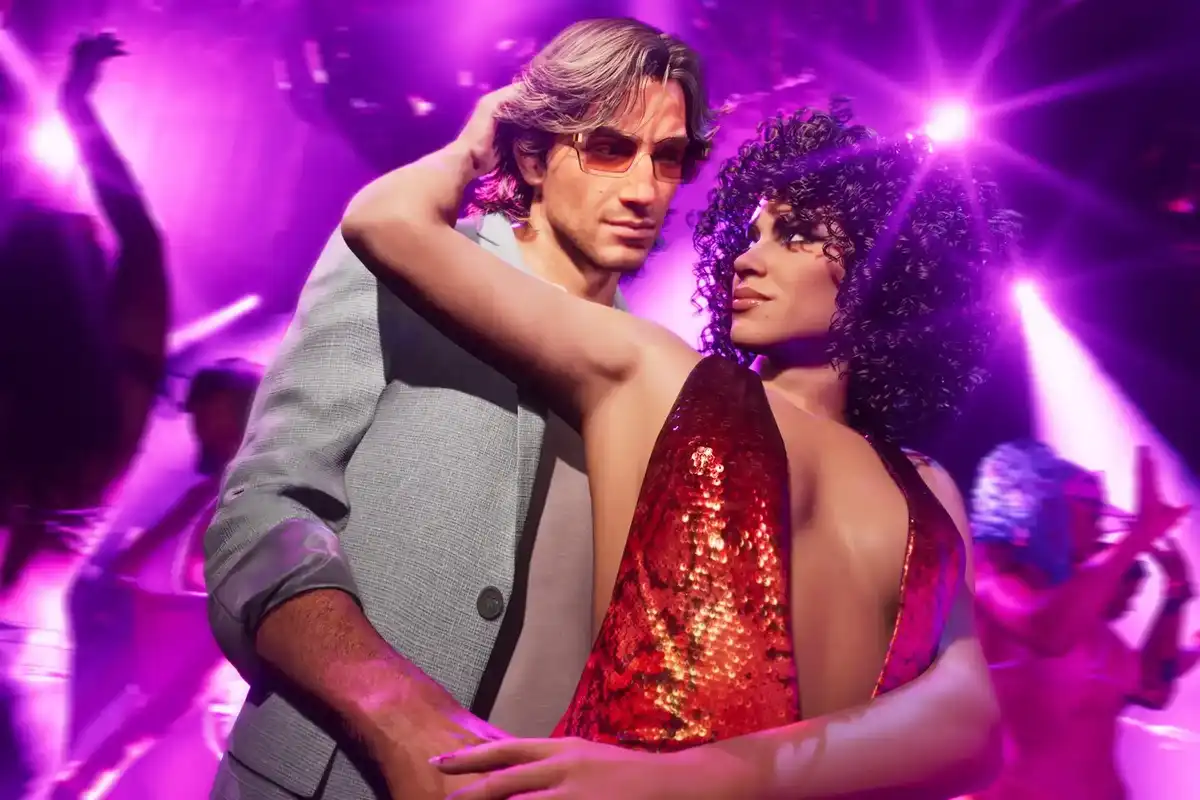
Jason Duval and Lucia Caminos of 'Grand Theft Auto VI.'
Features
‘It’s Not Just a Song on the Radio’: How Music Became A Main Character In ‘Grand Theft Auto VI’
In their first major interviews about the sonic universe of the culture-changing game, Rockstar Games and score composers Justice pull back the curtain on their mission to make Vice City sing.
1h
For decades, Rockstar Games was chasing one song.
In 2002, when the gaming behemoth was developing Grand Theft Auto: Vice City, the fourth installment of its iconic series, it had successfully secured classics like Michael Jackson’s “Billie Jean” and Grandmaster Flash and the Furious Five’s “The Message” for the game. But one record remained tantalizingly out of reach: The Cars’ 1984 single “Drive,” the highest-charting of the power-pop band’s career. A favorite of Rockstar co-founder Sam Houser, the haunting, synth-driven song encapsulated the neon-soaked ’80s world the developer was expanding. Rockstar couldn’t clear the track then — but more than two decades later, the wait is finally over.
advertisement
On Nov. 19, Rockstar made its long-awaited return to Vice City with the epic, stunningly cinematic Grand Theft Auto VI. Even before breathless reviews of the game flooded the internet, GTA VI was predicted to be the biggest entertainment launch in history, with possibly more than $5 billion in first week sales alone. And when players turn on one of the game’s defining features — the in-game radio — “Drive” is the first song they hear.
For Rockstar vice president of music Ivan Pavlovich, clearing “Drive” wasn’t just a licensing victory — it was a testament to the company’s unwavering prioritization of music, the relationships it has cultivated throughout the industry and the meticulous curation that has transformed Grand Theft Auto into one of the past 20 years’ most culture-saturating, riveting and lucrative products. “Music,” Pavlovich says, “is the through line through all of that.”
That’s never been more true than with GTA VI, which Pavlovich calls “the biggest project we’ve ever done,” with, by his count, “over 800 songs in the game right now.” With 23 radio stations — 21 for music and two for talk radio — along with in-game podcasts to crank up as you’re cruising through the streets of Leonida (GTA’s Florida stand-in), plus even TV shows to watch when you’re not, it’s Rockstar’s most ambitious music-driven experience yet.
advertisement
In 1997, video game developers David Jones and Mike Dailly helped bring the first Grand Theft Auto to life at Scottish gaming studio DMA Design (now Rockstar North). Originally published by BMG Interactive, the 2D game introduced players to an open-world experience built around driving, shootouts and criminal escapades. Four years later (and following 1999’s Grand Theft Auto 2), the franchise underwent a seismic transformation with Grand Theft Auto III, which introduced a fully realized 3D environment.
The following year, Rockstar upped the ante with 2002’s Grand Theft Auto: Vice City, recruiting acclaimed actor Ray Liotta to voice main character Thomas “Tommy” Vercetti. Set in the fictional, Miami-inspired Vice City during the 1980s, the game captured the era’s drug-fueled excess, flashy nightlife and colorful personalities — and music became a major part of its appeal, as Rockstar leaned into the decade’s eclectic sounds, spanning pop, rock, metal, hip-hop and R&B. With a slew of radio stations available in-game — from pop-driven Flash FM, to the hip-hop of Wildstyle Pirate Radio — players could cruise through the city while switching between their favorite records, all licensed for Rockstar’s use in the game.
advertisement
With 2004’s Grand Theft Auto: San Andreas, Rockstar moved into the ‘90s, leaning heavily into West Coast hip-hop culture and partnering with Interscope Records for the game’s soundtrack releases. San Andreas kept Vice City’s radio stations concept intact but added more star power, recruiting Public Enemy’s Chuck D, Parliament-Funkadelic’s George Clinton and Guns N’ Roses’ Axl Rose as DJs. By 2008, when Grand Theft Auto IV arrived with another robust musical lineup, including DJ Premier and New York radio maestros DJ Mister Cee and DJ Green Lantern helming their own radio stations, Rockstar wasn’t simply licensing songs — it was deepening its relationships with artists, producers and labels as it created original music, too.
advertisement
“Music is part of the DNA of these games,” says Pavlovich, who credits Houser’s passion for music as a crucial driver behind GTA‘s musical identity. And as Grand Theft Auto evolved into one of gaming’s most successful franchises, Rockstar in turn grew more confident in its ability to create original music. In 2013, Grand Theft Auto V introduced the series’ first original score, which Pavlovich recruited hip-hop producer The Alchemist, pioneering electronic group Tangerine Dream, rapper Oh No and composer Woody Jackson to craft together. Together, they made more than 20 hours of original music. Rockstar also gave producers like Flying Lotus their own in-game radio stations and issued music from the game on CD and vinyl through Mass Appeal.
And then, Rockstar pressed pause. After two decades of regular GTA releases, the franchise went more than a decade without a new mainline installment — due to the company’s prioritization of developing Red Dead Redemption 2 (which came in 2018), its ambition to scale GTA VI and production challenges during the pandemic — which meant that the stakes, and anticipation, for GTA VI grew exponentially.
Early projections from market research firm Newzoo estimated that GTA VI could generate $3.25 to $5.2 billion in first-week sales (in fact, its first day sales were $3.79 billion). And with music playing such a pivotal role in the franchise’s success, expectations were equally high for how Rockstar would soundtrack its biggest release yet. With GTA VI, Rockstar had two major missions of its own to execute: creating a score that would capture the emotional journey of the game’s protagonists, the Bonnie and Clyde-esque couple Jason and Lucia; and building a musical world reflective of a reimagined Vice City and the booming global sounds that now define it.
advertisement
The latter would be especially time-intensive, but Rockstar had an advantage: multiple global superstars love Grand Theft Auto, having grown up with the franchise. For the 34-track soundtrack, Rockstar recruited a stacked roster including SZA, Tame Impala, JENNIE, Dua Lipa, Lana Del Rey, Young Thug, Cardi B and many more. As for the score, Pavlovich always had a gut feeling that French dance duo Justice had the right tools to not only reflect the ’80s era but also elevate the sound of Leonida with a modern edge.
“We went to them as fans first,” says Pavlovich. “There was nobody else who could do this but Justice. Maybe it took a little while to find it, but it was always Justice. It was their score to make.”
On Nov. 20, a day after the release of the game itself, Grand Theft Auto VI: The Album landed on streaming services. On Spotify’s coveted New Music Friday playlist, Dua Lipa landed the leadoff spot with “Go Easy” from the album, followed by new songs from Playboi Carti and Lana Del Rey, along with a new Justice song from the official score and one featuring a certain iconic crooner. And on the morning of Nov. 23, Atlantic and Rockstar surprise dropped GTA VI: The Album (Deluxe Edition), with 23 more new, original tracks — adding artists like Slayyyter, Anitta, The Dare, Offset, 21 Savage and many more to the mix. GTA VI’s musical takeover had officially begun.
advertisement
On an otherwise regular morning, Justice’s Xavier de Rosnay and Gaspard Augé found a text from their managers with a simple question: would they like to compose the score for the biggest video game in history?
“Our first reaction was, ‘Of course we want to,’ because we knew it would be an anticipated piece of entertainment,” says de Rosnay. It would also be a commitment that ultimately occupied years of their lives. “When we started working, I had one kid,” de Rosnay says with a laugh. “When we finished, I had three.”
De Rosnay and Augé had long been interested in scoring a film, television show or video game, but GTA VI would be their first time actually doing so. “Rockstar liked the idea that we’ve never properly worked on a score before, because that could mean we don’t have the habits of people who think, ‘but that’s the way we do it,’ ” de Rosnay says. “We were coming completely fresh.”
The GTA franchise has a long, rich history with electronic music, with artists including Soulwax, Moodymann, The Blessed Madonna, Solomun and many more contributing to the game’s radio stations over the years and some even appearing as themselves in the game. Rockstar also has a long partnership with Ibiza’s venerable CircoLoco Records, and the label’s founders co-host GTA VI’s CircoLoco Records Radio. Meanwhile, the soundtrack’s dance roots go far beyond Justice itself, featuring contributions from Fred again.., PinkPantheress and other dance stars, and Miami’s hallowed nightclub Space appears in the game as The Vault.
Creating the score for GTA VI was a particularly daunting task for Justice, given that “it took us 20 years to release four albums that accumulate to maybe three and a half hours of music,” says de Rosnay. The team at Rockstar, also famous for taking a long time to make things, said they weren’t worried about it. To get started, de Rosnay and Augé went to Rockstar’s New York headquarters, where they spent several days watching drafts of the game and wrapping their minds around Leonida, Jason and Lucia and how their music would fit into the sprawling world Rockstar was building.
“We thought we had an idea of what the game was,” says de Rosnay, “and actually spending a week looking at it, we left the office with a completely different view of what needed to be done” in terms of mood and how their music would be used, particularly with respect to each character’s narrative arc and the game’s overall scale.
“I would guess that usually when you start a score, you start defining a sound that’s going be [central] to it,” de Rosnay continues. “That’s impossible in a game like this. The score has to cover as many styles and genres as there are parts of the cities, situations and variety of people.”
Justice worked in near-total secrecy with a tiny team at Rockstar made up of Pavlovich, Rob Nelson, the co-studio head of Rockstar North and one of the three creative leads on GTA VI, and Houser. (When they spent a month in New York working on the game earlier this year, de Rosnay’s sister-in-law — having no idea what he was doing in town — thought he was going into the city every day to work at Google.) Justice joined the project when big sections of the game were still being written, rewritten and moved around. As such, the duo worked by scoring large swaths of the game piece by piece, returning to each as Rockstar further developed it.
“We would be revisiting constantly and adapting it to new developments in terms of writing,” says de Rosnay. “We cycled through all of this for four years, improving on and changing things, because what worked two months ago didn’t work anymore.”
The scope of that task was staggering. For each scene, Justice had to account for all the ways a player might experience it. “We would watch a scene and determine with the team that an average player is going to spend, like, five minutes on this,” de Rosnay says. “Someone who knows what they’re doing, they’re going to spend one minute, and someone who has no idea and gets lost spends 15 minutes.” To cover all scenarios, he says they “would deliver maybe 20 to 25 minutes of music, just to make sure that when things are being interactive, there’s no wrong parts or things that sound artificial.” Those minutes multiply across all the game’s branching possibilities — which is why, de Rosnay says, “we have no idea” how many hours of Justice’s music are in the game.
Much of this work happened while Justice was on the world tour for its 2024 album Hyperdrama — and de Rosnay and Augé had never previously produced on the road. With GTA VI, however, de Rosnay says that “every minute we were not doing standalone Justice stuff or making kids was spent working on the score” in hotel rooms, airplanes and studios in Paris and New York. A situation that might seem stressful “wasn’t, to be honest,” he says; in fact, it showed them “that we were actually able to do something we didn’t think we could.”
In terms of overall vibe, Rockstar’s marching orders for Justice were simply to make music that created a spirit of fun, even when the game gets thematically dark, and to ensure that it “not sound like video game music.” Rockstar also brought references from deep in the Justice catalog (which encompasses four studio albums and two live LPs going back to 2007) with a particular interest in its second studio album, 2011’s Audio, Video, Disco, a project that’s essentially the duo’s arena rock LP.
The Rockstar team was well-aware of the classic rock thread running through Justice’s oeuvre, and the duo’s understanding of (and love for) the genre ultimately proved crucial to the score. That also overlapped with an understanding of Miami that came both from their experiences playing in the city, and, more importantly, representations of the city in ‘80s media — Miami Vice and Scarface in particular — that they were exposed to growing up in France. The vibe of these cultural references matched their own sensibility, which let them “stay true to ourselves,” says de Rosnay, rather than attempting to work in other regional genres like Miami bass or South Florida rap. “It’s Florida and Miami seen through a very specific prism of a rock star,” he says.
This ‘80s rock star essence was present as early as December 2023, when Tom Petty’s “Love Is a Long Road,” from 1989’s Full Moon Fever, soundtracked the game’s first trailer. (Streams of the song went up by 8,421% following this needle drop, according to Luminate.) The second trailer, released in May 2025, featured The Pointer Sisters’ slick, synthy 1986 track “Hot Together.” sAn amalgamation of those vibes is all over “Flower in a Hurricane,” the score and soundtrack song that Justice made supergroup-style with King Gizzard & The Lizard Wizard, SZA and Tame Impala. The opening riff came from King Gizz and initially had a more ’70s style that ultimately shifted a forward in time and ended up evoking Dire Straits’ 1985 smash “Money For Nothing” and classic ZZ Top. The song debuted at No. 2 on Billboard’s Hot Dance/Electronic Songs in October and No. 62 on the Billboard Hot 100.
“It doesn’t take much for a riff that sounds like ‘Money For Nothing’ to immediately trigger a [feeling of] the early days of MTV and compact discs,” says de Rosnay. “We were like, ‘Oh s–t! It’s exactly the mood [for the game], this type [of] Dire Straits ‘80s mood.” When they sent an early demo of “Flower In a Hurricane” to the Rockstar team, “we didn’t hear anything from them for maybe three or four days,” says de Rosnay. “Because we were working on a schedule, we would usually send something and have a response 10 minutes later. With this we didn’t hear anything, and then the response was like, ‘This is the best track we’ve ever had. There’s going to be a trailer in a year or so, and we need to work so this song is in it.” (This trailer ultimately dropped Oct. 15, 2026, 35 days before the game’s release.)
Other collaborators on the score include fellow French producer Gesaffelstein — a close friend of Justice’s, but not someone with whom they’d ever worked (“When we meet each other, we have dinner,” says de Rosnay. “We do everything but music related things”). While “it never really occurred to us that we could actually make music together,” says de Rosnay, eventually they had a moment in the game that needed anxiety-inducing music. “We know how to make those tracks,” says de Rosnay (see: Justice’s 2007 classic “Stress” and Hyperdrama’s “Generator”) but it’s not a mode they felt like forcing, as “doing it on command almost felt like going backwards.” So they asked Gesaffelstein, who “comes up with this type of stuff naturally,” for help. The result: the seven-minute, multimovement, often nerve-wracking “Pusher.”
On the other end of the sonic spectrum from Gesaffelstein: eternally smooth yacht-rock legend Michael McDonald. De Rosnay calls scoring the game’s opening credits sequence “the most difficult piece we had to write for the whole thing.” Having tried dozens of ideas, Pavlovich asked the guys who their dream singer for the song would be. They said McDonald. “To us, he really lives in the same realm as Prince, Paul McCartney, Brian Wilson, all those guys we really idolize,” says de Rosnay. Pavlovich, Nelson and Hauser loved the idea, so Rockstar put a call out to McDonald’s team and days later, Justice was with him in a studio space they constructed inside a house in L.A.’s Los Feliz neighborhood.
“We worked in a living room in the simplest way possible,” says de Rosnay. “He could have been a d–k and we wouldn’t have minded, because he can, but the guy was so nice, so humble, so attentive to everything and so good. We’d decide on a line, and he’d get up and sing it perfectly. You can see that he’s a professional, the old school way.” By the end of the day, they had the opening credits song, “Starting From Zero.”
Months before GTA VI’s Nov. 19 release, sharp-eared fans guessed that they might be hearing Justice when the 27-minute Grand Theft Auto VI: An Extended Look dropped in late August. (“In the new trailer, the moment Lucia drives the car the OST sounds so Justice-like. Shazaming it did nothing. Thoughts?” reads the lead comment on a speculative Reddit thread with 97 replies dissecting the idea.) For Justice, the fact that anyone recognized the music as theirs was a surprise, given that “we really took this job almost as actors, in the sense that we were going to disappear into the role of making this and it didn’t matter if it didn’t sound like Justice,” says de Rosnay. While he and Augé were feeling “very proud in our abilities to completely disappear into the score,” the Rockstar team provided a reality check. “They told us, ‘Guys, are you crazy? It sounds totally like you.’ “
“GTA is one of those rare cultural moments that reaches far beyond its own world,” says Emmanuel de Buretel, the co-founder and CEO of Justice’s label Because Music. “It will give Justice the opportunity to reach an entirely new level of exposure and audience, connecting their music with the hundreds of millions of players who make up the GTA universe.”
Ultimately, Justice’s Grand Theft Auto VI: Original Score (which will be released in full on Dec. 11) encompasses 50 pieces of music. They call it the best introduction to scoring they could’ve asked for, with de Rosnay comparing the process to debuting the Hyperdrama tour at Coachella. “We feel that you learn 10 times faster if you start with something big,” he says. “It’s a bit more painful at the beginning, but once you’re there, you can really evaluate what you’re able to do.
“It’s great to be a cog in such a big system and such a big piece of entertainment,” he continues. “We’re very proud to be part of something like this — and finally my daughter thinks we’re involved in something cool, so that’s maybe the biggest victory.”
While Justice worked to capture the emotional journey of Jason and Lucia’s storyline, Rockstar joined forces with Atlantic Records to expand the musical world surrounding them into what became the game’s blockbuster soundtrack. In recent years, the label has become a force in soundtrack releases, delivering albums for films like Barbie, F1 and Twisters that have scaled the Billboard charts — and extending its reach to the gaming world felt like a natural next step.
“Rockstar Games has built GTA into the biggest multimedia series of our generation,” says Atlantic Records president Kevin Weaver. “We all felt GTA VI would be one of the biggest pop culture moments of the decade, and we wanted to make a soundtrack that would live up to exactly what that was going to be.”
Beginning in 2023, Weaver worked closely with Pavlovich and the Rockstar music team to identify artists, songwriters and producers right for the album. The process involved what he describes as “intense creative conversations,” including early meetings with the company’s music team. Weaver’s mission: create music that could elevate specific moments in the game’s storyline and bring the proper energy to its signature radio stations and club scenes. Both companies prioritized creative compatibility over label affiliation. “They never pushed their own artists,” Pavlovich says of Atlantic. “Their main goal was finding the right songs for the game.”
To wit, the first artist Weaver approached was the Epic-signed Travis Scott, flying to the superstar’s hometown of Houston and spending three days in the studio with Scott working on records for the project. Scott’s resulting song, “RHYNO,” hit the Hot 100 upon its release in September.
Beyond Scott, Weaver wanted to build an album where multiple genres shined — and other prerelease tracks have demonstrated the resonance of that approach: country superstar Morgan Wallen’s “Last Thing You Need” hit the Hot 100 top 10, and regional Mexican group Fuerza Regida’s “Suzuki” reached No. 5 on Hot Latin Songs.
“Luckily, the sound of ‘Last Thing You Need’ was a direction I was already headed,” Wallen tells Billboard. “Don’t mistake that for it being easy though — we wrote at least 10 songs trying to get a song we loved for the soundtrack. We turned in three or four and this is the one that we all felt matched the world of Leonida best.”
For reggaetón superstar Rauw Alejandro — who spent countless hours playing the franchise’s games growing up — working on GTA VI was a full-circle moment. He jumped at the opportunity to bring his Puerto Rican roots to Vice City. “Sometimes, I wasn’t even doing the missions — I was just vibing, discovering new things, listening to the music on the radio,” Alejandro recalls of when he first experienced the game. With his infectious track “Macacoa 2000,” Alejandro sought to recapture the spirit of old-school reggaetón while embracing Leonida’s vibrant nightlife.
“I wanted to bring back the roots of reggaetón, ese perreo de antes, but with a fresh twist,” he says. “I wanted the track to capture that feeling of driving around late at night, windows down, music blasting, running from the cops on our way to the club.”
“The greatest thing about Vice City is that all the kids who played Vice City are now the top artists in the world,” adds Pavlovich. “Everybody’s always been excited about being part of these games, but this one really is a homecoming to Vice City.”
For Swedish pop singer-songwriter Tove Lo, inspiration struck after watching the game’s first two trailers. Drawing from the romance between Jason and Lucia, she crafted “Blood in Your Eyes,” an ’80s-inspired synth-pop record that captures the couple’s ride-or-die bond.
“I loved writing this song with the game in mind,” she says. “Me, [producers] Ludvig Söderberg and Ilya Salmanzadeh — who both are avid players — spent a week writing while having the first two trailers on repeat as we were working. It’s really inspirational having another world as the storyline. Writing for something so adventurous and adrenaline driven is the best.”
The game’s release — and in turn, the soundtrack’s arrival and promotion — have not been without speed bumps. Initially slated for a fall 2025 release, GTA VI was pushed to May 26, 2026, before being delayed again to Nov. 19. Atlantic faced its own challenges, working around artists’ release schedules, coordinating song deliveries and planning a robust rollout.
“When the game got moved from spring to fall, we really had to rethink the entirety of our strategy, both from an A&R and marketing perspective,” says Weaver. “We all adapted quickly, and I think the additional time that we were able to gain became a major advantage to us for a lot of reasons. I think it actually made the album better.”
For Rockstar, the game’s sheer scale presented the biggest challenge. Since the last major GTA installment, Miami has evolved into a global destination, so capturing the city’s expansive sounds became vital to reimagining Vice City. That meant incorporating everything from Southern hip-hop and Cuban music to contemporary Latin sounds while expanding the game’s radio stations and recruiting DJs to host them.
Licensing the music also proved arduous. For Kaleidoscope — a radio station featuring international covers of popular Western songs — Rockstar had to track down rights holders for recordings from countries as far flung as Thailand and Vietnam. “It’s almost like detective work in terms of finding who has the rights and who can license those rights to you,” says Pavlovich.
“From a day-to-day standpoint, we work very closely with Sam [Houser], our music team, licensing team and legal team to make sure we get the rights for all these songs,” he continues. “We’re probably licensing three times the amount of songs we end up using. If we’re getting 800-plus songs in the game, you can imagine the amount of time, love and effort that all these people put into clearing music.”
In the spirit of elevating the gaming experience, Rockstar has also created missions built around individual songs. Rather than relying solely on the radio dial, separate song stems are incorporated into gameplay, transforming familiar records into interactive scores. Travis Scott and Justice are among the artists whose music accompanies these special sequences, allowing players to experience their songs in a more immersive way.
“It’s not just a song on the radio that’s one of 20 or 30 or 40 or 50,” says Pavlovich. “You are actually playing this mission to those songs. Those are the standout moments.”
Upon the game’s release, Atlantic’s efforts paid off quickly: the label claims it sold more vinyl and physical products in the first 24 hours than any previous soundtrack in its history. “In the short term, we’d love a big debut [on the Billboard 200],” says Weaver. “We’re optimistic that we’re gonna debut very high on the charts, hopefully No. 1.” (At press time, the soundtrack had not yet been out a full charting week — but official on-demand U.S. streams of “Flower in a Hurricane” had already gone up 153.4% the day of and after game release compared to the Thursday-Friday period the week before).
On the day we speak in November, an awe-struck Pavlovich also has high hopes. He has just landed in Miami, and the city’s streets are awash in GTA VI imagery. Billboards blanket the highways, while the Miami Heat’s Kaseya Center sports a massive “Welcome to Vice City” display ahead of the NBA team’s “A Night in Vice City” crossover game. Awaiting him next is Grand Theft Auto VI: The Festival, a one-day live music launch taking place at a sprawling event space in the hip Wynwood neighborhood, with headlining sets by Travis Scott, Cardi B and Metro Boomin. During our conversation, he marvels at Miami’s transformation, reflecting on the countless research trips and painstaking planning that went into recreating the city. Even Miami’s merciless rain can’t dampen his excitement.
“The hairs on my arms are standing up,” he says. “I can’t believe I’m actually here after all this time.”
keep readingShow less
advertisement
Popular
advertisement
Published by ARTSHOUSE MEDIA GROUP (AMG) under license from Billboard Media, LLC, a subsidiary of Penske Media Corporation.
advertisement