advertisement

Billboard is a part of Penske Media Corporation. © 2023 Billboard Media, LLC. All Rights Reserved.

advertisement
Popular

Latest News


advertisement
BILLBOARD CANADA FYI
A weekly briefing on what matters in the music industry
By signing up you agree to Billboard Canada’s privacy policy.
advertisement
advertisement
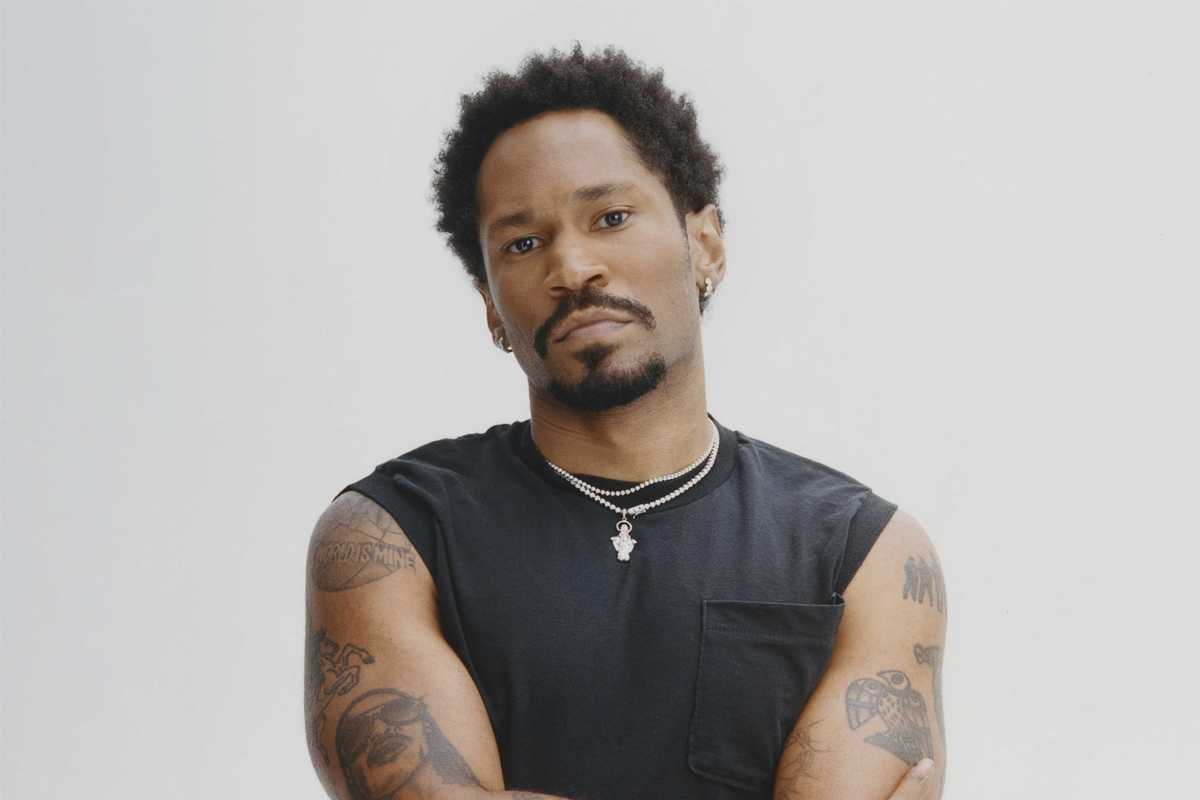
Kaytranada
Kaytranada
Features
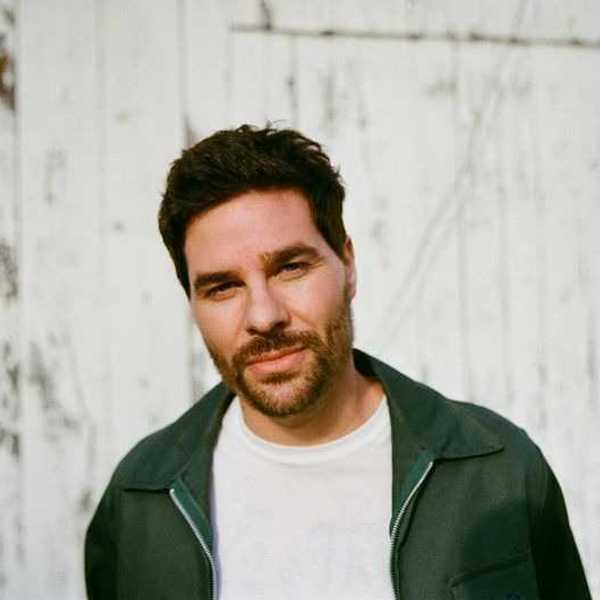
How Kaytranada Went From Quiet Beatmaker to Global Sonic Leader: 40 Under 40 Interview
The Canadian DJ-producer has become one of Canada's biggest global success stories. As he prepares to accept the Visionary Award at Billboard Canada 40 Under 40 reflects on his career trajectory, overcoming shyness and the signature 'Kaytranada' sound that has become a genre of its own.
1h
Kaytranada is a quiet hero of the Canadian music industry. It's taken him years to accept his role as a sonic architect whose sound has practically become its own genre. Now, he's starting to realize his legacy.
"I celebrate everything and I’m happy with still being a force in electronic music," he says. "I never take it for granted."
On Nov. 20, 2026, the Haitian-Canadian star will accept the 40 Under 40 Visionary Award at Billboard Canada 40 Under 40, recognizing the pioneering influence he has had on the musical landscape as an artist and culture-builder.
Before he was a global touring superstar, the Kaytranada was a young adult making beats in his Saint-Hubert, Quebec bedroom, capturing the smoothness of R&B and emulating the funk of his favourite deep cuts, a bouncy signature that would reshape the dance music landscape over the next decade.
advertisement
Even when talking about his biggest accomplishments, he retains some of his self-admitted shyness that defined his early studio sessions as a DJ-producer climbing the ranks of Montreal's party scene. Before he became a leader curating and creating songs in the studio, he simply let artists do their thing over his beats as he quietly watched. He's even a little embarrassed by his instantly-viral Boiler Room Montreal DJ set, a legendary 2013 performance that catapulted him to fame and built the blueprint for his decade-plus of success. It launched him to fame, but he's capable of so much more, he says.
While becoming a go-to for major pop artists, he built a close-knit circle of collaborators as a trusted tastemaker, picking up accolades along the way. From the club to the charts to the critics, Kaytranada has made history as an electronic musician. His debut album 99.9% (2016) made him the first hip-hop/electronic act to take home the coveted Polaris Music Prize in 2016 and his landmark double victory at the 2021 Grammy Awards for Bubba (2019) and "10%" made him the first Black producer and gay artist to ever win the best dance/electronic album award.
advertisement
His style has reached the world's biggest stages, from his own global tours to The Weeknd's After Hours Til Dawn tour, which was recently crowned the highest-grossing tour by a male artist ever and third-biggest overall. Kaytranada opened for all six record-setting shows at Toronto's Rogers Centre, having also opened for the tour's first North American and European legs in 2022-23 and returning for select dates in 2025. He has earned key co-signs from legends like Janet Jackson, whose track "If" was the foundation of his breakthrough remix, and collaborative hits or remixes with everyone from Chance the Rapper to Anderson .Paak, Kali Uchis, Dua Lipa, Don Toliver, Victoria Monét and The Weeknd.
He's still reaching new heights, headlining the influential Pacha Ibiza, co-headlining arenas across North America with his idols Justice and embarking on his own sold-out European arena trek. As his sound has stretched to every continent and corner of the world, he's racked up a No. 1 album and two more top 2 entries on the Billboard Top Dance Albums chart, four charting hits on the Canadian Albums chart and over 3 billion Spotify streams. He's done it all while remaining true to his sound. Now, he's ready to embrace the global influence and impact he's made.
advertisement
Ahead of the star-studded Billboard Canada 40 Under 40 celebration on Nov. 20 at SOUNDSTAGE, Billboard Canada spoke to Kaytranada about the honour.
You've gone from making early beats in your childhood home and playing Montreal's nightclub and party scene to playing massive stages all over the globe and winning Grammy awards. How has that growth felt from the inside?
advertisement
It's insane. [I] kind of knew it was going to happen, but you also go on autopilot in a sense. I just followed my gut. I wasn't really thinking too much. [When you] talk about the St-Laurent [Montreal] bars, I just crossed over to where I am now. It didn't feel like it was extra work, it felt like it was meant to be. [Being] somebody that just makes beats and then you DJ and cross over like that, it sounds like a fairy tale.
You frequently return to Canada to play shows in Montreal. What significance has Canada held to you throughout your career and what is the importance of keeping one foot grounded at home?
Growing up in the early 2000s, artists in the Canadian scene didn't have much exposure outside of Canada. It was always my dream to see a lot of artists like [Justin] Bieber, Drake and The Weeknd breaking through.
Even when I was 11 or 12, when I had that dream of becoming an artist, [I told myself] I would have to find a way to not stay in Canada or be stuck in the Canadian scene. Today, I think it’s more accessible because we have social media and things that expose what's going on all around the world.
It’s important because it's a legacy. It’s important for Canada to have that visibility [in terms] of artists that can make it. I see Angine [de Poitrine] and Chxrry making it, all these artists that are coming from Canada and making it worldwide. It’s like the new way of the Canadian Heritage [Minutes] commercials. It’s expanding history and creating more legacy for Canada.
Your Boiler Room set in Montreal has become a cultural touchstone. It ranks as the platform’s fourth-most-viewed video ever with over 25 million views, and has even become a Halloween costume. What did that moment mean to you as an up-and-coming DJ 13 years ago, and how do you see it today, now that it has become a seminal music moment?
advertisement
Every time I look at the video, it takes me back to that time where Montreal was so fun. There were more hungry people up-and-coming — Shay [Lia] by my side, my brother Lou [Phelps] in the back, Tommy Kruise — people that were all into beatmaking and the electronic scene. It was very much alive and present from 2008 up until 2014.
I am also embarrassed by that set in a way where I don’t think it defines me in the best way. When you think of me, some people think about the Montreal set. It’s bittersweet. I enjoy where it got me but it can be annoying at times when [people are] just referencing that one part where it looks like a painting. We can see a very historical moment where everybody's just going crazy to "Be Your Girl." "Be Your Girl" is not even my personal favourite song of mine, but I still embrace where it got me.
advertisement
For it to be reposted so much on social media as “Kaytranada and that girl” and, on top of that, never naming Shay Lia, that's the annoying part. And it's always the same comments. It’s the same clip and the same comments all the time. That's silly, but other than that, I'm very happy for where it took me. I don't think I'd be where I am without it.
You made history as the first Black man and gay man to win the Grammy award for best dance/electronic album. How does it feel to be a pioneer in that field and to see so many Black and queer musicians in the dance/electronic realm currently having their moment?
I don't take it very lightly. It's a crazy milestone for me, but I think [a Black artist winning] was supposed to happen a little while ago. I still think the Grammys have a little problem with categorizing genres, where it's not as expansive as it [seems]. We only get two or three nominations judging the entirety of electronic music.
It's beautiful to see Black people have this visibility for electronic music, because for a while it was not very visible. Growing up, I was ignorant about house and thought it was a white genre, but that's [because of] what they didn't teach or show you growing up. There was a lack of visibility when it came to Black DJs. I'm very happy that I'm one of them who can show what's coming up next and the things that are possible because we're put in boxes, but now the box is various things that can be exposed.
You developed a sound that is so distinctly yours, a unique and smooth blend of R&B with funk, dance and hip-hop. How has it felt watching that signature catch on among other musicians?
I think it's funny that people call it the "Kaytranada sound" and that it has become its own genre, because nobody can redo it like I do. It’s rare. You see a couple of DJs and producers that are doing it exactly like me, and that's pretty cool because not many people can. People plainly use the term "Kaytranada sound" and the music really doesn't sound like it. It's more than a sound, it's about the rhythms and the groove.
It's cool that it became such a thing because I was just trying to showcase R&B at an uptempo level. There are a lot of albums I grew up listening to in the 2000s that always had an upbeat deep cut that felt house-y and boogie-influenced, around 108 [Beats Per Minute] to 120 BPM. It was a lost art. I was trying to do those things as a young man producing at 18, 19. Also, having a twist to the synths that I use, sidechain [compression], those are not things they were doing back then with R&B.
I also learned through a lot of my favourite producers. Justice and Daft Punk were all doing this sidechain house thing. Hearing that with R&B is a lost art till this day. Now that I know that I have the genre that I created or pushed forward, I'm trying to embrace that fully. If other artists that know how to do it so well, it leaves me space to do something else.
You have developed a tightly-knit circle of close and frequent collaborators throughout your discography while also working with big names like Pharrell, Anderson .Paak, H.E.R. and Tinashe. How do you approach collaboration depending on the artist?
I've come to a more comfortable approach. Back [when I started], it was not the easiest thing for me to speak up — I'm just incredibly shy. I thought that all I had to do was make the beat and [let] the other artists do whatever they had to do. There was one session where I was working with Georgia Anne Muldrow, and she was like, “come on Mr. Producer, what are we going to do?” It shook me. Things were on autopilot for me up until that point. Now, I want to create a song.
It really depends who I'm working with too. If that person is a fan of me, it's always the easiest session, the most fun compared to people that are just being [put together] by an A&R. Sometimes it was 50/50 where I just made the beat and the artist did their thing. Now, I get to help the writers and help the artists to come up with an actual song. I tend to make other artists comfortable. Sometimes it fires back in a way where we make a good song, but it's not what I expected to walk out with. It's an experiment.
What is a change you would like to see in the music industry in the near future?
I hope to see more funding and [placing importance on] independent and alternative music in Montreal and in Canada. People are having more of a push in the U.K. and the U.S., and I think Canada needs that.
The Canadian government recently announced a $67 million boost to the Canadian music sector through the Canada Music Fund, as well as the Canada Creative Credit, a new tax relief for up to $45,000 for artists. What are your thoughts on that?
I think it's beautiful. I think this is very needed. I think Quebec has really got to take that to the next level.
What are some upcoming projects you are currently working on or excited about?
I've started working on my next album. I'm in the very early stages. It's been hard to start working on one because all these shows are interrupting my creativity. 2027 is going to be more focused on working on the album. It’s hard to turn things down. You're trying to collect as much as you can and if you’re in demand and hot in these streets, you have to take it and make yourself available as much as you can. It's bittersweet because you want to show up for your fans and give a good show, and you want to live and make money. I knew in the beginning of my career I wasn’t going to make a lot of money from songs. I still want to give my fans a new album and just [put] more material out.
Back in 2016, you told The Fader a similar story about how being on the road all the time was getting in the way of you focusing on making your first album, 99.9%. It's a full circle moment, in a way.
It’s funny because I feel the same way. It's parallel. 2026 was definitely a reflection year because I was like damn, it's [10 years] since the first album. Everything started around 2012-13 for me, but to a lot of people the first album tends to mark the beginning of a career.
What do you think makes a person a Visionary?
To me, it's somebody that leads the way. You look up to a Visionary and they know where to go. I tend to struggle sometimes to be a leader, even as a producer sometimes. The difference between when I produce and when I call the shots is still something that I struggle with.
I slowly understood recently [that] I'm a Visionary, a leader, somebody a lot of people look up to and are trying to find answers from [on] where to go sonically.
What does it mean to you to receive the Billboard Canada 40 Under 40 Visionary Award?
It's been a beautiful road and it's full circle. Billboard acknowledging my success is something very unique and beautiful. Coming from Saint-Hubert [Quebec] and then being in Montreal, and then crossing over internationally — as a beatmaker too — it’s not just anything. I sometimes pinch myself. I still don't understand how all of this happened but I'm fortunate to have made it this far.
keep readingShow less
advertisement
Popular
advertisement
Published by ARTSHOUSE MEDIA GROUP (AMG) under license from Billboard Media, LLC, a subsidiary of Penske Media Corporation.
advertisement